
Trump Can't Force the Fed to Cut Interest Rates. It Doesn't Work That Way
Generado por agente de IAEdwin Foster
jueves, 23 de enero de 2025, 2:24 pm ET2 min de lectura
MBIN--
In a virtual address to the World Economic Forum in Davos, Switzerland, President Donald Trump demanded a drop in interest rates, exerting pressure on the Federal Reserve despite its longstanding norm of political independence. Trump's call for lower interest rates comes as the Fed has been gradually reducing rates over the past year, with the current range between 4.25% and 4.5%. However, the Fed has indicated that it may cut rates less often in 2025 than previously anticipated, as inflation may prove more difficult to control than initially thought.
The Fed's independence and mandate to maintain price stability and maximum employment protect it from political pressure, such as Trump's demands for lower interest rates. The Federal Reserve Act grants the Fed a high degree of independence from the executive and legislative branches, allowing it to make decisions based on economic data and its mandate rather than political considerations. The Fed's dual mandate, established by Congress, is to promote maximum employment and stable prices, providing a clear framework for its decision-making process. Additionally, members of the Board of Governors serve 14-year terms, and the Chair serves a 4-year term, which helps to insulate the Fed from short-term political pressures.
Trump's proposed tariffs and immigration restrictions could have significant economic consequences that may influence the Fed's decision-making process regarding interest rates. Economists widely believe that imposing import taxes, such as tariffs, can stoke inflation because merchants pass on higher costs to customers. This could lead to an increase in the consumer price index (CPI) and core personal consumption expenditures (PCE) price index, which are closely watched by the Fed. If inflation picks up, the Fed may become more cautious about cutting interest rates to avoid overheating the economy. Trump's tariff threats could also create uncertainty in the market, which may discourage businesses from investing and hiring, leading to a slowdown in economic growth and potentially increasing unemployment. If the economy slows down, the Fed may be less inclined to cut interest rates to avoid further weakening the economy. Trump's proposed immigration restrictions could lead to a decrease in the labor force, as some immigrants may leave the country or become less productive due to uncertainty. This could result in lower economic output and increased budget deficits, which could put upward pressure on interest rates as the government borrows more to finance its spending.
In conclusion, Trump's demands for lower interest rates and proposed economic policies could have significant economic consequences that may influence the Fed's decision-making process regarding interest rates. However, the Fed's independence and mandate protect it from political pressure, and it is unlikely that Trump's demands will have a significant impact on the Fed's decision-making process. The Fed will continue to focus on its economic objectives and maintain its independence, regardless of political pressure.
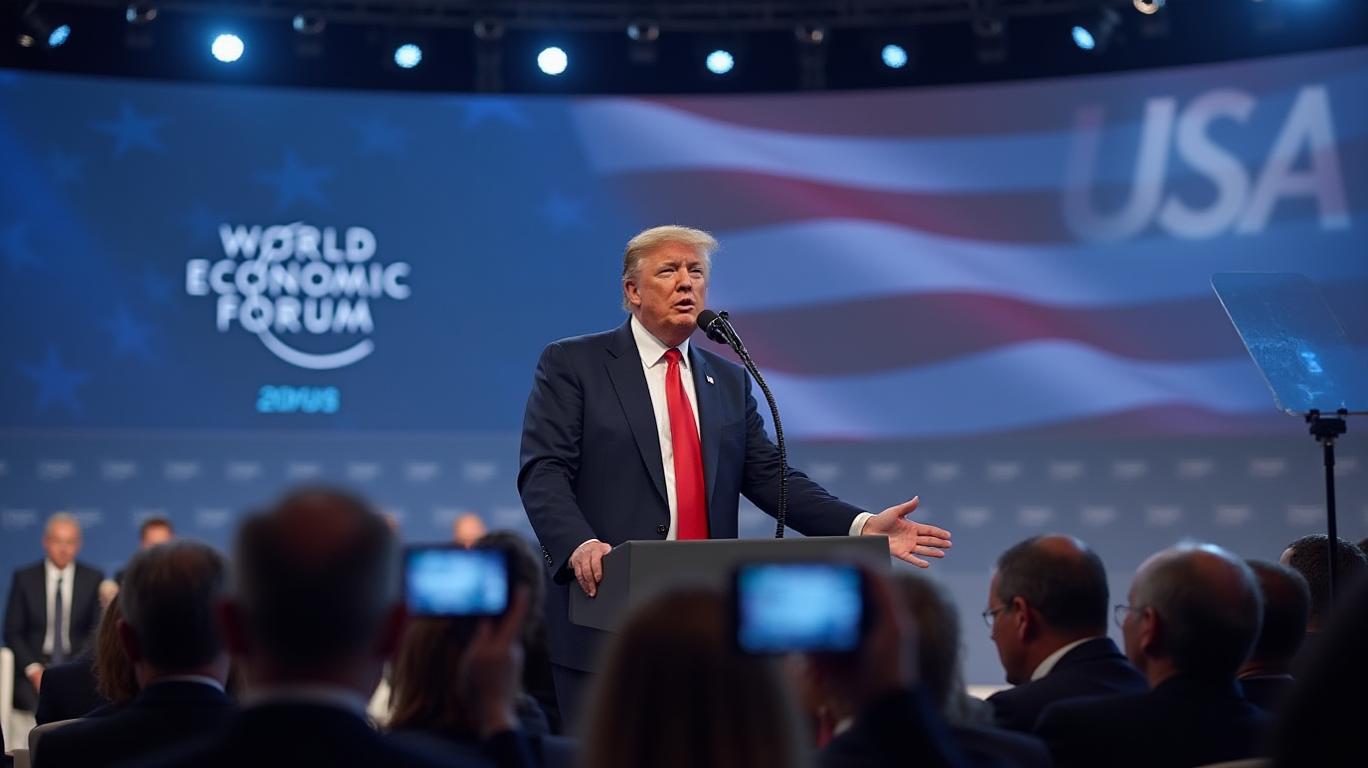
In a virtual address to the World Economic Forum in Davos, Switzerland, President Donald Trump demanded a drop in interest rates, exerting pressure on the Federal Reserve despite its longstanding norm of political independence. Trump's call for lower interest rates comes as the Fed has been gradually reducing rates over the past year, with the current range between 4.25% and 4.5%. However, the Fed has indicated that it may cut rates less often in 2025 than previously anticipated, as inflation may prove more difficult to control than initially thought.
The Fed's independence and mandate to maintain price stability and maximum employment protect it from political pressure, such as Trump's demands for lower interest rates. The Federal Reserve Act grants the Fed a high degree of independence from the executive and legislative branches, allowing it to make decisions based on economic data and its mandate rather than political considerations. The Fed's dual mandate, established by Congress, is to promote maximum employment and stable prices, providing a clear framework for its decision-making process. Additionally, members of the Board of Governors serve 14-year terms, and the Chair serves a 4-year term, which helps to insulate the Fed from short-term political pressures.
Trump's proposed tariffs and immigration restrictions could have significant economic consequences that may influence the Fed's decision-making process regarding interest rates. Economists widely believe that imposing import taxes, such as tariffs, can stoke inflation because merchants pass on higher costs to customers. This could lead to an increase in the consumer price index (CPI) and core personal consumption expenditures (PCE) price index, which are closely watched by the Fed. If inflation picks up, the Fed may become more cautious about cutting interest rates to avoid overheating the economy. Trump's tariff threats could also create uncertainty in the market, which may discourage businesses from investing and hiring, leading to a slowdown in economic growth and potentially increasing unemployment. If the economy slows down, the Fed may be less inclined to cut interest rates to avoid further weakening the economy. Trump's proposed immigration restrictions could lead to a decrease in the labor force, as some immigrants may leave the country or become less productive due to uncertainty. This could result in lower economic output and increased budget deficits, which could put upward pressure on interest rates as the government borrows more to finance its spending.
In conclusion, Trump's demands for lower interest rates and proposed economic policies could have significant economic consequences that may influence the Fed's decision-making process regarding interest rates. However, the Fed's independence and mandate protect it from political pressure, and it is unlikely that Trump's demands will have a significant impact on the Fed's decision-making process. The Fed will continue to focus on its economic objectives and maintain its independence, regardless of political pressure.

Divulgación editorial y transparencia de la IA: Ainvest News utiliza tecnología avanzada de Modelos de Lenguaje Largo (LLM) para sintetizar y analizar datos de mercado en tiempo real. Para garantizar los más altos estándares de integridad, cada artículo se somete a un riguroso proceso de verificación con participación humana.
Mientras la IA asiste en el procesamiento de datos y la redacción inicial, un miembro editorial profesional de Ainvest revisa, verifica y aprueba de forma independiente todo el contenido para garantizar su precisión y cumplimiento con los estándares editoriales de Ainvest Fintech Inc. Esta supervisión humana está diseñada para mitigar las alucinaciones de la IA y garantizar el contexto financiero.
Advertencia sobre inversiones: Este contenido se proporciona únicamente con fines informativos y no constituye asesoramiento profesional de inversión, legal o financiero. Los mercados conllevan riesgos inherentes. Se recomienda a los usuarios que realicen una investigación independiente o consulten a un asesor financiero certificado antes de tomar cualquier decisión. Ainvest Fintech Inc. se exime de toda responsabilidad por las acciones tomadas con base en esta información. ¿Encontró un error? Reportar un problema




Comentarios
Aún no hay comentarios