
Trump's Energy Policy and the Future of U.S. Energy Independence
The U.S. energy landscape in 2025 is undergoing a profound transformation under President Trump's aggressive policy agenda, which prioritizes fossil fuels, deregulation, and the revitalization of domestic infrastructure. This shift, framed as a path to energy independence and global dominance, has sparked both optimism and concern among investors, policymakers, and environmental advocates. By examining the administration's strategic investments, regulatory rollbacks, and market dynamics, we can assess the opportunities and risks for those seeking to capitalize on the evolving energy sector.
Fossil Fuels and Infrastructure: A Resurgence of Traditional Energy
At the core of Trump's energy policy is the acceleration of fossil fuel production and infrastructure development. The administration declared a national energy emergency in early 2025, granting federal agencies emergency powers to fast-track projects for oil, natural gas, coal, and critical minerals. This has led to a surge in liquefied natural gas (LNG) export permits, with the Department of Energy (DOE) and Federal Energy Regulatory Commission (FERC) streamlining regulatory reviews and rescinding environmental review timelines under the National Environmental Policy Act (NEPA). For instance, the Golden Pass LNG Terminal received an export permit extension in March 2025, accelerating its operational timeline.
Alaska has emerged as a focal point for oil and gas exploration. The Ambler Road Project, approved in October 2025, provides access to the Ambler Mining District, unlocking critical minerals like copper and cobalt. The U.S. government also invested $35.6 million to become a 10% shareholder in Trilogy Metals, signaling a commitment to reshoring mineral supply chains. Meanwhile, the Bureau of Land Management (BLM) reopened 1.56 million acres of the Alaska Coastal Plain to oil and gas leasing, reversing prior restrictions. These initiatives align with broader executive orders aimed at reducing regulatory barriers and boosting domestic production. 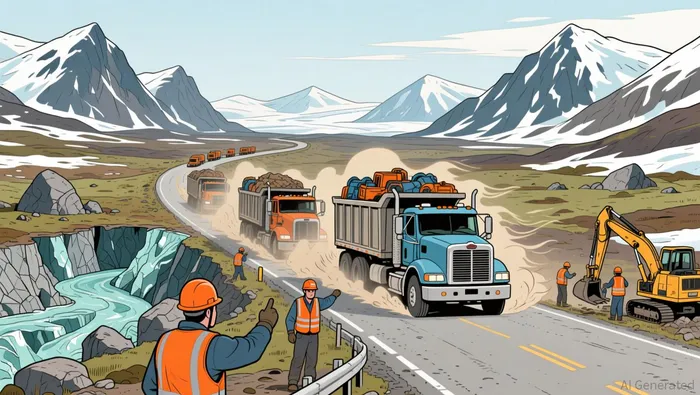
However, the rapid expansion of LNG projects has had unintended consequences. U.S. households paid $12 billion more for natural gas in the first nine months of 2025 compared to the previous year, as exports drove up domestic prices. Additionally, all operational LNG terminals have faced violations of federal pollution limits, raising environmental and public health concerns.
Nuclear Energy: A Strategic Investment in Grid Reliability
While fossil fuels dominate the administration's agenda, nuclear energy has received targeted support to address grid reliability amid surging electricity demand. The DOE allocated $1 billion to restart a Pennsylvania nuclear power plant and $800 million to TVA and Holtec for small modular reactor development. The administration's goal of expanding nuclear capacity from 100 GW in 2024 to 400 GW by 2050 reflects a recognition of nuclear power's role in decarbonizing the grid while maintaining baseload capacity.
This focus on nuclear energy is driven by the rise of AI data centers, which are projected to triple electricity demand by 2040. Despite Trump's skepticism toward renewables, the Energy Information Administration forecasts that solar, wind, and battery storage will supply most of the anticipated demand growth over the next decade. This suggests that even under a fossil-fuel-centric policy, the grid's decarbonization trajectory remains intact, albeit at a slower pace.
Critical Minerals and Supply Chain Reshoring
The administration's emphasis on energy independence extends to securing domestic supply chains for critical minerals. A $355 million funding package was allocated for domestic lithium carbonate production, including a restructuring of a loan to Lithium Americas. These efforts aim to reduce reliance on foreign sources, particularly China, for materials essential to energy technologies and advanced manufacturing.
The Ambler Road Project, which grants access to critical minerals in Alaska, exemplifies this strategy. By unlocking access to copper, cobalt, and gallium, the project supports both energy infrastructure and industrial applications. Such investments are critical for national security, as highlighted by the administration's reclassification of coal as a strategic national asset.
Renewable Energy: Headwinds and Resilience
Despite the administration's focus on traditional energy, renewable sources continue to gain traction. In March 2025, fossil fuels fell below 50% of U.S. electricity generation for the first time on record, driven by record contributions from wind and solar power. However, the administration's rollback of subsidies and tax credits for renewables, including the One Big Beautiful Bill Act, has created uncertainty for the sector.
The Rhodium Group's Taking Stock 2025 report warns that the policy shift could slow decarbonization efforts, with natural gas and coal contributing more to the grid than previously projected. Yet, the EIA notes that solar power production is expected to increase by a third in 2025 and nearly 20% in 2026, underscoring the sector's resilience. This duality-policy headwinds versus market momentum-highlights the complexity of investing in renewables under Trump's agenda.
Economic and Market Implications
The administration's policies have yielded mixed economic outcomes. Deregulation and reduced subsidies have saved consumers $11 billion in costs, including $500 million in gas savings by Christmas 2025. Record energy production and grid stability have bolstered domestic energy dominance, while reshoring mineral supply chains aim to insulate the economy from global shocks.
However, the Rhodium Group cautions that the rollback of EPA regulations could weaken emission reductions by 2040, with power sector emissions potentially rising by 8% from 2030 to 2040. This underscores the long-term risks of prioritizing short-term economic gains over climate goals.
Conclusion: Navigating the New Energy Paradigm
Trump's 2025 energy policy presents a clear-eyed opportunity for investors willing to navigate its complexities. Fossil fuel infrastructure, nuclear energy, and critical minerals offer tangible returns, supported by regulatory tailwinds and strategic investments. Yet, the resilience of renewables and the looming challenges of climate policy cannot be ignored.
For investors, the key lies in balancing short-term gains with long-term sustainability. While the administration's focus on energy independence may favor traditional sectors, the underlying trends-rising electricity demand, technological innovation, and global decarbonization-will continue to shape the energy landscape. As the U.S. grapples with its energy future, the interplay between policy, market forces, and environmental imperatives will define the next chapter of domestic energy investment.







Comentarios
Aún no hay comentarios