
Tidewater Midstream's Strategic Expansion into the Western Pipeline System: A Case Study in Midstream Consolidation and Infrastructure Resilience
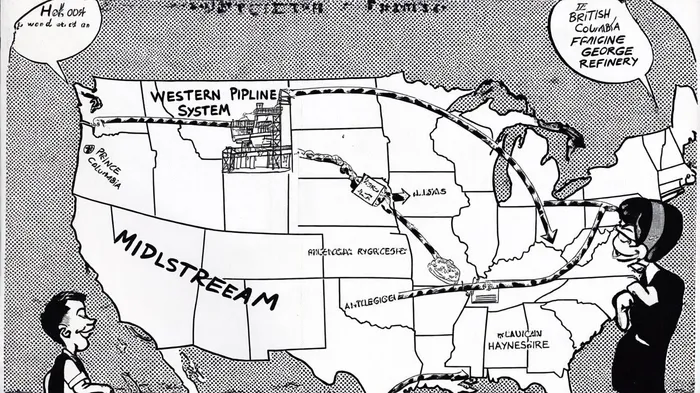
The midstream energy sector in 2025 is undergoing a profound transformation, driven by a relentless pursuit of scale, efficiency, and resilience in the face of volatile energy markets and evolving policy landscapes. TidewaterTDW-- Midstream and Infrastructure Ltd.'s recent acquisition of the North Segment of the Western Pipeline System from Pembina Pipeline CorporationPBA-- exemplifies this trend. This $1.2 million cash transaction, coupled with the assumption of $30 million in future abandonment liabilities, underscores Tidewater's strategic pivot toward vertical integration and infrastructure optimization[1]. The Western Pipeline, a 377 km crude oil conduit linking the Prince George Refinery (PGR) to supply sources in Northeastern British Columbia, is expected to enhance feedstock procurement and reduce operational costs at the refinery[3]. This move aligns with broader industry dynamics, where midstream companies are consolidating assets to secure logistical advantages and stabilize cash flows in an era of heightened capital discipline[2].
Midstream Consolidation: A Catalyst for Infrastructure Value
The midstream sector has witnessed a surge in mergers and acquisitions (M&A) over the past 18 months, with deal values exceeding $260 billion globally[4]. This consolidation is not merely a response to short-term market pressures but a strategic recalibration to address long-term challenges. As noted by PwC in its 2025 midyear energy deals outlook, companies are prioritizing infrastructure-focused transactions that bundle gathering systems, processing plants, and takeaway pipelines to unlock synergies[4]. For instance, Energy Transfer's $3.25 billion acquisition of WTG Midstream and Phillips 66's $2.2 billion purchase of EPIC NGL highlight the sector's shift toward vertical integration, enabling operators to control offtake and reduce exposure to commodity price swings[1].
Tidewater's acquisition of the Western Pipeline fits this pattern. By integrating the pipeline into its downstream operations, the company aims to eliminate third-party transportation costs and streamline crude supply logistics for the PGR. According to Tidewater's press releases, the transaction is projected to yield “meaningful operational efficiencies” and improve cost management at the refinery[2]. This aligns with industry-wide trends, where midstream players are leveraging scale to reduce unit costs and enhance margins. For example, Enbridge's $14 billion acquisition of Dominion Energy's gas utilities in late 2023 diversified its revenue base and bolstered cash flow predictability, a critical factor in an era of energy affordability concerns[5].
Cash Flow Stability in a Fragmented Market
The financial implications of midstream consolidation are equally compelling. As highlighted by RBN Energy, companies with robust balance sheets and self-funding models are better positioned to navigate economic cycles and regulatory uncertainties[6]. Tidewater's recent financial performance, however, reveals a mixed picture. For the second quarter of 2025, the company reported a net loss of $16.3 million, driven by declining refined product margins and operational constraints[7]. Yet, its acquisition of the Western Pipeline is expected to mitigate these challenges by reducing feedstock costs and improving throughput at the PGR.
Broader industry data reinforces the potential for cash flow stabilization through consolidation. Western MidstreamWES-- Partners, for instance, has outlined a $400–450 million investment plan for 2025–2027, including the Pathfinder pipeline to transport produced water in the Delaware Basin[1]. Such projects, which align with growing demand for infrastructure in unconventional resource plays, are projected to generate stable returns through long-term take-or-pay contracts. Similarly, Tidewater's focus on optimizing its existing asset base—such as the sale of non-core assets like the Sylvan Lake gas processing facility—demonstrates a disciplined approach to capital allocation[7].
Policy Tailwinds and Long-Term Outlook
The Trump administration's pro-business energy policies, including the reopening of LNG export permits and streamlined compliance timelines, have further catalyzed midstream investment[1]. Natural gas infrastructure, in particular, has emerged as a focal point, given its role in supporting AI-driven data center growth and the transition to cleaner energy. For Tidewater, the Western Pipeline's integration into its operations not only enhances crude supply reliability but also positions the company to capitalize on rising demand for natural gas in British Columbia's energy mix.
However, challenges remain. Tidewater's elevated debt-to-EBITDA ratio of 7.63 and a negative ROE of -17.01% for the last 12 months highlight the need for continued cost discipline and asset optimization[7]. The company's progress on non-core asset sales—exceeding $37 million year-to-date—suggests a commitment to deleveraging and improving liquidity[7]. If successful, these efforts could bolster investor confidence and align Tidewater's valuation metrics with industry peers, which command EBITDA multiples of 5x–6.5x depending on scale[8].
Conclusion
Tidewater Midstream's acquisition of the Western Pipeline System is emblematic of a broader industry shift toward consolidation, driven by the imperative to enhance infrastructure value and cash flow stability. While the company faces near-term financial headwinds, its strategic focus on vertical integration, cost optimization, and policy-aligned investments positions it to navigate the evolving energy landscape. As midstream players continue to consolidate and refine their asset bases, the sector's ability to deliver resilient returns will hinge on disciplined execution and alignment with long-term energy transition goals.





Comentarios
Aún no hay comentarios