
Tariffs and Tumult: Navigating U.S.-Brazil Trade Wars in Global Grain Markets
The U.S. imposition of a 50% tariff on Brazilian agricultural exports, effective August 1, 2025, marks a pivotal escalation in trade tensions with profound implications for global grain markets. This policy, framed as retaliation for “unfair trade practices,” risks destabilizing supply chains, reshaping commodity prices, and altering the competitive landscape for farmers and traders. For investors, the interplay of geopolitical dynamics, currency fluctuations, and shifting trade flows presents both opportunities and pitfalls.
The Weak Real: A Hidden Catalyst for Brazilian Competitiveness
While the tariffs aim to punish Brazilian exporters, the devaluation of the Brazilian real—projected to weaken to BRL 5.90/USD by year-end—could paradoxically boost the global competitiveness of its agricultural commodities. 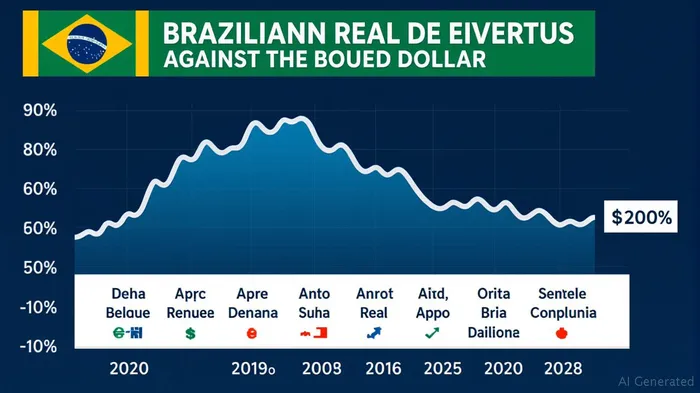 . A weaker real reduces the dollar cost of Brazilian exports, enabling farmers to undercut rivals in Europe and Asia even after tariffs. For instance:
- Soybeans: Brazil's dominant crop faces U.S. tariffs, but its cost advantage in Asia and the Middle East could expand. China, the world's largest soy importer, may deepen ties with Brazil over U.S. volatility.
- Corn: U.S. corn prices have already dropped 23% year-on-year, and Brazilian corn—cheaper in dollar terms—could further erode U.S. market share in regions like Southeast Asia.
. This data underscores how currency dynamics can offset tariff impacts, rewarding investors in Brazilian agribusiness equities like JBSJBS-- (JBSS3.SA) or BRFBRFS-- (BRFS3.SA), which benefit from stronger export volumes despite trade barriers.
U.S. Corn Dominance Under Siege
The U.S. has long dominated global corn exports, but the tariffs threaten this position. Brazil's corn, now cheaper in dollar terms, could attract buyers in regions where U.S. prices are inflated by domestic droughts and trade disputes. The CEPEA ESALQ Corn Index's 23% decline in Q2 2025 highlights the pressure U.S. farmers face:
- Competitive Displacement: U.S. corn exporters may lose ground to Brazilian rivals in markets like Egypt and Indonesia, where price sensitivity is acute.
- Input Costs: U.S. livestock producers reliant on corn feed could face higher costs, squeezing margins and incentivizing alternative protein sources.
. This trend line reveals the erosion of U.S. dominance, a shift that could accelerate if Brazil's real weakens further.
Geopolitical Risks: South America's Rising Market Power
The tariffs risk triggering a broader realignment in global grain trade. South American exporters, including Argentina and Paraguay, may band together to leverage their combined production capacity, sidelining U.S. influence. Meanwhile, Brazil's push to finalize trade deals with the EU and Mercosur partners could solidify its position as Asia's preferred supplier.
Investors should monitor:
- Soybean ETFs: Funds like the Teucrium Soybean Fund (SOY) could gain as Brazil's dominance in soy exports grows.
- Agribusiness Stocks: Companies with exposure to Brazilian logistics (e.g., railroads, ports) or commodity trading (e.g., Cargill) may benefit from higher trade volumes.
Risks and Considerations
- Currency Volatility: A weaker real could amplify inflation in Brazil, leading to higher input costs for farmers.
- Retaliation Risks: Brazil might impose countervailing duties on U.S. goods, prolonging the trade war.
- Climate Shocks: Droughts or pests (e.g., the New World screwworm) could disrupt U.S. and Brazilian production alike.
Investment Strategy: Play the Shift, Hedge the Risks
- Long Soybeans/Corn: Consider futures or ETFs (e.g., DBC for commodities) to capitalize on price increases driven by supply disruptions.
- Brazilian Agribusiness: Invest in firms like SuzanoSUZ-- (SUZB3.SA) or WEG (WEGE3.SA), which benefit from export diversification.
- U.S. Alternatives: Short U.S. agricultural ETFs (e.g., MOO) if corn prices slump due to lost market share.
Conclusion
The U.S.-Brazil tariff war is a microcosm of global trade's fragility in an era of geopolitical fragmentation. While the immediate losers may be Brazilian exporters of coffee and orange juice—sectors with limited diversification options—the long-term winners could be South American agribusinesses and investors positioned to exploit currency and commodity shifts. For now, the real's decline and Brazil's strategic pivot to Asia offer a compelling thesis for risk-tolerant investors—provided they stay vigilant to the risks of prolonged trade strife.
. This data could be the key to unlocking the next phase of returns in global grain markets.





Comentarios
Aún no hay comentarios