
Tariff Turbulence: How Trump's Trade Policies Are Upending Auto Markets and Investor Confidence
The U.S. automotive sector is bracing for a storm. On May 5, 2025, Ford Motor CompanyF-- withdrew its full-year financial guidance, citing “the potential for future or increased tariffs in the U.S.” as a critical risk. This followed President Trump’s April 2025 announcement of a 25% tariff on imported vehicles and auto parts—a policy that has sent shockwaves through global supply chains and Wall Street. 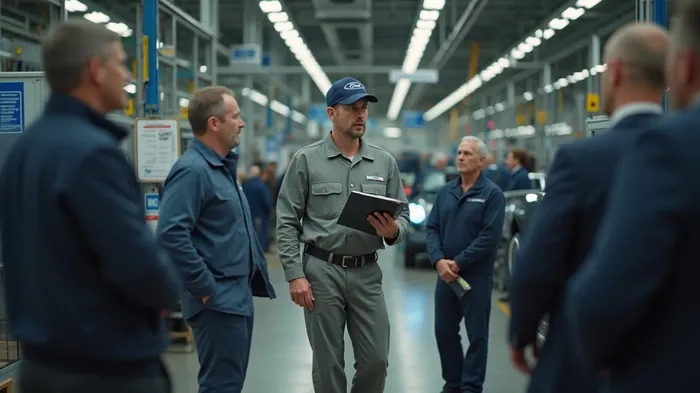 . As stock futures for automotive companies slide and investor confidence wavers, the question looms: How will the auto industry—and its investors—navigate this turbulent landscape?
The Tariff Tsunami: Structure and Impact
Trump’s tariff regime, implemented under Section 232 of the Trade Expansion Act, imposes a 25% duty on imported vehicles and parts. To mitigate some costs, automakers can claim offsets: rebates equal to 3.75% of the MSRP of U.S.-assembled vehicles in the first year, tapering to 2.5% in the second. However, these offsets apply only to parts used in domestic assembly, leaving automakers exposed to rising material costs and supply chain bottlenecks.
Ford estimates tariffs will reduce its 2025 EBIT by $1.5 billion, even after offsetting $1 billion in costs through supply chain adjustments. The automaker’s first-quarter results reflect this strain: adjusted EBIT fell to $1.02 billion, a 63% drop from 2024, despite record revenue of $40.7 billion. .
Industry Divide: Winners and Losers
The policy has created stark contrasts. Ford and GM, which sources 80% of U.S. vehicles domestically, have structural advantages over rivals reliant on foreign imports. Yet, even these companies face headwinds:
- Ford Blue (ICE vehicles): EBIT plummeted 90% to $96 million, as pricing wars and supply chain costs bite.
- Ford Model e (EVs): Losses narrowed to $849 million, but scaling remains a challenge.
- Ford Pro (commercial vehicles): Resilient with $1.31 billion EBIT, benefiting from strong truck demand.
Meanwhile, General Motors, which projects a $4–5 billion tariff hit, has suspended stock buybacks and delayed investor calls. Analysts note the broader auto sector’s vulnerability: a $93.5 billion 2024 trade deficit in auto parts and a 34% decline in U.S. parts manufacturing jobs since 2000 underscore the industry’s reliance on foreign supply chains.
Market Reactions: Fear and Uncertainty
The ripple effects extend beyond automakers. . As companies like UPS and Apple also withdraw guidance, investors are pricing in systemic risks. Key concerns include:
1. Supply Chain Fragility: Delays in securing rare earth materials and microchips could amplify costs.
2. Consumer Backlash: Tariffs may add $2,500–$20,000 to vehicle prices, risking demand collapse.
3. Geopolitical Risks: Retaliatory tariffs and trade wars could destabilize global markets.
The Investment Crossroads
Investors face a critical choice:
- Defensive Plays: Shift toward companies with robust domestic supply chains, like Ford or GM, which have at least partial tariff protection.
- Avoid Export-Heavy Firms: Automakers reliant on Asian or European parts (e.g., Toyota, BMW) face disproportionate risks.
- Monitor Policy Shifts: The 90-day tariff pause announced in April 2025 offers a reprieve, but the administration’s next moves are unpredictable.
Conclusion: A Crossroads for U.S. Manufacturing
The data paints a clear picture: Trump’s tariffs have created a lose-lose scenario. While they aim to boost domestic production, the auto industry’s mixed performance and the $1.5 billion hit to Ford’s EBIT highlight the trade-offs. With Michigan’s economy at risk—projected to lose $30 billion in consumer spending—and automakers’ R&D budgets lagging global peers, the long-term costs may outweigh short-term gains.
Investors would be wise to heed Ford’s caution. As the auto sector navigates this tariff-induced turbulence, portfolios should prioritize firms with diversified supply chains and hedged exposure to trade policy risks. The road ahead is uncertain, but one thing is clear: the era of free-flowing global automotive trade is over.
. The numbers speak louder than any executive’s guidance: in an era of tariff-driven volatility, prudence—not optimism—is the safest bet.





Comentarios
Aún no hay comentarios