
Strategic Yield Optimization via DeFi Integration for Institutional Bitcoin Portfolios
The evolution of BitcoinBTC-- from a speculative asset to a strategic treasury allocation has reached a pivotal inflection point. Institutional investors, once content to treat Bitcoin as a "digital gold" reserve, are now actively seeking yield through decentralized finance (DeFi) protocols. This shift reflects both the maturation of the crypto ecosystem and the relentless pursuit of returns in a low-interest-rate environment.
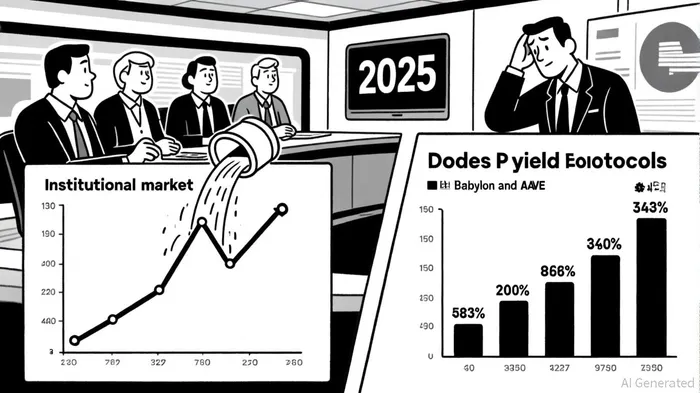
According to a report by CoinDesk, institutional Bitcoin portfolios in 2025 are increasingly adopting DeFi yield strategies, leveraging platforms like Rootstock and BabylonBABY-- to generate returns while maintaining self-custody. Babylon's innovation-allowing Bitcoin to secure proof-of-stake networks via staking-has been particularly transformative. By issuing liquid staking tokens such as LBTC through protocols like LombardBARD-- Finance, institutions can further compound their yields within DeFi ecosystems, as noted by Analytics Insight. Meanwhile, wrapped BitcoinWBTC-- variants (WBTC, cbBTC) enable participation in EthereumETH-- and Solana-based protocols, broadening access to liquidity pools and lending markets, a point also highlighted by Analytics Insight.
The institutional embrace of Bitcoin has been turbocharged by regulatory developments. The approval of Bitcoin ETFs, notably BlackRock's IBIT, has unlocked a flood of capital, with $6.96 billion in inflows recorded in 2025 alone, according to CoinDesk. This trend is not merely speculative: companies like MicroStrategy have redefined Bitcoin's role in corporate treasuries. As of December 31, 2024, MicroStrategy held 447,470 BTC, achieving a 2.9% yield in QTD 2025 and revising its 2025 annual target to a minimum of 15%, per the company's financial release. Such performance metrics underscore the growing sophistication of institutional strategies, blending traditional asset management with blockchain-native tools.
Yet, the economics of these strategies remain contentious. Despite the influx of capital, DeFi yields for Bitcoin remain modest-often under 2%-raising questions about their viability for risk-averse institutions, as CoinDesk observes. AAVEAAVE--, the dominant DeFi lending protocol with $24.4 billion in total value locked (TVL), exemplifies this tension. While it offers scalability and multi-chain flexibility, its returns pale against traditional fixed-income instruments, a discrepancy CoinDesk highlights. This divergence underscores a critical challenge: institutions must balance innovation with prudence, especially as regulatory scrutiny intensifies.
The path forward hinges on the maturation of Bitcoin-native DeFi infrastructure. Platforms prioritizing security, compliance, and interoperability-such as Babylon's staking solutions-are likely to attract further institutional adoption. However, Analytics Insight notes that the sector must address volatility risks and regulatory constraints to sustain growth. For now, the yield-seeking frenzy reflects a broader paradigm shift: Bitcoin is no longer a fringe asset but a cornerstone of diversified institutional portfolios, albeit one that demands careful calibration between ambition and caution.







Comentarios
Aún no hay comentarios