
Strategic Positioning for Resilient Investments Amid U.S. Government Shutdown Uncertainty
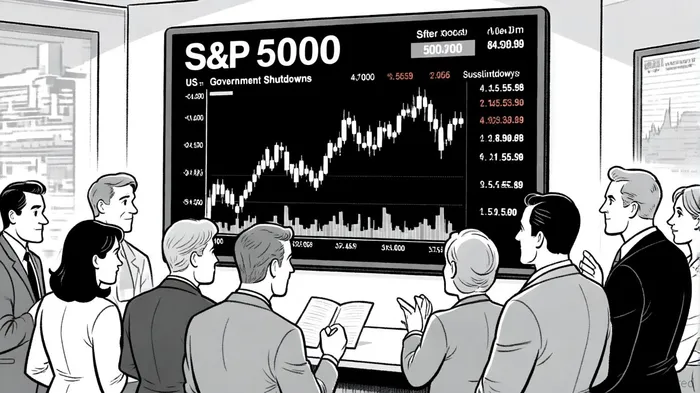
The specter of a partial U.S. government shutdown looms once more, raising questions about its potential impact on financial markets and economic stability. Historical precedents, however, suggest that while such events generate short-term volatility, their long-term consequences for investors are often muted. The challenge lies in distinguishing between transient noise and enduring fundamentals, a task that demands both discipline and strategic foresight.
Market Resilience and Sector-Specific Vulnerabilities
According to a report by Fidelity Institutional, past government shutdowns have typically had limited direct effects on broad equity indices like the S&P 500. For instance, during the 2013 shutdown, the index rose by 3.1%, and in the 12 months following the 2018–2019 shutdown, it surged by 26.2% despite a 35-day closure [1]. This resilience stems from the fact that corporate earnings—the primary driver of stock prices—remain largely unaffected, as non-essential federal services are the only functions disrupted [2].
However, sector-specific impacts are pronounced. Defense and aerospace firms, reliant on federal contracts, often face operational delays. During the 2018–2019 shutdown, companies like Lockheed MartinLMT-- and Raytheon experienced funding freezes [3]. Similarly, healthcare providers and pharmaceutical firms faced disruptions in FDA approvals and Medicare/Medicaid administrative functions [3]. In contrast, defensive sectors such as consumer staples and utilities tend to outperform. Procter & Gamble and Duke Energy, for example, posted gains during past shutdowns, reflecting the enduring demand for essential goods and services [4].
Investor Behavior and the Role of Uncertainty
Investor behavior during shutdowns has historically been characterized by a focus on long-term horizons. As noted by American Century Investments, the S&P 500 has shown positive returns in 12 of the last 21 shutdowns, with gains materializing within 100 days of the event's resolution [5]. This suggests that markets tend to discount the risks of short-term political disruptions, particularly when the broader economic environment remains robust.
A critical concern, however, is the erosion of business and consumer confidence. Prolonged shutdowns can delay the release of key economic data—such as employment and inflation reports—hindering the Federal Reserve's ability to make informed policy decisions [1]. This uncertainty may amplify market volatility, particularly in fixed-income markets, where Treasury auctions remain operational but sentiment could sour if fiscal policy is perceived as unstable [5].
Strategic Positioning: Defensive Holdings and Hedging Mechanisms
For investors seeking to navigate shutdown-related uncertainties, a dual approach of diversification and sector rotation is advisable. Defensive asset classes such as Treasury securities and gold have historically served as safe havens. During the 2018–2019 shutdown, gold prices rose as investors sought refuge from political risk [3]. Similarly, utilities and consumer staples ETFs, such as the Utilities Select Sector SPDR ETF (XLU) and the Consumer Staples Select Sector SPDR ETF (XLP), have demonstrated resilience during periods of market stress [6].
For those inclined to tactical adjustments, sector rotation strategies can enhance risk-adjusted returns. The Invesco Food & Beverage ETF (PBJ) and Vanguard Dividend Appreciation ETF (VIG) offer exposure to sectors with stable demand, even in turbulent environments [6]. Conversely, investors should exercise caution with sectors like defense and financials, which are more susceptible to funding delays and regulatory bottlenecks [3].
Conclusion: Prioritizing Long-Term Fundamentals
While a partial government shutdown may introduce temporary volatility, its impact on long-term investment outcomes remains limited. The broader economy and financial markets have historically absorbed such disruptions, with GDP losses typically temporary and recoverable [4]. Investors are thus well-advised to avoid overreacting to short-term political noise and instead focus on maintaining a diversified, well-balanced portfolio aligned with their long-term goals.
In an era of persistent fiscal uncertainty, resilience lies not in speculative bets but in disciplined adherence to fundamentals. As the adage goes, markets do not punish the patient—they reward them.





Comentarios
Aún no hay comentarios