
Strategic Partnerships as the Engine of Next-Generation Mobility Ecosystems
The transportation and travel sectors are undergoing a profound transformation, driven not by isolated breakthroughs but by the synergies of strategic partnerships. These collaborations are redefining mobility ecosystems, blending technological innovation with sustainability imperatives. For investors, understanding the architecture of these partnerships is critical to identifying where capital can catalyze systemic change.
Aviation: A New Era of Sustainable Flight
The partnership between Delta Air LinesDAL-- and Airbus exemplifies how cross-industry collaboration can accelerate decarbonization. By 2025, the two firms are testing Airbus' fello'fly technology, a formation flying method inspired by geese that reduces CO₂ emissions by at least 5% through wake energy retrieval, according to the Delta–Airbus partnership. This innovation, coupled with Delta's advocacy for Sustainable Aviation Fuel (SAF) and Airbus' hydrogen-powered ZEROe project, underscores a multi-pronged approach to sustainable aviation. Delta's participation in the Minnesota SAF Hub-a coalition aiming to scale SAF production-further illustrates how partnerships can address supply-side bottlenecks in the transition to green fuels, as noted in that announcement.
Such initiatives align with broader industry trends. According to Deloitte's 2025 report, government leaders must prioritize infrastructure resilience and AI-driven mobility solutions to meet climate goals. For investors, aviation's shift toward sustainability is not merely an environmental imperative but a $1.5 trillion opportunity in SAF production and hydrogen infrastructure alone.
Autonomous Driving: Toyota and Waymo's Synergy
In the realm of autonomous vehicles, Toyota's collaboration with Waymo represents a pivotal convergence of hardware and software expertise. By integrating Waymo's autonomous driving software with Toyota's vehicle engineering, the partnership aims to develop a scalable autonomous platform for both shared and personally owned vehicles, according to the Waymo–Toyota partnership. This aligns with Toyota's vision of "zero traffic accidents" and Waymo's ambition to democratize self-driving technology.
The economic implications are significant. Autonomous mobility could reduce transportation costs by up to 40% in urban areas, according to a 2024 McKinsey analysis, while creating new revenue streams in mobility-as-a-service (MaaS). For investors, the key lies in identifying partnerships that address regulatory hurdles and consumer adoption barriers-areas where Toyota and Waymo's combined influence could prove decisive.
Sustainability and Equity: The Role of Government-Industry Alliances
Strategic partnerships are not confined to corporate collaborations. The Federal Transit Administration's Enhancing Mobility Innovation (EMI) grants, for instance, are fostering equity-focused solutions such as integrated fare payment systems and AI-driven demand-response transit, supported by EMI grants. These initiatives, supported by the Biden-Harris Administration's climate-smart transportation agenda, highlight how public-private partnerships can address systemic inequities in mobility access.
Meanwhile, U.S. Travel's Future of Travel Mobility event underscored the importance of biometric systems and AI-driven security in enhancing traveler experiences-points echoed by the FTA program. Such innovations, when paired with infrastructure upgrades, could position the U.S. as a global leader in seamless, secure travel-a market projected to grow at 8% annually through 2030.
Broader Trends: AI, Immersion, and Consumer Demand
Beyond specific partnerships, the sector is being reshaped by AI and immersive technologies. AI-driven personalization is already transforming travel booking and in-flight services, while augmented reality (AR) and virtual reality (VR) are enhancing traveler engagement, as highlighted in the top travel innovation trends. These trends reflect a broader consumer shift toward tech-enhanced, sustainable experiences-a demand that strategic partnerships are uniquely positioned to fulfill.
Conclusion: Investing in the Infrastructure of the Future
The next-generation mobility ecosystem is being built on the bedrock of strategic partnerships. For investors, the challenge lies in distinguishing between fleeting trends and durable collaborations that address systemic challenges. Aviation's decarbonization, autonomous driving's scalability, and equity-focused infrastructure projects represent three pillars of this transformation.
As the PATH Conference 2025 emphasized, innovation in transportation is no longer a zero-sum game, and the Deloitte report underscores that it requires shared goals, shared risks, and shared rewards. Those who invest in partnerships that align with these principles will not only capture market opportunities but also shape the future of mobility itself.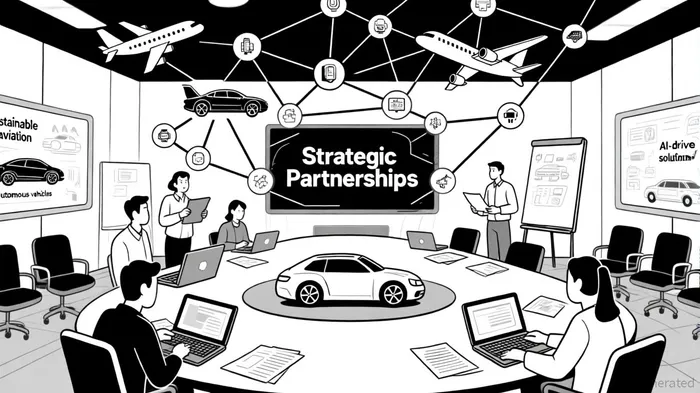







Comentarios
Aún no hay comentarios