
Strategic Partnerships as Catalysts for Autonomous Aviation Adoption: A Global Investment Analysis
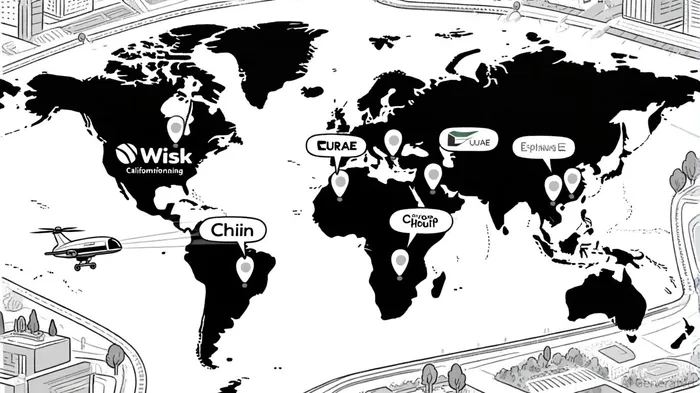
The autonomous aviation sector is undergoing a transformative phase, driven by strategic partnerships that are accelerating infrastructure development, regulatory alignment, and technological innovation. As electric vertical takeoff and landing (eVTOL) aircraft, autonomous air taxis, and advanced air mobility (AAM) systems move closer to commercial deployment, cross-industry collaborations are proving critical to overcoming longstanding barriers. From North America to Asia, these alliances are reshaping the landscape, offering investors a compelling case for long-term growth.
North America: A Hub of Innovation and Infrastructure
In the United States, Wisk Aero has emerged as a leader in autonomous aviation, leveraging partnerships to address infrastructure and regulatory challenges. Its collaboration with the City of Fullerton, California, to develop vertiports and operational frameworks at Fullerton Municipal Airport is a cornerstone of its strategy to integrate autonomous air taxis into urban environments[1]. Complementing this, Wisk's five-year research partnership with NASA focuses on defining air traffic control procedures and safety standards for autonomous flight under Instrument Flight Rules (IFR), a critical step toward scalable operations[4].
Government support has further accelerated progress. The eVTOL Integration Pilot Program (eIPP), launched in September 2025, provides a regulatory fast track for companies like Wisk, Joby AviationJOBY--, and Archer, enabling real-world testing and public-private collaboration[2]. Meanwhile, GE Aerospace's $300 million investment in Beta Technologies underscores the sector's shift toward hybrid-electric solutions, aiming to extend flight ranges and reduce emissions[3]. These initiatives collectively highlight North America's role as a testing ground for AAM ecosystems.
Europe and Asia: Bridging Regulatory and Technological Gaps
Europe and Asia are witnessing a surge in cross-regional partnerships, driven by the need to harmonize standards and address airspace complexity. The International Civil Aviation Organization (ICAO) has deepened collaborations with European aviation leaders to advance AI integration and sustainable aviation fuels, while companies like Destinus showcased autonomous systems at the Paris Air Show 2025, engaging partners from the Middle East and Asia[1].
In China, EHang's recent unmanned eVTOL flight in Benidorm, Spain, demonstrated the viability of urban operations under EASA regulations, while its joint venture with JAC Motors and Guoxian Holdings in Hefei aims to standardize eVTOL manufacturing[4]. Similarly, the UAE's Robo.ai joint venture has positioned the region as a strategic hub for eVTOL operations, leveraging favorable regulations to attract Asian suppliers and investors[4]. These efforts reflect a growing convergence of European and Asian strategies to address technical and regulatory challenges.
Emerging Markets: Expanding the Global Footprint
While North America and Europe dominate headlines, emerging markets are also making strides. In Africa, the Aviation Africa 2025 Summit highlighted Rwanda's pioneering use of Zipline drones for medical deliveries and Kenya's exploration of eVTOLs for urban logistics[5]. South America, meanwhile, has seen ICAO advocate for regional collaboration to align with global sustainability goals, emphasizing partnerships with manufacturers like Embraer and regulators such as Brazil's ANAC[6]. These developments underscore the sector's potential to address mobility gaps in underserved regions.
The Investment Case: Partnerships as a Force Multiplier
Strategic partnerships are not merely facilitating technological progress—they are redefining the economics of autonomous aviation. By pooling resources, companies are reducing R&D costs and accelerating time-to-market. For instance, Delta Air Lines' collaboration with Maeve Aerospace to develop hybrid-electric aircraft for regional flights aims to cut fuel consumption by 40%[3], a metric that appeals to both environmental and financial stakeholders.
However, challenges remain. Airspace congestion, public acceptance, and regulatory fragmentation could delay widespread adoption. Yet, the pace of collaboration suggests these hurdles are being addressed incrementally. The passenger-grade autonomous aerial vehicle (AAV) market, for example, is projected to grow at a 27.1% CAGR from 2024 to 2030, driven by partnerships that align technical capabilities with commercial viability[7].
Conclusion
The autonomous aviation sector stands at a pivotal juncture, with strategic partnerships serving as the linchpin for its evolution. From Wisk's vertiport developments to EHang's cross-border manufacturing ventures, these alliances are addressing the multifaceted challenges of adoption. For investors, the key lies in identifying companies and regions where partnerships are not only fostering innovation but also creating defensible market positions. As the industry moves toward commercialization, the winners will be those who have mastered the art of collaboration.





Comentarios
Aún no hay comentarios