
Strategic Industrial Consolidation: Linamar's Acquisition of Aludyne Assets and Its Implications for North American Mobility Markets
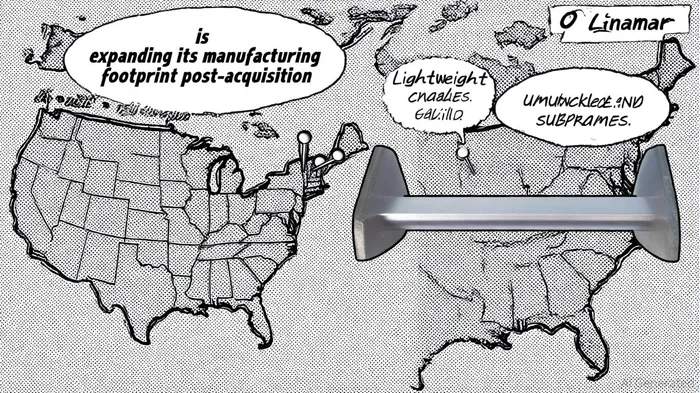
The recent $300 million acquisition of select Aludyne assets by Linamar Corporation represents a pivotal moment in the ongoing consolidation of the North American automotive and aerospace supply chains. This transaction, announced in late September 2025, underscores a broader industry trend toward vertical integration and localized production, driven by shifting trade dynamics and the imperative for supply chain resilience, according to a GlobeNewswire release. For Linamar, a Canadian industrial conglomerate with a global footprint, the deal is not merely a financial transaction but a strategic recalibration to strengthen its position in propulsion-agnostic structural components-a category critical to both traditional and emerging mobility technologies.
Strategic Rationale: Expanding Capabilities and Geography
Aludyne, a Tier 1 automotive supplier, specializes in lightweight aluminum chassis and structural technologies, including knuckles, subframes, and axle housings, the GlobeNewswire release notes. These capabilities align seamlessly with Linamar's Structures Group, which operates within its broader Mobility Segment. By acquiring Aludyne's North American operations, Linamar gains access to advanced manufacturing processes that cater to the growing demand for weight-reduction solutions in vehicles-a priority for automakers navigating stringent emissions regulations and the transition to electric vehicles (EVs).
The acquisition also expands Linamar's geographic reach, particularly in the United States, where proximity to customers is increasingly vital. As stated by Linamar in its official announcement, the deal enhances its ability to "support customers locally," according to an Investing.com report. This localized production model not only reduces lead times but also mitigates risks associated with global supply chain disruptions.
Financial Prudence and Operational Integration
Linamar's decision to fund the acquisition using existing liquidity and cash reserves, rather than debt, reflects fiscal discipline. This approach preserves financial flexibility, allowing the company to pursue further strategic opportunities without overleveraging, the GlobeNewswire release states. The integration of Aludyne's assets into the Structures Group is expected to be seamless, given the complementary nature of their technologies. Analysts note that this synergy could accelerate Linamar's ability to scale its offerings in structural components, a segment projected to grow as automakers prioritize modular, adaptable platforms for both internal combustion and electric vehicles.
Industrial Consolidation and Market Positioning
The Aludyne acquisition is emblematic of a larger wave of industrial consolidation in the automotive sector. As global trade frictions persist and nearshoring gains momentum, firms that can offer end-to-end solutions with localized capabilities are gaining a competitive edge. Linamar's move positions it to capitalize on this trend, particularly in North America, where the U.S. government's Inflation Reduction Act (IRA) has incentivized domestic production of EV components. While Aludyne's expertise is currently focused on automotive applications, its structural technologies could also find relevance in aerospace, a sector where lightweight materials are paramount.
Conclusion: A Win for Resilience and Innovation
Linamar's acquisition of Aludyne's North American assets is a masterclass in strategic industrial consolidation. By expanding its manufacturing footprint, enhancing its technological portfolio, and reinforcing its commitment to localized production, Linamar is well-positioned to navigate the complexities of the modern mobility landscape. For investors, this deal signals a company that is not only reactive to market shifts but proactively shaping them. As the automotive and aerospace sectors continue to evolve, Linamar's propulsion-agnostic approach and focus on structural innovation may well become a blueprint for success.







Comentarios
Aún no hay comentarios