
The Strategic Implications of SPIE's European Tesla BESS Framework for Clean Energy Infrastructure
The energy transition in Europe is accelerating, driven by the urgent need to decarbonize power systems and integrate renewable energy sources. At the forefront of this transformation is SPIE, a global leader in energy infrastructure, which has recently solidified its strategic position through a landmark framework agreement with TeslaTSLA-- for the deployment of battery energy storage systems (BESS) across Europe. This collaboration, effective December 15, 2025, represents a pivotal step in scaling clean energy infrastructure while unlocking long-term shareholder value.
Strategic Alignment with the Energy Transition
SPIE's partnership with Tesla is not merely a commercial agreement but a strategic alignment with the European Union's broader energy transition goals. By standardizing legal and operational conditions for Tesla Megapack projects across its European subsidiaries, SPIE is streamlining the deployment of large-scale BESS systems, which are critical for balancing intermittent renewable energy supply and ensuring grid stability. 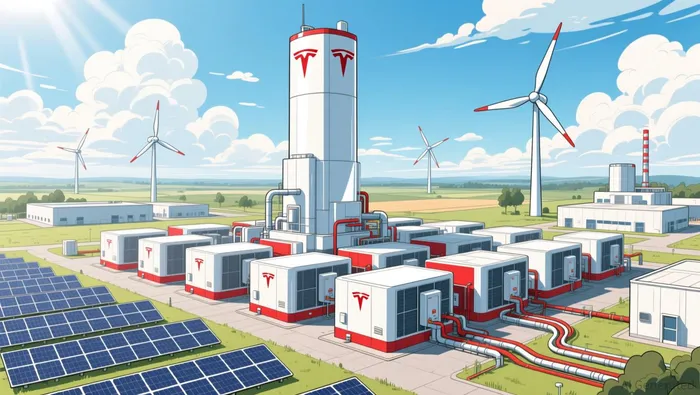 For instance, the Mufasa project in the Netherlands-a 1.4 GWh system comprising 372 Tesla Megapacks-will become one of the largest battery storage sites in Europe, directly supporting the region's shift toward a low-carbon grid. Similarly, a 100 MW/200 MWh BESS unit in France's Eure department, set to be commissioned by late 2026, underscores SPIE's role in addressing energy intermittency and enhancing resilience.
This framework agreement also reflects SPIE's commitment to leveraging cutting-edge technology. Tesla's Megapack, with its modular design and advanced software, offers a scalable solution for grid-scale storage, enabling SPIE to deliver projects that align with the EU's ambition to integrate renewable energy more efficiently. As the International Monetary Fund has noted, an integrated European electricity system is essential for balancing supply and demand across the continent, a goal SPIE's projects actively advance.
Market Dynamics and Growth Projections
The European BESS market is poised for exponential growth, driven by policy tailwinds and the rising share of renewables in the energy mix. According to market forecasts, the region's BESS market is expected to expand from $18.1 billion in 2024 to $87.34 billion by 2033, a compound annual growth rate (CAGR) of nearly 18% according to analysis. Tesla, already a dominant player in this space, is projected to grow its energy storage deployments by at least 50% in 2025, with its Megapack and Powerwall systems leading the charge according to industry reports. SPIE's partnership positions it to capitalize on this growth, as Tesla's technology accounts for 15% of the global BESS market in 2024, with an even stronger 39% share in North America according to market data.
For SPIE, the collaboration is a strategic bet on high-margin infrastructure projects. Battery storage systems, particularly those deployed at scale, offer attractive profitability due to their role in grid services and ancillary revenue streams. SPIE's Q3 2025 earnings report highlights the company's growing focus on such projects, with revenue up 5.4% year-over-year, partly driven by acquisitions in key sectors like industrial cooling and digital transport infrastructure. These synergies reinforce SPIE's ability to deliver innovative solutions while maintaining technical and operational excellence.
Competitive Advantages and Shareholder Value
SPIE's competitive advantages in the European energy storage market are multifaceted. First, its geographic footprint in Germany and Northwestern Europe-regions at the vanguard of the energy transition-provides a natural advantage. Second, the company's recent acquisitions have expanded its expertise in critical areas such as nuclear energy and digital infrastructure, enhancing its value proposition for complex BESS projects. Third, the Tesla framework agreement allows SPIE to differentiate itself by offering standardized, high-performance solutions that reduce deployment risks for clients.
From a shareholder value perspective, the framework agreement aligns with SPIE's long-term financial strategy. Large-scale BESS projects typically generate stable cash flows over their operational lifetimes, contributing to predictable revenue streams. Moreover, the growing demand for grid flexibility-exacerbated by the phase-out of fossil fuels and the volatility of renewable energy-creates a durable market for SPIE's services. While specific revenue projections for the Tesla BESS framework were not disclosed, the broader market trends suggest significant upside. For example, Tesla's energy business alone generated $10.09 billion in revenue in 2024, with storage deployments reaching 11 GWh in the final quarter according to industry analysis. SPIE's role as a key integrator in this ecosystem positions it to capture a meaningful share of this growth.
Risks and Challenges
Despite the optimism, risks persist. Global trade uncertainties and potential changes in U.S. federal tax credits could impact Tesla's energy business, indirectly affecting SPIE's projects. Additionally, Chinese BESS integrators are gaining ground in Europe, with their market share rising by 67% year-over-year. SPIE must continue to innovate and maintain cost efficiencies to retain its competitive edge.
Conclusion
SPIE's European Tesla BESS framework is a masterstroke in the energy transition. By combining Tesla's technological leadership with SPIE's operational expertise, the partnership accelerates the deployment of critical infrastructure while generating long-term shareholder value. As the EU races to meet its climate targets, SPIE's role in scaling BESS systems will not only enhance grid resilience but also position the company as a cornerstone of the continent's clean energy future. Investors would do well to recognize the strategic and financial implications of this collaboration, which exemplifies how infrastructure innovation can drive both environmental progress and profitability.





Comentarios
Aún no hay comentarios