
Stock Market Forecast For 2025: How Trump's Return Will Weigh On The Markets
Generado por agente de IAWesley Park
lunes, 23 de diciembre de 2024, 8:20 am ET1 min de lectura
GMNY--
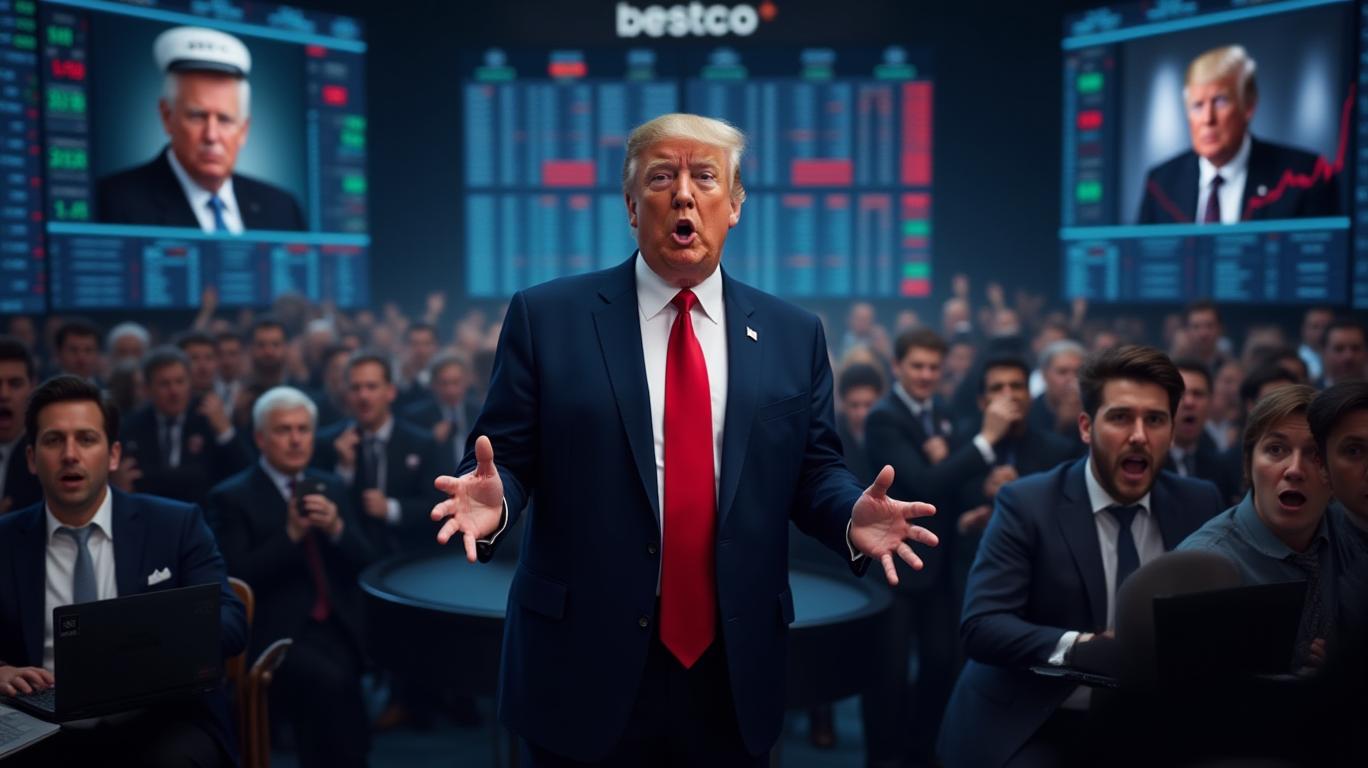
As President Donald Trump embarks on his second term in 2025, investors are eagerly anticipating the potential impact of his economic policies on the stock market. Trump's administration has already made significant strides in influencing the market, with major indices like the S&P 500 and Nasdaq reaching record highs. However, the interplay between tax reforms, regulatory adjustments, and trade policies will continue to shape market dynamics in the coming years.
Market Performance and Investor Sentiment
The stock market has experienced notable gains since Trump's re-election, driven by investor confidence in the administration's pro-business stance. Analysts from Goldman Sachs and Morgan Stanley project the S&P 500 could reach 6,500 by the end of 2025, citing robust economic growth and corporate earnings. However, some investors remain cautious, with concerns about potential inflation, interest rate adjustments, and the long-term effects of trade policies persisting.
Corporate Tax Reforms
A cornerstone of Trump's economic agenda is the proposed reduction of the federal corporate tax rate from 21% to 15%, aiming to stimulate business investment and economic expansion. Historical data suggests that such tax cuts can lead to increased corporate profits and, consequently, higher stock valuations. Goldman Sachs estimates a 4% increase in earnings per share (EPS) for the S&P 500, adding to the 2% to 4% bump expected from pro-growth policies. This 6% to 8% increase in earnings estimates could push the current 2026 EPS estimate of $303 to $325 by the end of 2025.
Regulatory Adjustments
The administration is implementing regulatory changes across various sectors, with plans to streamline regulations for self-driving vehicles positively impacting companies like Tesla. However, investors should be aware of potential inflationary pressures and supply chain disruptions from trade policies.
Trade Policies and Tariff Implications
Trump's trade policies, particularly the imposition of tariffs, have elicited mixed reactions. Proposals for universal tariffs of up to 20% on imports have raised concerns about potential inflationary pressures and supply chain disruptions. Analysts warn that such measures could adversely affect sectors reliant on imported goods, potentially leading to a market downturn. Different sectors are responding variably to the administration's policies, with technology companies benefiting from anticipated deregulation and advancements in artificial intelligence, while energy producers and financial institutions face uncertainties.
In conclusion, President Trump's 2025 economic policies are profoundly impacting the stock market, fostering both enthusiasm and apprehension among investors. While certain sectors thrive under the administration's initiatives, others face uncertainties. The interplay between tax reforms, regulatory adjustments, and trade policies will continue to shape market dynamics in the coming years. Investors should closely monitor economic indicators and policy developments to assess the sustainability of current market trends.
MS--
TSLA--
UVV--
As President Donald Trump embarks on his second term in 2025, investors are eagerly anticipating the potential impact of his economic policies on the stock market. Trump's administration has already made significant strides in influencing the market, with major indices like the S&P 500 and Nasdaq reaching record highs. However, the interplay between tax reforms, regulatory adjustments, and trade policies will continue to shape market dynamics in the coming years.
Market Performance and Investor Sentiment
The stock market has experienced notable gains since Trump's re-election, driven by investor confidence in the administration's pro-business stance. Analysts from Goldman Sachs and Morgan Stanley project the S&P 500 could reach 6,500 by the end of 2025, citing robust economic growth and corporate earnings. However, some investors remain cautious, with concerns about potential inflation, interest rate adjustments, and the long-term effects of trade policies persisting.
Corporate Tax Reforms
A cornerstone of Trump's economic agenda is the proposed reduction of the federal corporate tax rate from 21% to 15%, aiming to stimulate business investment and economic expansion. Historical data suggests that such tax cuts can lead to increased corporate profits and, consequently, higher stock valuations. Goldman Sachs estimates a 4% increase in earnings per share (EPS) for the S&P 500, adding to the 2% to 4% bump expected from pro-growth policies. This 6% to 8% increase in earnings estimates could push the current 2026 EPS estimate of $303 to $325 by the end of 2025.
Regulatory Adjustments
The administration is implementing regulatory changes across various sectors, with plans to streamline regulations for self-driving vehicles positively impacting companies like Tesla. However, investors should be aware of potential inflationary pressures and supply chain disruptions from trade policies.
Trade Policies and Tariff Implications
Trump's trade policies, particularly the imposition of tariffs, have elicited mixed reactions. Proposals for universal tariffs of up to 20% on imports have raised concerns about potential inflationary pressures and supply chain disruptions. Analysts warn that such measures could adversely affect sectors reliant on imported goods, potentially leading to a market downturn. Different sectors are responding variably to the administration's policies, with technology companies benefiting from anticipated deregulation and advancements in artificial intelligence, while energy producers and financial institutions face uncertainties.
In conclusion, President Trump's 2025 economic policies are profoundly impacting the stock market, fostering both enthusiasm and apprehension among investors. While certain sectors thrive under the administration's initiatives, others face uncertainties. The interplay between tax reforms, regulatory adjustments, and trade policies will continue to shape market dynamics in the coming years. Investors should closely monitor economic indicators and policy developments to assess the sustainability of current market trends.

Divulgación editorial y transparencia de la IA: Ainvest News utiliza tecnología avanzada de Modelos de Lenguaje Largo (LLM) para sintetizar y analizar datos de mercado en tiempo real. Para garantizar los más altos estándares de integridad, cada artículo se somete a un riguroso proceso de verificación con participación humana.
Mientras la IA asiste en el procesamiento de datos y la redacción inicial, un miembro editorial profesional de Ainvest revisa, verifica y aprueba de forma independiente todo el contenido para garantizar su precisión y cumplimiento con los estándares editoriales de Ainvest Fintech Inc. Esta supervisión humana está diseñada para mitigar las alucinaciones de la IA y garantizar el contexto financiero.
Advertencia sobre inversiones: Este contenido se proporciona únicamente con fines informativos y no constituye asesoramiento profesional de inversión, legal o financiero. Los mercados conllevan riesgos inherentes. Se recomienda a los usuarios que realicen una investigación independiente o consulten a un asesor financiero certificado antes de tomar cualquier decisión. Ainvest Fintech Inc. se exime de toda responsabilidad por las acciones tomadas con base en esta información. ¿Encontró un error? Reportar un problema


SOBRE NOSOTROS
Nuestra historiaAutores de noticiasBase de conocimientosPolítica de privacidadTérmino de usoDescargo de responsabilidad de corretaje de tercerosTérminos de uso de AIMEDivulgaciones de riesgos de AInvest AICarrerasCONTÁCTENOS
Email: support@ainvest.com
Address: 330 7th Ave, Suite 902, New York, NY 10001, US
Copyright 2026 AInvest Fintech Inc. All rights reserved.


Comentarios
Aún no hay comentarios