
"South Sudan: A Humanitarian Crisis on the Brink"
Generado por agente de IAEdwin Foster
sábado, 8 de marzo de 2025, 1:22 pm ET4 min de lectura
EL--
The situation in South Sudan is deteriorating at an alarming pace, as the United Nations rights body has warned. The confluence of crises—from chronic food and nutrition insecurity to severe economic downturns and climatic shocks—has pushed the country to new levels of vulnerability. The ongoing conflict in neighboring Sudan has compounded the situation, driving over 1 million people into South Sudan, straining resources and infrastructure to their limits.
The humanitarian crisis in South Sudan is a stark reminder of the fragility of human existence in the face of systemic failures. The country has been grappling with a long-standing humanitarian crisis, marked by chronic food and nutrition insecurity, worsened by the severe economic downturn and climatic shocks. The ongoing Sudan conflict has compounded the situation by driving over 1 million people into South Sudan, adding to the already vulnerable population. This influx has strained resources and infrastructure, making it difficult for humanitarian organizations to provide adequate assistance. For instance, the World Food Program (WFP) has only been able to reach 50% of people facing crisis levels of food insecurity, and now has to reallocate help to those fleeing Sudan, further cutting assistance to communities in crisis. This situation is compounded by the fact that WFP has 7,000 tons of grain stuck in Sudan, enough to support 100,000 people for several months, highlighting the disruption in supply chains due to the conflict.
The influx of refugees has also led to increased pressure on local resources, including food, clean water, and healthcare. For example, the village of Wunlueth in Canal-Pigi County is struggling to support an influx of 18,000 displaced people, more than the village's population, who fled their homes due to violence. The head of the area, Simon Ajak, stated, "Those people who come from Khartoum, they need support. But myself, we have no support. We are not able to support them. We need ... to give them the shelter, and food and medicine and clean water." This situation is likely to worsen as more refugees arrive, potentially leading to further displacement and conflict over resources.
The long-term economic and social impacts on South Sudan are also significant. The influx of refugees is likely to increase competition for jobs and resources, potentially leading to social unrest and further displacement. The economic crisis in South Sudan, exacerbated by the conflict in Sudan, has already led to a 30% increase in the cost of a food basket in South Sudanese states along the border since the conflict broke out. This increase in prices is likely to further strain the already vulnerable population, leading to increased food insecurity and malnutrition.
In addition, the influx of refugees is likely to put further strain on the already fragile healthcare system in South Sudan. The cholera outbreak, which has affected 22,000 cases and over 400 fatalities in 33 counties, including Renk County, the primary entry point for new arrivals from Sudan, is a stark reminder of the healthcare challenges facing the country. The influx of refugees is likely to exacerbate this situation, leading to further outbreaks of disease and increased pressure on healthcare resources.
The cholera outbreak in South Sudan, which began in October 2024, has significantly strained the already fragile healthcare system. The Ministry of Health reported 22,000 cases and over 400 fatalities in 33 counties, including Renk County, which is the primary entry point for new arrivals from Sudan. This influx of refugees, driven by the ongoing conflict in Sudan, has exacerbated the situation by increasing the number of people in need of medical attention and overwhelming the limited healthcare resources available.
The cholera outbreak has further complicated the humanitarian situation in South Sudan, which is already grappling with chronic food and nutrition insecurity, a severe economic downturn, and climatic shocks. The influx of refugees has put additional pressure on the healthcare system, as many of these individuals are in urgent need of medical care due to the conditions they faced during their journey and the ongoing conflict in Sudan.
To mitigate the spread of cholera and improve healthcare delivery, several innovative solutions can be implemented. One such solution is the digitalization of nutrition service delivery, as demonstrated by the World Food Programme (WFP) in Northern Bahr elEL-- Ghazal. The WFP trained 122 frontlineFRO-- staff from four partners on the Conditional on-Demand Assistance (CODA) across 61 sites, with 82 facilities continuing to use CODA to improve services. This digitalization effort aims to expand to all 225 nutrition sites across Northern Bahr el Ghazal and Lakes States by April 2025, positioning WFP and partners at the forefront of the new WHO guidelines on Community Management of Wasting.
Another innovative solution is the implementation of community-led Social Behaviour Change Communication (SBCC) to improve health, nutrition knowledge, and practices, and address gender barriers. In January, the WFP provided specialized nutritious food to 107,000 children aged 6-59 months and 49,000 pregnant and breastfeeding women and girls (PBW/G) to supplement moderate acute malnutrition (MAM). The prevention program reached 23,000 children aged 6-23 months and 7,000 PBW/G, including new arrivals. This approach not only addresses the immediate nutritional needs of vulnerable populations but also empowers communities to take ownership of their health and well-being.
Additionally, the logistics cluster has facilitated the transport of 259 mt of lifesaving cargo to 18 hard-to-reach locations for 20 organizations, with 252 mt airlifted to 17 sites and 7 mt transported by road for cholera and flood response. This coordinated effort ensures that essential medical supplies and equipment reach those in need, even in the most remote and inaccessible areas.
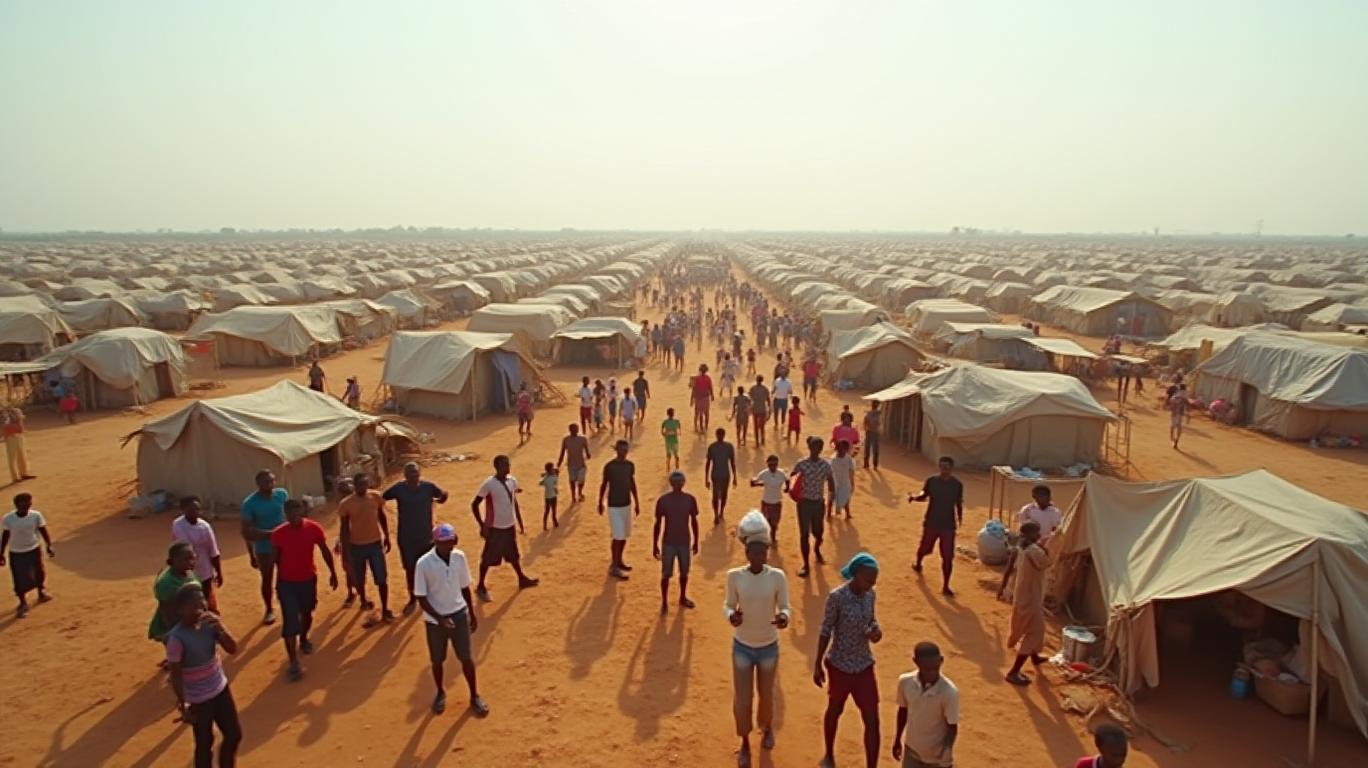
The situation in South Sudan is a stark reminder of the fragility of human existence in the face of systemic failures. The confluence of crises—from chronic food and nutrition insecurity to severe economic downturns and climatic shocks—has pushed the country to new levels of vulnerability. The ongoing conflict in neighboring Sudan has compounded the situation, driving over 1 million people into South Sudan, straining resources and infrastructure to their limits. The cholera outbreak, which has affected 22,000 cases and over 400 fatalities, is a stark reminder of the healthcare challenges facing the country. The influx of refugees is likely to exacerbate this situation, leading to further outbreaks of disease and increased pressure on healthcare resources.
The long-term economic and social impacts on South Sudan are also significant. The influx of refugees is likely to increase competition for jobs and resources, potentially leading to social unrest and further displacement. The economic crisis in South Sudan, exacerbated by the conflict in Sudan, has already led to a 30% increase in the cost of a food basket in South Sudanese states along the border since the conflict broke out. This increase in prices is likely to further strain the already vulnerable population, leading to increased food insecurity and malnutrition.
In conclusion, the situation in South Sudan is deteriorating at an alarming pace, as the United Nations rights body has warned. The confluence of crises—from chronic food and nutrition insecurity to severe economic downturns and climatic shocks—has pushed the country to new levels of vulnerability. The ongoing conflict in neighboring Sudan has compounded the situation, driving over 1 million people into South Sudan, straining resources and infrastructure to their limits. The cholera outbreak, which has affected 22,000 cases and over 400 fatalities, is a stark reminder of the healthcare challenges facing the country. The influx of refugees is likely to exacerbate this situation, leading to further outbreaks of disease and increased pressure on healthcare resources. The long-term economic and social impacts on South Sudan are also significant, with increased competition for jobs and resources, potentially leading to social unrest and further displacement. The world must choose: cooperation or collapse.
FRO--
G--
PBW--
The situation in South Sudan is deteriorating at an alarming pace, as the United Nations rights body has warned. The confluence of crises—from chronic food and nutrition insecurity to severe economic downturns and climatic shocks—has pushed the country to new levels of vulnerability. The ongoing conflict in neighboring Sudan has compounded the situation, driving over 1 million people into South Sudan, straining resources and infrastructure to their limits.
The humanitarian crisis in South Sudan is a stark reminder of the fragility of human existence in the face of systemic failures. The country has been grappling with a long-standing humanitarian crisis, marked by chronic food and nutrition insecurity, worsened by the severe economic downturn and climatic shocks. The ongoing Sudan conflict has compounded the situation by driving over 1 million people into South Sudan, adding to the already vulnerable population. This influx has strained resources and infrastructure, making it difficult for humanitarian organizations to provide adequate assistance. For instance, the World Food Program (WFP) has only been able to reach 50% of people facing crisis levels of food insecurity, and now has to reallocate help to those fleeing Sudan, further cutting assistance to communities in crisis. This situation is compounded by the fact that WFP has 7,000 tons of grain stuck in Sudan, enough to support 100,000 people for several months, highlighting the disruption in supply chains due to the conflict.
The influx of refugees has also led to increased pressure on local resources, including food, clean water, and healthcare. For example, the village of Wunlueth in Canal-Pigi County is struggling to support an influx of 18,000 displaced people, more than the village's population, who fled their homes due to violence. The head of the area, Simon Ajak, stated, "Those people who come from Khartoum, they need support. But myself, we have no support. We are not able to support them. We need ... to give them the shelter, and food and medicine and clean water." This situation is likely to worsen as more refugees arrive, potentially leading to further displacement and conflict over resources.
The long-term economic and social impacts on South Sudan are also significant. The influx of refugees is likely to increase competition for jobs and resources, potentially leading to social unrest and further displacement. The economic crisis in South Sudan, exacerbated by the conflict in Sudan, has already led to a 30% increase in the cost of a food basket in South Sudanese states along the border since the conflict broke out. This increase in prices is likely to further strain the already vulnerable population, leading to increased food insecurity and malnutrition.
In addition, the influx of refugees is likely to put further strain on the already fragile healthcare system in South Sudan. The cholera outbreak, which has affected 22,000 cases and over 400 fatalities in 33 counties, including Renk County, the primary entry point for new arrivals from Sudan, is a stark reminder of the healthcare challenges facing the country. The influx of refugees is likely to exacerbate this situation, leading to further outbreaks of disease and increased pressure on healthcare resources.
The cholera outbreak in South Sudan, which began in October 2024, has significantly strained the already fragile healthcare system. The Ministry of Health reported 22,000 cases and over 400 fatalities in 33 counties, including Renk County, which is the primary entry point for new arrivals from Sudan. This influx of refugees, driven by the ongoing conflict in Sudan, has exacerbated the situation by increasing the number of people in need of medical attention and overwhelming the limited healthcare resources available.
The cholera outbreak has further complicated the humanitarian situation in South Sudan, which is already grappling with chronic food and nutrition insecurity, a severe economic downturn, and climatic shocks. The influx of refugees has put additional pressure on the healthcare system, as many of these individuals are in urgent need of medical care due to the conditions they faced during their journey and the ongoing conflict in Sudan.
To mitigate the spread of cholera and improve healthcare delivery, several innovative solutions can be implemented. One such solution is the digitalization of nutrition service delivery, as demonstrated by the World Food Programme (WFP) in Northern Bahr elEL-- Ghazal. The WFP trained 122 frontlineFRO-- staff from four partners on the Conditional on-Demand Assistance (CODA) across 61 sites, with 82 facilities continuing to use CODA to improve services. This digitalization effort aims to expand to all 225 nutrition sites across Northern Bahr el Ghazal and Lakes States by April 2025, positioning WFP and partners at the forefront of the new WHO guidelines on Community Management of Wasting.
Another innovative solution is the implementation of community-led Social Behaviour Change Communication (SBCC) to improve health, nutrition knowledge, and practices, and address gender barriers. In January, the WFP provided specialized nutritious food to 107,000 children aged 6-59 months and 49,000 pregnant and breastfeeding women and girls (PBW/G) to supplement moderate acute malnutrition (MAM). The prevention program reached 23,000 children aged 6-23 months and 7,000 PBW/G, including new arrivals. This approach not only addresses the immediate nutritional needs of vulnerable populations but also empowers communities to take ownership of their health and well-being.
Additionally, the logistics cluster has facilitated the transport of 259 mt of lifesaving cargo to 18 hard-to-reach locations for 20 organizations, with 252 mt airlifted to 17 sites and 7 mt transported by road for cholera and flood response. This coordinated effort ensures that essential medical supplies and equipment reach those in need, even in the most remote and inaccessible areas.
The situation in South Sudan is a stark reminder of the fragility of human existence in the face of systemic failures. The confluence of crises—from chronic food and nutrition insecurity to severe economic downturns and climatic shocks—has pushed the country to new levels of vulnerability. The ongoing conflict in neighboring Sudan has compounded the situation, driving over 1 million people into South Sudan, straining resources and infrastructure to their limits. The cholera outbreak, which has affected 22,000 cases and over 400 fatalities, is a stark reminder of the healthcare challenges facing the country. The influx of refugees is likely to exacerbate this situation, leading to further outbreaks of disease and increased pressure on healthcare resources.
The long-term economic and social impacts on South Sudan are also significant. The influx of refugees is likely to increase competition for jobs and resources, potentially leading to social unrest and further displacement. The economic crisis in South Sudan, exacerbated by the conflict in Sudan, has already led to a 30% increase in the cost of a food basket in South Sudanese states along the border since the conflict broke out. This increase in prices is likely to further strain the already vulnerable population, leading to increased food insecurity and malnutrition.
In conclusion, the situation in South Sudan is deteriorating at an alarming pace, as the United Nations rights body has warned. The confluence of crises—from chronic food and nutrition insecurity to severe economic downturns and climatic shocks—has pushed the country to new levels of vulnerability. The ongoing conflict in neighboring Sudan has compounded the situation, driving over 1 million people into South Sudan, straining resources and infrastructure to their limits. The cholera outbreak, which has affected 22,000 cases and over 400 fatalities, is a stark reminder of the healthcare challenges facing the country. The influx of refugees is likely to exacerbate this situation, leading to further outbreaks of disease and increased pressure on healthcare resources. The long-term economic and social impacts on South Sudan are also significant, with increased competition for jobs and resources, potentially leading to social unrest and further displacement. The world must choose: cooperation or collapse.

Divulgación editorial y transparencia de la IA: Ainvest News utiliza tecnología avanzada de Modelos de Lenguaje Largo (LLM) para sintetizar y analizar datos de mercado en tiempo real. Para garantizar los más altos estándares de integridad, cada artículo se somete a un riguroso proceso de verificación con participación humana.
Mientras la IA asiste en el procesamiento de datos y la redacción inicial, un miembro editorial profesional de Ainvest revisa, verifica y aprueba de forma independiente todo el contenido para garantizar su precisión y cumplimiento con los estándares editoriales de Ainvest Fintech Inc. Esta supervisión humana está diseñada para mitigar las alucinaciones de la IA y garantizar el contexto financiero.
Advertencia sobre inversiones: Este contenido se proporciona únicamente con fines informativos y no constituye asesoramiento profesional de inversión, legal o financiero. Los mercados conllevan riesgos inherentes. Se recomienda a los usuarios que realicen una investigación independiente o consulten a un asesor financiero certificado antes de tomar cualquier decisión. Ainvest Fintech Inc. se exime de toda responsabilidad por las acciones tomadas con base en esta información. ¿Encontró un error? Reportar un problema




Comentarios
Aún no hay comentarios