
South Korea: Navigating Trump's Tariff Storm
Generado por agente de IAWesley Park
jueves, 20 de febrero de 2025, 7:42 pm ET2 min de lectura
TASK--
As the global trade landscape shifts under the Trump administration, South Korea finds itself in the eye of the tariff storm. With the US President's aggressive trade policies, including the recent announcement of universal tariffs on steel and aluminum, South Korea is scrambling to mitigate the potential economic fallout. In this article, we will explore the challenges South Korea faces, the strategies it employs to navigate these challenges, and the potential consequences if it fails to secure an exemption from Trump's tariffs.
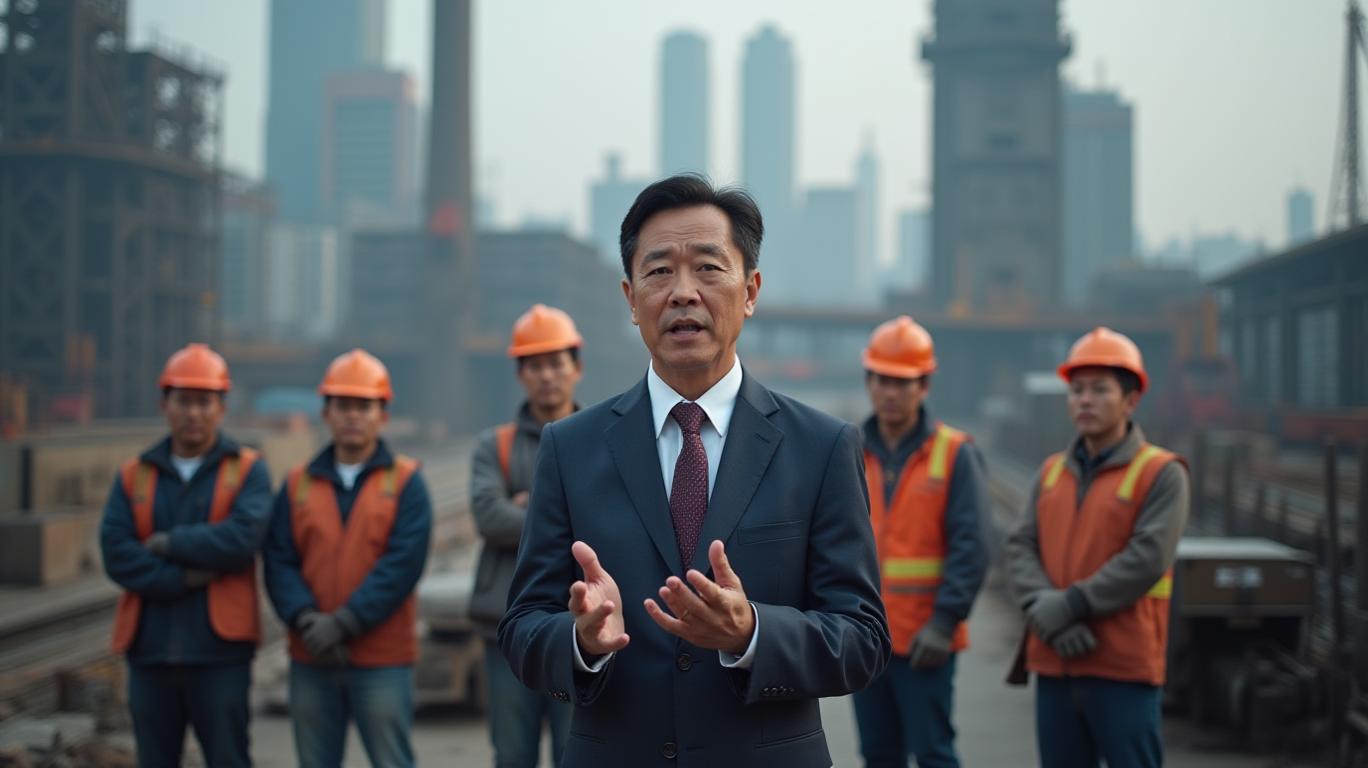
South Korea's trade relationship with the US has been marked by several tariff-related challenges under the Trump administration. In 2018, Trump imposed a 25% tariff on steel and a 10% tariff on aluminum imports, citing national security concerns. South Korea was initially exempted but later faced tariffs in June 2018. To mitigate the impact, the Korean government negotiated a quota system, allowing duty-free exports of up to 70% of the average import volume for the three preceding years (2.63 million tons per year). Additionally, the government increased investment in the US by Korean companies, such as building factories, to leverage as a bargaining point in negotiations.
In February 2025, Trump announced plans to impose reciprocal tariffs on all countries that set duties on US imports, raising concerns in South Korea. The Korean government responded by establishing a task force to assess the country's vulnerabilities and non-tariff barriers, and prepare materials to explain its position to US officials. The government also vowed to respond pre-emptively to any domestic impact from US tariffs by preparing support measures for firms that might be hit and seeking to diversify export markets.
If South Korea fails to secure an exemption from Trump's tariffs, it could face significant economic and political consequences. The steel industry, which accounts for a substantial portion of South Korea's exports to the US, would be particularly vulnerable. A 25% tariff on steel imports would increase the price of South Korean steel exports, reducing their competitiveness in the global market. This could lead to a decline in exports, impacting downstream industries such as construction, automobiles, and shipbuilding. The uncertainty and potential economic losses from tariffs could also discourage foreign investment in South Korea, further impacting economic growth.
Domestically, the economic fallout from tariffs could exacerbate political instability, particularly if the ruling party is perceived as ineffective in mitigating the impact. The impeachment and criminal indictment of President Yoon Suk Yeol have already created political turmoil, and economic hardship could further fuel public discontent. Internationally, South Korea's relationship with the US could be strained if it fails to secure an exemption, potentially impacting other aspects of the bilateral relationship, such as security cooperation and trade negotiations.
To mitigate these impacts, South Korea could consider several strategies. First, it should engage in high-level diplomatic negotiations with the US to secure an exemption or reduce the impact of tariffs. This could involve leveraging South Korea's contributions to the US economy, such as massive investments by Korean companies and bilateral economic cooperation. Second, South Korea could explore new export markets to reduce its dependence on the US market. This could involve negotiating free trade agreements with other countries or regions, such as the Comprehensive and Progressive Agreement for Trans-Pacific Partnership (CPTPP) or the Regional Comprehensive Economic Partnership (RCEP). Third, the South Korean government could implement policies to encourage domestic investment in industries affected by tariffs, such as providing financial incentives, streamlining regulations, or investing in infrastructure projects. Finally, South Korea could work to strengthen political unity by encouraging bipartisan cooperation on economic issues, granting full trade authority to Acting President and Deputy Prime Minister Choi Sang-mok to enhance negotiation power.
In conclusion, South Korea faces significant challenges in navigating the tariff storm under the Trump administration. To mitigate the potential economic and political consequences, the Korean government must employ a multi-faceted strategy that includes diplomatic negotiations, market diversification, domestic investment promotion, and political unity. By taking these steps, South Korea can enhance its resilience and adaptability in the face of US tariff policies.
U--
UVV--
As the global trade landscape shifts under the Trump administration, South Korea finds itself in the eye of the tariff storm. With the US President's aggressive trade policies, including the recent announcement of universal tariffs on steel and aluminum, South Korea is scrambling to mitigate the potential economic fallout. In this article, we will explore the challenges South Korea faces, the strategies it employs to navigate these challenges, and the potential consequences if it fails to secure an exemption from Trump's tariffs.
South Korea's trade relationship with the US has been marked by several tariff-related challenges under the Trump administration. In 2018, Trump imposed a 25% tariff on steel and a 10% tariff on aluminum imports, citing national security concerns. South Korea was initially exempted but later faced tariffs in June 2018. To mitigate the impact, the Korean government negotiated a quota system, allowing duty-free exports of up to 70% of the average import volume for the three preceding years (2.63 million tons per year). Additionally, the government increased investment in the US by Korean companies, such as building factories, to leverage as a bargaining point in negotiations.
In February 2025, Trump announced plans to impose reciprocal tariffs on all countries that set duties on US imports, raising concerns in South Korea. The Korean government responded by establishing a task force to assess the country's vulnerabilities and non-tariff barriers, and prepare materials to explain its position to US officials. The government also vowed to respond pre-emptively to any domestic impact from US tariffs by preparing support measures for firms that might be hit and seeking to diversify export markets.
If South Korea fails to secure an exemption from Trump's tariffs, it could face significant economic and political consequences. The steel industry, which accounts for a substantial portion of South Korea's exports to the US, would be particularly vulnerable. A 25% tariff on steel imports would increase the price of South Korean steel exports, reducing their competitiveness in the global market. This could lead to a decline in exports, impacting downstream industries such as construction, automobiles, and shipbuilding. The uncertainty and potential economic losses from tariffs could also discourage foreign investment in South Korea, further impacting economic growth.
Domestically, the economic fallout from tariffs could exacerbate political instability, particularly if the ruling party is perceived as ineffective in mitigating the impact. The impeachment and criminal indictment of President Yoon Suk Yeol have already created political turmoil, and economic hardship could further fuel public discontent. Internationally, South Korea's relationship with the US could be strained if it fails to secure an exemption, potentially impacting other aspects of the bilateral relationship, such as security cooperation and trade negotiations.
To mitigate these impacts, South Korea could consider several strategies. First, it should engage in high-level diplomatic negotiations with the US to secure an exemption or reduce the impact of tariffs. This could involve leveraging South Korea's contributions to the US economy, such as massive investments by Korean companies and bilateral economic cooperation. Second, South Korea could explore new export markets to reduce its dependence on the US market. This could involve negotiating free trade agreements with other countries or regions, such as the Comprehensive and Progressive Agreement for Trans-Pacific Partnership (CPTPP) or the Regional Comprehensive Economic Partnership (RCEP). Third, the South Korean government could implement policies to encourage domestic investment in industries affected by tariffs, such as providing financial incentives, streamlining regulations, or investing in infrastructure projects. Finally, South Korea could work to strengthen political unity by encouraging bipartisan cooperation on economic issues, granting full trade authority to Acting President and Deputy Prime Minister Choi Sang-mok to enhance negotiation power.
In conclusion, South Korea faces significant challenges in navigating the tariff storm under the Trump administration. To mitigate the potential economic and political consequences, the Korean government must employ a multi-faceted strategy that includes diplomatic negotiations, market diversification, domestic investment promotion, and political unity. By taking these steps, South Korea can enhance its resilience and adaptability in the face of US tariff policies.

Divulgación editorial y transparencia de la IA: Ainvest News utiliza tecnología avanzada de Modelos de Lenguaje Largo (LLM) para sintetizar y analizar datos de mercado en tiempo real. Para garantizar los más altos estándares de integridad, cada artículo se somete a un riguroso proceso de verificación con participación humana.
Mientras la IA asiste en el procesamiento de datos y la redacción inicial, un miembro editorial profesional de Ainvest revisa, verifica y aprueba de forma independiente todo el contenido para garantizar su precisión y cumplimiento con los estándares editoriales de Ainvest Fintech Inc. Esta supervisión humana está diseñada para mitigar las alucinaciones de la IA y garantizar el contexto financiero.
Advertencia sobre inversiones: Este contenido se proporciona únicamente con fines informativos y no constituye asesoramiento profesional de inversión, legal o financiero. Los mercados conllevan riesgos inherentes. Se recomienda a los usuarios que realicen una investigación independiente o consulten a un asesor financiero certificado antes de tomar cualquier decisión. Ainvest Fintech Inc. se exime de toda responsabilidad por las acciones tomadas con base en esta información. ¿Encontró un error? Reportar un problema


SOBRE NOSOTROS
Nuestra historiaAutores de noticiasBase de conocimientosPolítica de privacidadTérmino de usoDescargo de responsabilidad de corretaje de tercerosTérminos de uso de AIMEDivulgaciones de riesgos de AInvest AICarrerasCONTÁCTENOS
Email: support@ainvest.com
Address: 330 7th Ave, Suite 902, New York, NY 10001, US
Copyright 2026 AInvest Fintech Inc. All rights reserved.


Comentarios
Aún no hay comentarios