
SolGold Plc's Strategic Position in the Evolving Gold Mining Sector
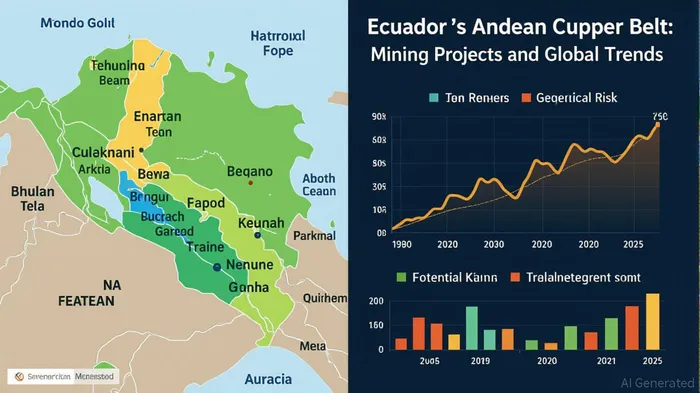
The global gold mining sector is undergoing profound transformation, driven by surging demand for safe-haven assets and the reconfiguration of supply chains amid geopolitical fragmentation. Against this backdrop, SolGold Plc, a London-listed explorer focused on Ecuador's Andean copper belt, presents a compelling case study of a company navigating both opportunity and risk. Its strategic initiatives, financial resilience, and alignment with macroeconomic trends warrant careful scrutiny for investors seeking exposure to the evolving resource landscape.
Strategic Positioning and Project Development
SolGold's core asset, the Cascabel Project in Ecuador's Imbabura province, represents a cornerstone of its growth strategy. The company has adopted an open-pit mining approach to accelerate early production, aiming to capitalize on rising gold prices and reduce capital intensity[4]. This strategy aligns with broader industry trends favoring near-term cash flow generation over long-term exploration. Crucially, SolGold has secured significant partnerships, including investments from Jiangxi Copper and BHPBHP-- Billiton, which provide both financial and technical expertise to advance its projects[1].
The company's recent execution of an Amended Investment Protection Agreement (AIPA) with the Ecuadorian government in May 2025 underscores its commitment to mitigating regulatory risks[4]. This agreement, coupled with the granting of an environmental license for the Porvenir Project, reflects progress in navigating the complex regulatory environment typical of resource-rich but politically volatile regions[4]. However, the success of these initiatives hinges on SolGold's ability to maintain community trust and adhere to environmental standards—a challenge exacerbated by global scrutiny of mining operations.
Financial Performance and Operational Challenges
Despite its strategic momentum, SolGold's recent financial results reveal significant headwinds. For the quarter ending June 2025, the company reported a net loss of £8.20 million, with operating expenses surging by 386.91% year-over-year[4]. Total liabilities rose to £165.41 million, while cash reserves stood at £32.48 million, highlighting a precarious liquidity position[4]. These figures suggest that operational costs and capital expenditures are outpacing revenue generation, a common issue for pre-production mining firms.
The company's negative net cash flow of -£15.58 million for the quarter further complicates its financial outlook[4]. Yet, SolGold's focus on low-cost, high-impact projects like Cascabel could eventually reverse this trend. The key question for investors is whether the company can achieve production milestones quickly enough to offset its current burn rate.
Geopolitical Risks and Global Demand Dynamics
Ecuador's mining sector is inherently exposed to geopolitical risks, particularly as global powers vie for control over critical minerals. The World Economic Forum's 2025 Global Risks Report highlights geoeconomic fragmentation as a top threat, with nations prioritizing domestic resource security over international cooperation[2]. While Ecuador is not explicitly mentioned in these analyses, its strategic location and rich mineral endowments place it at the intersection of global supply chain tensions.
Simultaneously, gold demand remains robust, driven by economic uncertainty and rising tariffs. The IMF and WEF note that trade fragmentation and misinformation risks are amplifying volatility, pushing investors toward gold as a hedge[3]. For SolGold, this creates a paradox: its operations are situated in a politically sensitive region but are aligned with a commodity experiencing strong tailwinds. The company's emphasis on sustainable practices and community engagement may help insulate it from some of these risks, but the broader geopolitical landscape remains a wildcard.
Balancing Risks and Opportunities
SolGold's strategic position is a double-edged sword. On one hand, its projects in Ecuador offer access to high-grade copper and gold deposits, supported by major stakeholders. On the other, the company must contend with rising operational costs, regulatory uncertainties, and the broader geopolitical shifts reshaping the mining industry. The execution of its early production strategy will be critical in determining whether it can transition from a capital-intensive explorer to a cash-generating producer.
For investors, the key metrics to monitor include the pace of production at Cascabel, the stability of its partnerships, and its ability to manage liabilities. While the current financials are concerning, the long-term potential of gold and copper markets—coupled with SolGold's proactive risk mitigation measures—suggests a high-risk, high-reward proposition.





Comentarios
Aún no hay comentarios