
First Solar vs. Sunrun: Riding Policy Winds or Fighting Regulatory Headwinds?
The U.S. solar industry faces a pivotal juncture in 2025, with the Inflation Reduction Act (IRA) driving a manufacturing renaissance while tariffs and policy rollbacks introduce new risks. Among the firms navigating this landscape, First SolarFSLR-- (FSLR) and Sunrun (RUN) exemplify diverging strategies: FSLR bets on domestic production and policy alignment, while Sunrun confronts vulnerabilities tied to residential tax credits and rising hardware costs. This analysis argues that FSLR's supply chain resilience and IRA tailwinds justify a buy stance, whereas Sunrun's exposure to regulatory headwinds and valuation risks warrant caution.
First Solar: Manufacturing Resilience Amid Policy Tailwinds
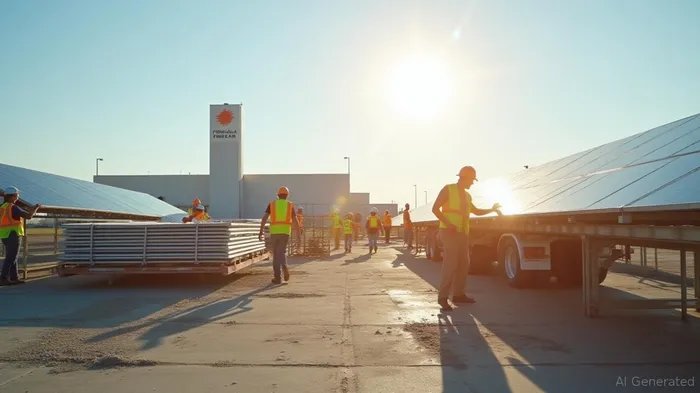
First Solar is positioned to capitalize on the IRA's domestic content incentives. Its vertically integrated model—expanding U.S. module capacity to 14GW by 2026—aligns perfectly with the law's 10% bonus tax credit for projects using U.S.-made components. This has enabled FSLR to secure a 50%+ share of U.S. utility-scale module demand, with its CuRe technology (improving efficiency and durability) further strengthening its competitive edge.
Despite 10% tariffs on imports, FSLR's strategy to shift production to domestic facilities mitigates costs. Its Alabama and Louisiana plants are nearing full capacity, while overseas output (e.g., India, Vietnam) pivots to serve local markets. Even with Q1 2025 sales guidance cuts, FSLR's backlog of 14GW of U.S.-bound projects underscores demand resilience.
FSLR's valuation also appears compelling at 8.5x 2025E EBITDA, a discount to peers. Risks include lingering module quality concerns (e.g., Series 7 performance issues) and the need to defend against Chinese competitors exploiting tariff loopholes. However, FSLR's proactive legal stance—including potential anti-dumping cases—bolsters its long-term prospects.
Sunrun: Exposed to Residential Policy and Tariff Risks
Sunrun, the leader in residential solar-plus-storage, faces a more precarious outlook. While its 69% storage attachment rate and Flex offering (scalable systems for EV demand) are innovative, the firm's reliance on tax credits and tariff-sensitive hardware creates vulnerabilities:
Hardware Cost Pressures: U.S. tariffs and China's dominance in battery supply chains could raise Sunrun's costs by 3–7% in 2025, despite pre-purchased inventory buffers. Batteries now account for 30–40% of system costs, with suppliers like CATL and BYD remaining exposed to U.S. trade actions.
Tax Credit Uncertainty: The One Big Beautiful Bill's proposed phaseout of the 48E tax credit (a key incentive for residential projects) threatens Sunrun's margins. Even if preserved, reduced transferability of IRA credits could force Sunrun to raise prices, risking demand erosion.
Valuation Overhang: Sunrun trades at 14.5x 2025E sales, a premium to its growth trajectory. Its $48.7k contracted subscriber value may struggle to offset rising grid costs and competition from utilities launching $0-down solar programs.
Sunrun's $56M Q1 cash flow and strong balance sheet provide near-term stability, but its lack of domestic battery manufacturing and dependence on Chinese supply chains leave it exposed to policy shifts. The firm's 19% U.S. solar market share may shrink if tariffs or credit cuts deter demand.
Key Contrasts: Supply Chain vs. Demand Risks
| Metric | First Solar (FSLR) | Sunrun (RUN) |
|---|---|---|
| Domestic Production | 14GW U.S. capacity by 2026 | 50% of modules sourced domestically |
| Tariff Impact | Mitigated via U.S. factories | Hardware costs rise 3–7% |
| Policy Alignment | IRA beneficiary | Exposed to 48E credit cuts |
| Valuation | 8.5x EBITDA (undervalued) | 14.5x Sales (expensive) |
| Growth Catalysts | CuRe tech, utility-scale demand | Storage adoption, Flex rollout |
Investment Thesis: Buy FSLR, Avoid RUN
First Solar is the clear buy in this pair:
- IRA Tailwinds: Its manufacturing scale and policy alignment ensure it captures the lion's share of U.S. utility projects.
- Supply Chain Control: Vertical integration and domestic expansion shield it from tariff shocks.
- Valuation Discount: At 8.5x EBITDA, it offers margin of safety despite near-term earnings headwinds.
Sunrun, meanwhile, faces structural risks:
- Residential Market Volatility: Tax credit phaseouts and grid cost inflation could reduce demand.
- Competitive Pressures: Utilities and rivals (e.g., Tesla) are encroaching on its residential dominance.
- Overvaluation: Its premium valuation assumes flawless execution in an increasingly hostile regulatory environment.
Final Take
The solar sector's winners in 2025 will be those insulated from trade wars and policy shifts. First Solar's manufacturing moat and alignment with the IRA's goals make it a rare defensive play in a volatile industry. Sunrun's exposure to rising costs and uncertain tax credits, however, tilts the scales against it. Investors seeking solar exposure should rotate into FSLR while avoiding RUN until its risks are priced in.





Comentarios
Aún no hay comentarios