
SoftBank Vision Fund's Strategic Restructuring and Its Implications for AI-Driven Tech Investing
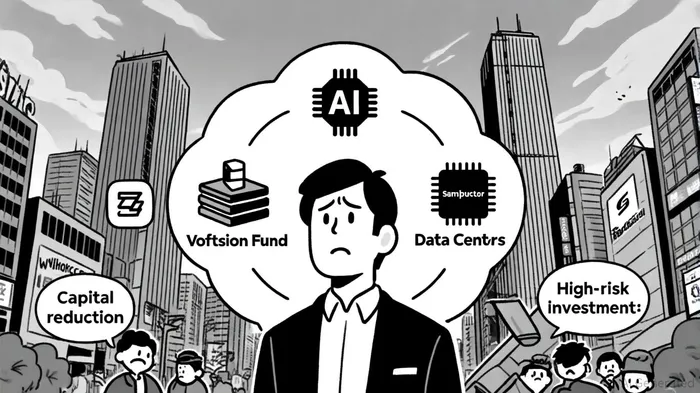
The SoftBank Vision Fund's 2025 strategic restructuring marks a pivotal moment in the evolution of high-risk, high-reward technology investing. By slashing nearly 20% of its global workforce and reallocating resources toward artificial intelligence (AI) and infrastructure, the fund is betting on a future where transformative technologies dominate global value creation[1]. This shift, while bold, raises critical questions about operational efficiency, risk management, and the long-term viability of concentrated bets in nascent sectors.
Operational Efficiency: A Leaner Structure for Bolder Bets
The decision to reduce staff by 20% reflects a deliberate effort to streamline operations and focus on core initiatives. According to a report by Reuters, this restructuring follows two previous rounds of layoffs since 2022 and aligns with founder Masayoshi Son's philosophy of “high-conviction” investing[1]. By narrowing its portfolio focus, the Vision Fund aims to enhance decision-making speed and resource allocation efficiency. For instance, the fund has redirected capital toward its Stargate project—a $500 billion initiative to build U.S. data centers in partnership with OpenAI—and its chip-design subsidiary, Arm[1].
Operational efficiency gains are already evident. In the latest quarter, the fund reported a $4.8 billion increase in value, driven by gains from public holdings like GrabGRAB-- and Swiggy[2]. This performance underscores the potential of strategic portfolio optimization, even as the fund navigates the inherent volatility of high-risk sectors.
Strategic AI Investments: Building a Global Ecosystem
SoftBank's AI ambitions are not merely speculative. The fund has committed $9.7 billion to OpenAI over the past 12 months, signaling a long-term partnership to develop foundational AI models and infrastructure[1]. Complementing this is its capital-intensive strategy to strengthen Arm's position in the semiconductor industry, including acquisitions of Graphcore and Ampere Computing[1]. These moves aim to create a vertically integrated AI ecosystem spanning hardware, data centers, and applications—a vision articulated by the Vision Fund's CEO as essential for driving productivity across sectors like logistics and professional services[2].
However, execution risks loom large. Delays in the Stargate project and a stalled OpenAI joint venture in Japan highlight the challenges of scaling such ambitious initiatives[1]. Yet, as CFO Yoshimitsu Goto noted in August 2025, SoftBank maintains a “very safe level” of cash reserves (4 trillion yen, or $27 billion), providing a buffer against short-term setbacks[1].
Risk Mitigation and Diversification: Balancing Boldness with Prudence
High-risk investing inherently demands robust risk mitigation. The Vision Fund's recent diversification into biotechnology and cybersecurity—evidenced by 13 substantial funding rounds in these sectors—demonstrates an attempt to spread exposure[4]. This contrasts with earlier periods of aggressive, concentrated bets, such as its investments in CoupangCPNG-- and DidiDLB--, which underperformed and contributed to a $900 million loss in a recent quarter[3].
The fund's approach also emphasizes strategic acquisitions and partnerships to de-risk AI ventures. For example, its stake in Arm HoldingsARM--, which went public in 2024, has provided both financial returns and technical capabilities to support AI infrastructure[4]. Such hybrid strategies—combining financial discipline with technological depth—may offer a blueprint for sustainable value creation in volatile markets.
Implications for AI-Driven Tech Investing
SoftBank's restructuring underscores a broader trend: the increasing importance of operational efficiency and ecosystem-building in high-risk tech sectors. For investors, the Vision Fund's experience highlights three key lessons:
1. Concentration vs. Diversification: While bold bets on transformative technologies can yield outsized returns, they require careful balancing with diversified portfolios to mitigate downside risks.
2. Infrastructure as a Foundation: AI's long-term potential hinges on robust hardware and data infrastructure, making investments in semiconductors and data centers critical.
3. Execution Discipline: Even visionary strategies falter without operational agility. SoftBank's workforce reductions and focus on core projects reflect a recognition of this reality.
Conclusion
SoftBank Vision Fund's strategic pivot to AI is a high-stakes gamble, but one that aligns with the transformative potential of the technology. By prioritizing operational efficiency, ecosystem integration, and disciplined risk management, the fund aims to navigate the turbulence of high-risk investing while positioning itself as a leader in the AI-driven economy. For the broader investment community, its journey offers a compelling case study in the delicate balance between bold innovation and sustainable value creation.





Comentarios
Aún no hay comentarios