
Siemens Energy's Strategic Share Buyback: A Catalyst for Value Creation in the Energy Transition Era
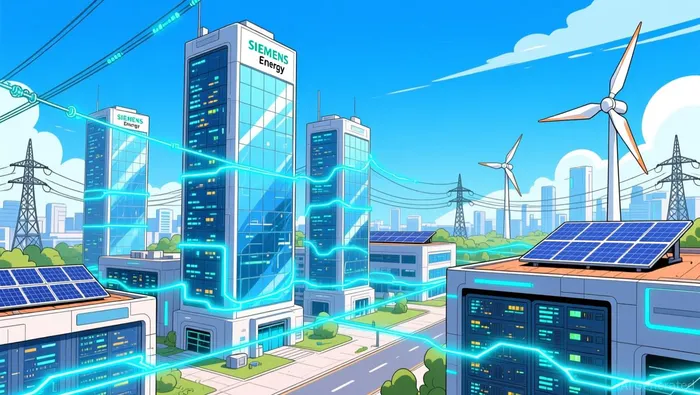
In an era defined by the dual imperatives of decarbonization and digital transformation, Siemens Energy's €6 billion share buyback program stands out as a bold yet calculated move to align shareholder value with long-term strategic priorities. The announcement, made during the company's 2025 Capital Markets Day, reflects not only confidence in its current financial strength but also a commitment to navigating the evolving energy landscape. By examining the interplay between Siemens Energy's robust financial performance, its investments in high-growth sectors like data center infrastructure and gas turbines, and the mechanics of the buyback, we can assess whether this initiative is a prudent catalyst for value creation-or a distraction from more pressing strategic needs.
Financial Strength as the Foundation
Siemens Energy's 2025 financial report provides a compelling case for the buyback's feasibility. The company reported full-year revenue of €39.7 billion, a 15% year-over-year increase, alongside a record order intake of €60 billion and a €138 billion backlog-enough to cover 85% of 2026 revenue needs. Profit before special items reached €2.4 billion, while Q4 free cash flow pre-tax hit €1.3 billion, and the firm maintained a net cash position of €4.8 billion. These metrics underscore a business model that is not only resilient but also generating surplus liquidity.
The buyback, scheduled to be completed by 2028, is thus underpinned by a strong balance sheet. As stated by the company during its earnings call, the program is part of a broader capital allocation strategy aimed at "enhancing shareholder value while supporting long-term growth". Notably, the stock price surged 9.14% following the announcement, signaling investor approval of the move. This reaction suggests that the market views the buyback as a signal of confidence rather than a short-term fix for underperformance.
Strategic Alignment with High-Demand Sectors
The buyback's credibility hinges on its compatibility with Siemens Energy's strategic investments in sectors poised for growth. Two areas stand out: data center infrastructure and gas turbines.
Data Center Infrastructure: Siemens Energy's grid technologies unit, which supplies power solutions for data centers, saw a 71% jump in profits during Q4 2025. This surge is driven by surging demand for AI and cloud computing, which require energy-intensive, high-reliability infrastructure. To capitalize on this trend, Siemens has partnered with Delta to develop modular, prefabricated power solutions. These systems, combining Siemens' electrical distribution expertise with Delta's UPS and cooling technologies, reduce deployment times by up to 50% and lower carbon emissions. The partnership aligns with the company's sustainability goals while addressing cost pressures for hyperscale operators-a win-win that complements the buyback by ensuring reinvestment in high-margin, future-facing projects.
Gas Turbines: Despite the global shift toward renewables, gas turbines remain critical for grid stability and transitional energy needs. Siemens Energy has cited "strong global demand" for its turbines as a key factor in raising its 2026 financial targets. A notable example is the company's involvement in a potential $7 billion project to rebuild Syria's power sector, including four combined-cycle gas plants and a solar component. While no contracts have been finalized, the engagement highlights Siemens Energy's ability to leverage its technical expertise in emerging markets-a capability that enhances its long-term revenue visibility and justifies the buyback's focus on returning capital to shareholders.
A Prudent Balance Between Shareholder Returns and Growth
Critics might argue that large-scale buybacks could divert resources from innovation or capital expenditures. However, Siemens Energy's financials suggest otherwise. The €6 billion buyback is modest relative to its €138 billion order backlog and €4.8 billion net cash position. Moreover, the company has maintained a disciplined approach to capital allocation, with a target profit margin of 14%-16% by 2028. This margin expansion, coupled with its strategic investments in data centers and gas turbines, indicates that the buyback is not a substitute for growth but a complementary tool to optimize shareholder returns.
Conclusion: A Catalyst for Value Creation
Siemens Energy's share buyback is more than a financial maneuver-it is a strategic lever to reinforce its position in the energy transition. By returning capital to shareholders while investing in high-growth, high-margin sectors, the company is addressing both immediate and long-term value drivers. The alignment of the buyback with its robust financial performance and forward-looking investments in data center infrastructure and gas turbines suggests a well-calibrated approach to navigating the complexities of the 21st-century energy landscape. For investors, this combination of fiscal discipline and strategic foresight offers a compelling case for optimism.







Comentarios
Aún no hay comentarios