
The Shifting Tides of Emerging Markets Debt: Sovereign Risks and Opportunities in a Private-Creditor Era
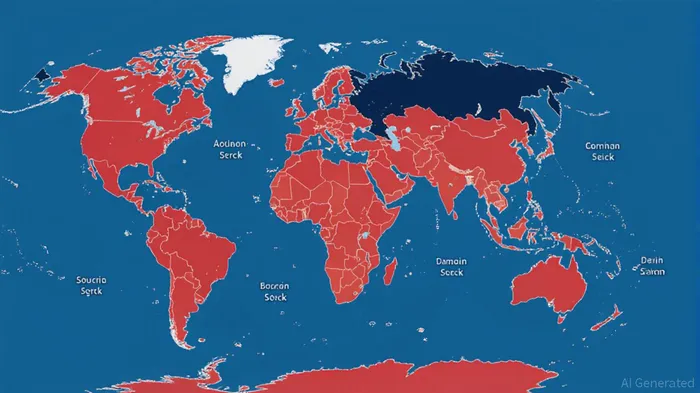
The global debt architecture of emerging markets is undergoing a seismic transformation. For over a decade, China's Belt and Road Initiative (BRI) positioned it as the preeminent public lender to developing economies, financing infrastructure and development projects with state-backed loans. But by 2025, this model has unraveled. China's annual lending to emerging markets has plummeted from $50 billion in 2016 to a mere $7 billion in 2023, marking a 86% decline. This retreat has left a vacuum, which private creditors—including banks, export credit agencies, and non-state actors—have rushed to fill. However, this shift carries profound implications for sovereign credit risk and opens new investment horizons in debt relief mechanisms.
The Decline of Public Lenders and the Rise of Private Creditors
China's withdrawal from large-scale public lending has not been a mere reduction in scale but a strategic recalibration. By 2025, developing nations will collectively owe China $35 billion in debt service, with $22 billion coming from the world's poorest countries. These repayments now account for over 30% of bilateral debt service in emerging markets, surpassing contributions from multilateral lenders like the World Bank. Meanwhile, private creditors have stepped in, offering loans with higher interest rates, shorter maturities, and less transparency. For instance, private debt to emerging markets grew by 40% between 2020 and 2024, driven by the search for yield in a low-interest-rate global environment.
The consequences are stark. Private creditors often lack the policy conditions of multilateral lenders, prioritizing returns over development outcomes. This has led to a “commercialization” of debt, where infrastructure projects are increasingly tied to profit motives rather than public goods. For example, in 54 of 120 developing countries with available data, debt repayments to China now exceed those to the Paris Club of Western bilateral lenders. This shift has also exposed emerging markets to greater volatility, as private creditors are less likely to offer grace periods or restructuring flexibility during crises.
Sovereign Credit Risk in a New Era
The rise of private creditors has amplified sovereign credit risk in three key ways:
1. Higher Cost of Borrowing: Private loans typically carry interest rates 2–4 percentage points above those of multilateral or public lenders. For countries already grappling with high debt-to-GDP ratios, this exacerbates repayment burdens.
2. Reduced Fiscal Flexibility: With private creditors demanding strict covenants, governments face limited room to adjust budgets during economic shocks. For example, 16 of the V20 climate-vulnerable countries now spend over 20% of government revenue on debt service, leaving little for healthcare or education.
3. Geopolitical Fragmentation: China's selective lending to politically aligned neighbors (e.g., Pakistan, Laos) has created a patchwork of debt obligations, complicating multilateral coordination on debt relief.
Investment Opportunities in Debt Relief Mechanisms
Amid these risks, innovative debt relief mechanisms are emerging as both a lifeline for vulnerable economies and a compelling investment thesis. The V20 Debt Review, a coalition of 74 climate-vulnerable nations, has identified several strategies with significant potential:
Debt-for-Climate Swaps: These instruments restructure sovereign debt in exchange for investments in climate resilience. For example, a country might redirect debt service payments toward reforestation or renewable energy projects. Such swaps not only reduce debt burdens but also generate environmental co-benefits, making them attractive to impact investors.
State-Contingent Debt Instruments (SCDIs): These financial tools automatically reduce debt service obligations when a country faces climate disasters or economic downturns. For instance, if a hurricane devastates a Caribbean nation, SCDIs could trigger a temporary pause in repayments, freeing up resources for recovery.
Concessional Financing Extensions: By extending repayment periods from 5 to 40 years and lowering interest rates to 1.35% (aligned with the International Development Association), countries could reduce their total debt burden by 37% over the next decade. This creates a “fiscal space” for climate adaptation and development.
Debt Pause Clauses: These contractual provisions allow temporary suspensions of debt service during crises. For countries with debt-to-GDP ratios exceeding 100%, such clauses could prevent defaults during periods of economic stress.
Investors are increasingly recognizing the value of these mechanisms. For example, the Jubilee 2025 campaign, which advocates for debt forgiveness for climate-vulnerable nations, has attracted support from institutional investors seeking to align portfolios with ESG (Environmental, Social, Governance) criteria. Similarly, green bonds issued by emerging markets—such as India's $10 billion issuance in 2024—have drawn strong demand from private creditors seeking both yield and sustainability.
Strategic Recommendations for Investors
For investors navigating this evolving landscape, the following strategies merit consideration:
- Diversify Exposure to Debt Relief Instruments: Sovereign bonds from countries adopting debt-for-climate swaps or SCDIs may offer higher risk-adjusted returns, given their alignment with global sustainability goals.
- Monitor Sovereign Credit Metrics: Focus on countries with manageable debt service-to-revenue ratios and active participation in multilateral debt restructuring frameworks.
- Engage with Multilateral Institutions: Collaborate with organizations like the IMF or World Bank, which are increasingly acting as intermediaries in debt relief negotiations.
Conclusion: A New Paradigm for Emerging Markets Debt
The shift from public to private creditors in emerging markets is not merely a financial transition but a geopolitical and developmental realignment. While the risks of higher sovereign credit risk are undeniable, the opportunities in debt relief mechanisms present a unique window for investors to combine profitability with purpose. As the V20 Debt Review underscores, the next decade will test the resilience of the global financial system—and those who adapt to this new paradigm will find themselves at the forefront of a transformative era.
In this context, the role of investors is not just to mitigate risk but to catalyze a more sustainable and equitable global economy. The question is no longer whether to invest in emerging markets debt, but how to do so with foresight, innovation, and a commitment to long-term value creation.







Comentarios
Aún no hay comentarios