
Seres' $2 Billion IPO Ambitions and Huawei's Strategic EV Bet: Timing and Valuation in China's EV Ecosystem
The electric vehicle (EV) revolution in China has reached a pivotal inflection point. As the world's largest EV market, China's new energy vehicle (NEV) sales now account for nearly half of all passenger vehicle transactions, driven by technological innovation, government incentives, and shifting consumer preferences, according to a July 2025 report. At the heart of this transformation lies Seres Group, a Huawei-backed automaker preparing for a Hong Kong IPO in 2025. With ambitions to raise over $1 billion, Seres' listing represents not just a funding play but a strategic bet on the future of mobility, underpinned by Huawei's deepening role as a technological enabler in the EV sector.
Huawei's Strategic Bet: From Hardware to Ecosystem Dominance
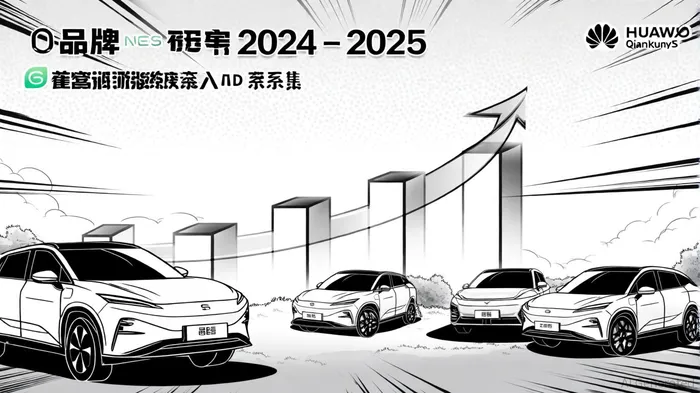
Huawei's involvement in the EV space has evolved from a hardware supplier to a critical architect of China's smart mobility ecosystem. Through its Harmony Intelligent Mobility Alliance (HIMA), Huawei collaborates with automakers like Seres, SAIC, and Chery to integrate its Qiankun intelligent driving systems and HarmonyOS smart cabin solutions, as detailed in a CNEVPost report. That report also noted that by 2025 over 28 models in China had adopted Huawei's Qiankun ADS, with more than one million vehicles equipped with its technology. This ecosystem approach-where Huawei provides the "brain" while partners handle manufacturing-has allowed it to dominate the smart EV segment without stepping into direct competition with automakers.
The "HI Plus" model, introduced in Q3 2025, further refines this strategy, according to a PwC Hong Kong release. It grants automakers greater brand autonomy while retaining Huawei's technological edge in autonomous driving and in-vehicle software. For instance, Dongfeng Motor's M-Hero brand now features Huawei's HarmonySpace 5 cockpit and Qiankun ADS 4 system, illustrating how the tech giant is scaling its influence without owning a single factory. This model aligns with Seres' own trajectory: its Aito brand, co-branded with Huawei, delivered 387,100 vehicles in 2024, capturing nearly 87% of HIMA's total sales, according to the CNEVPost coverage.
Seres' Financial Resurgence and IPO Timing
Seres' IPO plans are underpinned by a dramatic turnaround in its financial performance. According to CNEVPost, in 2024 the company reported revenue of RMB 145.176 billion, a 305% year-on-year increase, and achieved its first net profit of RMB 5.946 billion in five years. Its gross margin improved to 26.21%, and R&D spending surged by 58.9% to RMB 7.053 billion, reflecting a commitment to innovation. These metrics position Seres as a rare profitable player in a sector still grappling with razor-thin margins.
The timing of the IPO is equally strategic. Hong Kong's IPO market has rebounded sharply in 2025, with 44 listings raising HKD 107.1 billion in the first half of the year-seven times the amount raised in the same period in 2024, per the PwC Hong Kong release. Policy reforms, including the Technology Enterprises Channel launched in May 2025, have made the market more accessible to high-growth tech and EV firms. Seres' application for an H-share listing, supported by CICC and China Galaxy International, has already cleared the HKEX listing hearing, signaling regulatory progress, CNEVPost noted.
Valuation Metrics and Peer Comparisons
Seres' valuation metrics suggest a compelling case for investors. As of October 2025, the company trades at a trailing price-to-earnings (P/E) ratio of 34.32 and a forward P/E of 22.02, with a PEG ratio of 0.71, indicating undervaluation relative to growth prospects, according to StockAnalysis data. Its enterprise value of CNY 210.83 billion and market cap of CNY 263.79 billion reflect confidence in its global expansion plans, per the same StockAnalysis figures.
Comparisons with peers BYD and NIONIO-- highlight Seres' unique positioning, as shown in a TS2 comparison. BYD, the market leader, has a trailing P/E of 21.47 and an EV/Sales ratio of 0.87, but its net income has declined amid aggressive price competition. NIO, while rebounding with a 40% stock surge in July 2025, remains unprofitable, with a P/E of -6.89 and an EV/Sales ratio of 1.46. Seres' profitability and higher R&D investment give it a distinct edge in a sector where margins are razor-thin.
Risks and the Road Ahead
Despite the optimism, risks loom. The EV market is highly competitive, with price wars intensifying as smaller players struggle to survive, a concern highlighted in a TheAsiaLive article. Seres' reliance on Huawei's technology, while a strength, could also expose it to geopolitical risks if trade tensions escalate. Additionally, the IPO's success hinges on maintaining investor confidence in a market where many EV firms prioritize reinvestment over dividends, an observation noted in the PwC Hong Kong release.
However, the broader trend is in Seres' favor. That July 2025 report projects China's EV market will grow at an 18.4% compound annual rate through 2030, driven by government support and technological adoption. Goldman Sachs analysts suggest Seres could capture 5% of the global EV market by 2025, leveraging its Huawei partnership and expanding international footprint, according to PwC Hong Kong commentary.
Conclusion: A Strategic Inflection Point
Seres' IPO is more than a capital-raising exercise-it is a testament to the strategic alignment of technological innovation and market timing. By hitching its fortunes to Huawei's ecosystem and capitalizing on Hong Kong's IPO revival, Seres is positioning itself to ride the next wave of China's EV boom. For investors, the question is not whether the EV revolution will continue, but whether Seres can sustain its momentum in a sector defined by rapid disruption.





Comentarios
Aún no hay comentarios