
Securities Litigation in Volatile Markets: Navigating Investor Protection and Class-Action Timing
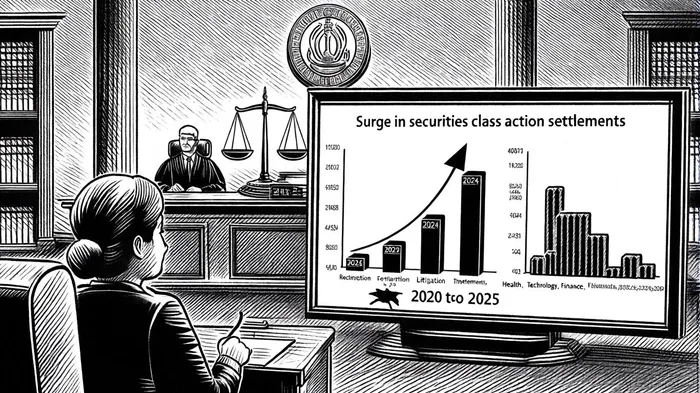
In the tempest of volatile markets, securities litigation has emerged as both a shield and a sword. For investors, it is a mechanism to hold corporations accountable; for corporations, it is a costly and unpredictable risk. The past two years have witnessed a seismic shift in this landscape, driven by sector-specific vulnerabilities, judicial idiosyncrasies, and the escalating stakes of class-action settlements. Understanding these dynamics is critical for investors seeking to protect their assets and for companies aiming to mitigate legal exposure.
The Evolving Litigation Landscape
Recent data underscores a stark reality: securities litigation is no longer confined to traditional sectors. According to a mid-year 2025 update by Gibson Dunn, federal securities litigation filings in the first half of 2025 totaled 108 cases, with the "Health and Technology Services" sector accounting for a disproportionate share of these suits[1]. This shift reflects the growing complexity of corporate disclosures in industries reliant on intangible assets and speculative valuations. Meanwhile, the "Finance" sector has seen a relative decline in litigation, suggesting a reallocation of investor and legal attention[1].
Rule 10b-5 cases—centered on securities fraud—remain dominant, but the legal terrain has grown more nuanced. The Supreme Court's handling of the Meta case left unresolved the question of when risk disclosures cross into misleading territory, a debate crystallized in analogies such as "disclosing the risk of rainouts" or "manufacturing plant fires"[2]. This ambiguity has forced companies to walk a tightrope between transparency and defensibility, a challenge exacerbated by the "fraud by hindsight" critique, where courts may later deem disclosures inadequate despite their contemporaneous reasonableness[2].
Judicial Discretion and Strategic Defense
One of the most striking trends is the growing influence of judicial discretion on litigation outcomes. At the 2025 PLUS D&O Symposium, experts noted that the success of motions to dismiss often hinges on the specific judge presiding over a case, regardless of broader jurisdictional trends[2]. This unpredictability demands a recalibration of corporate defense strategies. For instance, directors and officers (D&O) insurers are now advised to tailor coverage to the "judicial climate" of potential venues, a practice that may include adjusting policy limits or selecting counsel with experience in a judge's prior rulings[2].
The Goldman Sachs v. Arkansas Teacher Retirement System decision has further reshaped defense tactics. By permitting defendants to introduce price impact evidence during class certification, the ruling offers a narrow but potent avenue to challenge the economic validity of class claims[2]. However, this strategy requires sophisticated economic analysis, as seen in the Zillow case, where plaintiffs faced rigorous scrutiny over the link between alleged misstatements and stock price movements[2]. Such developments highlight the increasing technical complexity of securities litigation, favoring defendants with access to expert-driven defenses.
Investor Protection in an Era of Record Settlements
The financial stakes have never been higher. In 2024, securities class action settlements reached a record $4.1 billion, driven by larger payouts rather than an increase in the number of cases[2]. This surge reflects both the inflationary pressures of the broader economy and the rising valuations of technology firms, which accounted for six of the top 10 settlements in 2024[2]. For institutional investors, proactive engagement is essential. A 2025 report by Wolf Popper emphasizes the importance of comprehensive litigation policies, including vendor selection based on technological capabilities and alignment with institutional goals[3].
Investors must also navigate the procedural intricacies of class-action timelines. When a triggering event—such as a sharp stock price drop—unfolds, law firms swiftly investigate SEC filings and corporate communications to identify potential misstatements[1]. Potential class members are notified within 20 days, with a 60-day window for lead plaintiff applications[1]. The selection of a lead plaintiff, often an institutional investor, is governed by the Private Securities Litigation Reform Act (PSLRA), which prioritizes financial stake and adequacy of representation[1]. This phase is pivotal, as the lead plaintiff's choice of counsel and litigation strategy can shape the case's trajectory[1].
Strategic Implications for Market Participants
For corporations, the path to litigation resilience begins with crisis preparedness. As WilmerHale advises, companies must coordinate legal strategies with crisis response plans, ensuring that internal communications avoid self-incriminating statements[4]. This includes safeguarding attorney-client privilege during interactions with consultants or auditors[4]. Additionally, firms should anticipate shareholder derivative litigation by proactively managing document requests and inspections[4].
For investors, the lesson is equally clear: litigation is not a passive process. Institutions must adopt robust monitoring systems to identify and participate in relevant class actions, while also evaluating the performance of litigation vendors[3]. The rise of "event study coverage" in D&O insurance—where insurers fund economic analyses to challenge class certification—further underscores the need for strategic alignment between legal and financial defenses[2].
Conclusion
Securities litigation in volatile markets is a multifaceted challenge, shaped by judicial unpredictability, sector-specific risks, and the escalating costs of class-action settlements. For investors, the key lies in proactive engagement, rigorous due diligence, and strategic alignment with legal and insurance professionals. For corporations, the imperative is to balance transparency with defensibility, while preparing for the inevitability of litigation in an increasingly litigious environment. As markets continue to oscillate between boom and bust, the ability to navigate these legal currents will separate the resilient from the vulnerable.







Comentarios
Aún no hay comentarios