
Securities Litigation and Risk Assessment in the Broadband Sector: Evaluating Charter Communications' Exposure
The broadband sector, long a cornerstone of modern infrastructure, is increasingly exposed to regulatory and operational risks that challenge its stability. While securities litigation in 2024 and 2025 has predominantly targeted artificial intelligence (AI) and cryptocurrency firms, the sector's reliance on regulatory compliance and technological innovation means that indirect risks—such as misrepresentations of AI integration or regulatory missteps—can reverberate across industries. For Charter CommunicationsCHTR-- (CHTR), a leading broadband provider, these risks materialize in three critical areas: regulatory shifts, operational vulnerabilities, and antitrust scrutiny.
Regulatory Exposure: The ACP's End and FCC Oversight
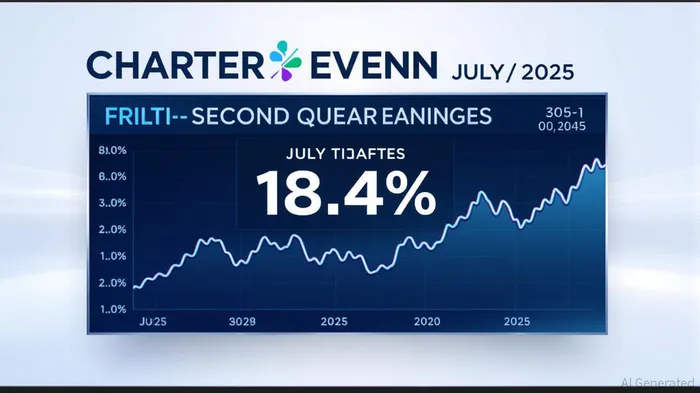
Charter's recent struggles highlight the fragility of its business model in the face of regulatory changes. The termination of the Federal Communications Commission's (FCC) Affordable Connectivity Program (ACP) in mid-2024 led to a 177,000 customer loss in Q4 2024, reducing its Internet customer base to 30.1 million [2]. This regulatory shock underscored the company's dependence on subsidized programs to retain low-income subscribers. The ACP's end also triggered a securities class-action lawsuit, Sandoval v. CharterCHTR-- Communications, Inc., alleging that the company failed to disclose the material impact of the program's termination on its financial outlook [1]. Investors reportedly lost significant value when Charter's stock plummeted 18.4% following Q2 2025 earnings, which revealed an additional 117,000 customer losses [3]. This sharp decline is consistent with historical patterns observed in Charter's earnings announcements, where the average return over 14 events since 2022 has been -1.2%, with a hit rate of 57% and a maximum drawdown of -18.4%.
The FCC's Open Trial Mobility Rule (OTMR), adopted in 2018, further complicates Charter's regulatory landscape. While intended to streamline infrastructure permitting, the rule's implementation in regulated states has created operational friction, requiring Charter to navigate a patchwork of local compliance requirements [3]. These regulatory headwinds, combined with the ACP's abrupt end, illustrate how policy shifts can destabilize even well-established firms.
Operational Risks: Network Reliability and Natural Disasters
Operational resilience is another area of concern. Charter's Q4 2024 results were further strained by hurricanes, which disrupted service and accelerated customer attrition [2]. While the company has invested in symmetrical gigabit speeds and managed WiFi services to improve reliability, these upgrades require sustained capital expenditure and may not fully offset recurring disruptions. According to a report by Bloomberg, such operational vulnerabilities are increasingly scrutinized by investors, who demand transparency about how companies mitigate risks like climate-related outages .
Securities Litigation: A Cautionary Tale
The Sandoval lawsuit exemplifies the legal risks of inadequate disclosure. The plaintiffs argue that Charter's executives assured investors the ACP's end would be “managed successfully,” while privately acknowledging the program's existential role in customer retention [4]. This case, now in the lead plaintiff appointment phase, could set a precedent for how courts evaluate regulatory foresight in securities law. As stated by Dechert LLP, a firm tracking litigation trends, “The surge in AI-related lawsuits has heightened judicial expectations for precise, forward-looking disclosures—standards that now apply to sectors like broadband, where regulatory dependencies are opaque” [4].
Antitrust Scrutiny: Mergers and Market Power
Antitrust concerns further complicate Charter's risk profile. In April 2024, the U.S. Department of Justice (DoJ) compelled the resignation of two directors from Warner BrosWBD--. Discovery's board due to overlapping board memberships with Charter, citing violations of Section 8 of the Clayton Act [5]. More recently, the proposed merger with Cox Communications has drawn scrutiny, though analysts suggest it may face less resistance than prior deals due to minimal geographic overlap [2]. While the DoJ and FCC focus on economic efficiency, the broader antitrust landscape remains fluid, with potential implications for market consolidation.
Implications for Investors
For investors, Charter's exposure to regulatory and operational shocks underscores the need for rigorous due diligence. The company's reliance on government subsidies, susceptibility to natural disasters, and legal liabilities from disclosure gaps all point to a high-risk profile. However, Charter's investments in infrastructure and its strategic pivot toward multi-gigabit services suggest a capacity for adaptation. As noted by Risk & Insurance, “The broadband sector's resilience hinges on its ability to balance regulatory compliance with technological innovation—a tightrope walk that demands constant vigilance” [3]. Given the historical volatility around earnings, with an average return of -1.2% and a 57% hit rate, investors must weigh these risks against Charter's strategic initiatives.
Conclusion
Charter Communications' recent challenges reflect broader vulnerabilities in the broadband sector. While regulatory and operational risks are inherent to its business model, the company's response to these pressures—through litigation, infrastructure investment, and merger strategies—will determine its long-term viability. For investors, the lesson is clear: in an era of heightened regulatory and legal scrutiny, transparency and proactive risk management are not just best practices but survival imperatives.





Comentarios
Aún no hay comentarios