
Saudi Aramco's 2026 Feedstock Price Hikes: A Catalyst for Energy-Efficient Industrial Leaders
The recent announcement by Saudi Aramco of a 2026 feedstock price hike-effective January 1, 2025-has sent ripples through the kingdom's energy-intensive industries. For firms like Sipchem and Sabic AN, the cost of sales is projected to rise by 2% and 3.7%, respectively, as they grapple with the financial implications of reduced subsidies under Vision 2030 according to reports. While these increases may seem burdensome at first glance, they represent a strategic recalibration of the Saudi economy. By redirecting funds from energy subsidies toward diversification, the government is accelerating the transition to a post-oil future. For investors, this shift creates a unique opportunity: identifying undervalued industrial leaders that are not merely weathering the storm but actively innovating to thrive in a high-cost, low-subsidy environment.
The Vision 2030 Imperative: From Subsidy to Sustainability
Saudi Arabia's Vision 2030 framework is not merely a fiscal exercise but a structural transformation. The government aims to reduce hydrocarbon dependency by fostering renewable energy, green hydrogen, and carbon capture technologies. For instance, SABIC's $5 billion investment in green hydrogen and circular carbon economy projects-coupled with its integration of 4 GW of solar and wind power-positions it as a decarbonization pioneer. Similarly, Saudi Aramco's Hawiyah carbon capture facility, which sequesters 1.5 million tonnes of CO2 annually and aims to scale to 9 million tonnes by 2027, underscores the kingdom's commitment to industrial sustainability. These initiatives align with a broader $10 billion green hydrogen investment pipeline, including the NEOM project, which targets 600 tonnes of daily green hydrogen production.
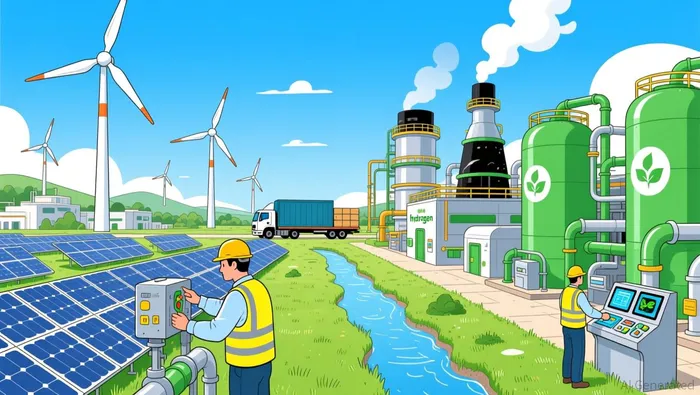 The feedstock price hikes, while challenging for cost-sensitive firms, are designed to fund such transitions. By reducing subsidy expenditures, the government can channel resources into infrastructure and innovation, creating a fertile ground for companies that prioritize efficiency. As one analyst notes, the pain of higher feedstock costs is a necessary step toward building a resilient, diversified economy.
Undervalued Leaders: SABIC and Sipchem in the Spotlight
Among the industrial firms navigating this transition, SABIC and Sipchem stand out for their strategic responses to rising energy costs. SABIC, with a price-to-earnings (P/E) ratio of 17x and a price-to-book (P/B) ratio of 1.08x according to valuation data, appears undervalued relative to its peers. Analysts have assigned it a "Hold" rating, with a 12-month average price target of $64.77 SAR according to market analysis. This valuation reflects confidence in SABIC's ability to offset feedstock costs through its green hydrogen and carbon capture initiatives, which are projected to reduce annual CO2 emissions by 6 million tonnes.
Sipchem, meanwhile, trades at a higher P/E of 42.1 according to market data, suggesting a more optimistic but riskier outlook. While its energy-efficient initiatives are less explicitly detailed in public reports, the company benefits from the national push toward renewables. For example, Saudi Arabia's $32 billion green energy pipeline-targeting 130 gigawatts of renewable capacity by 2030-creates a supportive ecosystem for firms like Sipchem to adopt cleaner technologies. A JPMorgan analyst recently upgraded Sipchem to "Hold" with a price target of 23.1 SAR, citing its potential to leverage Vision 2030-driven demand.
The Broader Industrial Sector: A Tale of Two Valuations
The Saudi industrials sector as a whole has a P/E ratio of 23.4x as of January 2026, below its 3-year average of 30.7x. This discount reflects investor caution about near-term earnings pressures but also hints at untapped value. For instance, the Saudi Green Cement Market, projected to grow from $202 million in 2024 to $511 million by 2030, offers opportunities for firms that pivot to low-emission production. Similarly, the CCUS (carbon capture, utilization, and storage) market, valued at $68.9 million in 2025 and growing at 11.6% annually, rewards companies that integrate these technologies.
Strategic Implications for Investors
The key for investors lies in distinguishing between firms that are merely adapting to higher costs and those that are redefining their industries. SABIC's aggressive investments in green hydrogen and carbon capture, combined with its conservative valuation, make it a compelling candidate. Sipchem, while more expensive, benefits from its alignment with national renewable energy goals and a favorable analyst outlook. Both companies exemplify the "energy-efficient industrial leader" archetype: firms that turn regulatory and cost pressures into competitive advantages.
As Saudi Aramco's feedstock price hikes take full effect in 2026, the market will likely reward those that innovate rather than merely endure. For investors with a long-term horizon, the current valuations of SABIC and Sipchem-coupled with the kingdom's structural shift toward sustainability-present a rare opportunity to capitalize on the next phase of Vision 2030.







Comentarios
Aún no hay comentarios