
Saudi Arabia's AI Dawn: A Geopolitical Pivot and Billion-Dollar Opportunity
The sands of Saudi Arabia are shifting—not with oil, but with data. The Humain-NVIDIA partnership, announced in May 2025, marks a seismic realignment of global tech power. This $200 billion+ initiative, fueled by the Public Investment Fund (PIF), is transforming the Kingdom into a non-Western AI superpower. For investors, this is not just a tech play—it’s a geopolitical arbitrage opportunity, blending Saudi sovereign wealth with U.S. semiconductor might to disrupt China’s AI dominance.
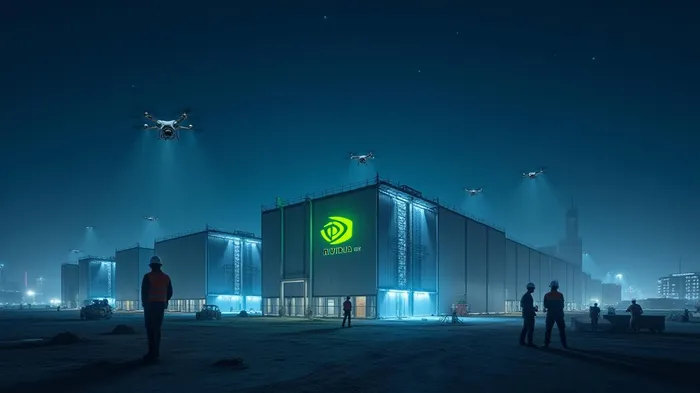
The Geopolitical Play: Saudi Arabia’s New Oil
Saudi Arabia’s Vision 2030 has long sought to diversify beyond oil. Now, it’s betting on AI as its new currency. The Humain-NVIDIA alliance combines two critical assets:
1. Saudi Sovereign Wealth: The PIF’s $200 billion+ war chest funds hyperscale AI data centers, while its geopolitical clout secures U.S. tech partnerships.
2. NVIDIA’s GPU Cloud Infrastructure: The Grace Blackwell supercomputers and Omniverse platform provide scalable AI “factories” to rival Western and Chinese hubs.
This is no mere infrastructure project. It’s a strategic move to position Saudi Arabia as the Middle East’s AI epicenter—a neutral ground for global firms seeking to avoid China’s regulatory risks and U.S. export restrictions.
Why Now? The Trump Deal Momentum
The partnership’s timing is no accident. Under the Trump administration’s Gulf pivot, U.S. export controls on advanced semiconductors were relaxed for Saudi Arabia, creating a legal and financial greenfield. This “data embassy” concept—where U.S. tech operates under American law in Saudi soil—offers a rare arbitrage:
- For U.S. firms: A China-free zone to train AI models.
- For global investors: Exposure to emerging-market growth without the risks of state control.
NVIDIA’s stock surged 3.6% on the news, signaling markets’ confidence in the deal’s scale. But this is just the tip of the iceberg.
The Investment Case: Three Pillars to Profit
AI Cloud Infrastructure Plays:
NVIDIA’s DGX Cloud and Omniverse platform enable enterprises to access Saudi’s data centers—a scalable, low-cost alternative to Western cloud giants. Investors should target NVIDIA’s AI-as-a-service (AIaaS) growth, with a focus on its Healthcare Inference Microservices (NIMs) and Omniverse industrial tools.Saudi-linked Tech Ventures:
The PIF’s $200 billion fund is primed to back startups and scale-ups leveraging Saudi’s AI infrastructure. Look for sectors like:- Healthcare: IQVIA’s AI-driven drug discovery collaboration with NVIDIANVDA--.
Manufacturing: Omniverse-powered digital twins for Saudi’s industrial sector.
Geopolitical Arbitrage:
The U.S.-Saudi alignment under Trump creates a “safe zone” for firms wary of China. Allocate to firms like Global AI, which signed a Saudi deal alongside NVIDIA, or PIF-backed ventures in autonomous vehicles and robotics.
Risks? Yes—but the Upside Outweighs
Critics cite China diversion risks (could Saudi’s chips end up there?) and geopolitical tensions. Yet safeguards—U.S. oversight, data embassy laws—are baked in. The bigger risk is missing the AI infrastructure gold rush as Saudi becomes the world’s third AI pole, after the U.S. and China.
Conclusion: Act Now—or Be Left in the Sand
The Humain-NVIDIA partnership is a once-in-a-decade opportunity. It’s a geopolitical pivot that merges oil wealth with cutting-edge tech, and an arbitrage play where Saudi’s infrastructure and U.S. semiconductors outflank China. For investors, the call is clear:
Allocate now to NVIDIA’s cloud infrastructure, Saudi-linked tech ventures, and the PIF’s AI ecosystem. The next trillion-dollar industry is rising in the desert—and it’s not too late to board the train.
The numbers speak: this is the AI boom of the 2020s. Don’t let the sands of time erode your returns.





Comentarios
Aún no hay comentarios