
Russia's Resilient Oil Exports and Their Implications for Global Energy Markets
The resilience of Russian oil exports in 2025, despite the relentless pressure of Western sanctions and geopolitical turbulence, underscores the adaptability of both the Russian energy sector and the global markets that continue to rely on its hydrocarbon resources. According to Reuters, Russia's oil and fuel export revenue fell to $13.51 billion in August 2025, a decline of $920 million from July, driven by a 70,000 barrels per day (bpd) reduction in exports and a $56-per-barrel discount for the Urals blend below the $60 Western price cap. Yet, these figures mask a more complex reality: while revenues have contracted, export volumes persist, sustained by a strategic pivot to Asian markets and the use of a shadow fleet of tankers.
The Geopolitical Realignment of Russian Oil Exports
The collapse of European demand for Russian oil-now less than 10% of its export mix-has been offset by the voracious appetite of China and India. Data from the Energy and Clean Air Center indicates that China imported 47% of Russia's crude oil in August 2025, while India accounted for 38%. This shift reflects not only the economic pragmatism of Asian buyers but also the structural limitations of Western alternatives. The EU's December 2022 oil import ban, coupled with the logistical challenges of replacing Russian crude, has left Europe reliant on LNG and Middle Eastern supplies, while Asia has absorbed the surplus, according to an ImportGlobals analysis.
However, this realignment is not without cost. To circumvent sanctions, Russia has increasingly turned to a shadow fleet of tankers, many of which are themselves under Western sanctions. Over 25% of oil transported via these vessels in August 2025 was carried on sanctioned ships, the Energy and Clean Air Center reports, exposing coastal nations along key shipping routes to environmental and regulatory risks. This strategy, while effective in maintaining export volumes, has eroded per-barrel profits and strained Russia's fiscal resilience, with June 2025 oil and gas revenue dropping 34% year-on-year, a trend noted by ImportGlobals.
Geopolitical Risks and Commodity Investment Strategies
The volatility surrounding Russian oil has forced institutional investors and sovereign wealth funds to recalibrate their strategies. Hedging mechanisms, such as protective puts and covered calls, have gained prominence, according to a NewsCommodities guide, as traders seek to mitigate downside risks while preserving upside potential. Long-term supply agreements now incorporate risk premiums to account for potential disruptions, a trend accelerated by military actions targeting energy infrastructure and the threat of U.S. punitive tariffs on countries purchasing Russian oil, as highlighted in a Moscow Foresight analysis.
Diversification has also become a cornerstone of energy security. European nations have pivoted to LNG imports from North America and the Middle East, while investors globally are strengthening ties with Middle Eastern producers and accelerating investments in alternative energy sources - a trend also noted in the Reuters coverage. Sovereign wealth funds, in particular, are playing a pivotal role in reshaping capital flows, with a growing emphasis on emerging markets and defensive sectors like cybersecurity, as the NewsCommodities guide observes.
The Long-Term Outlook: Uncertainty and Adaptation
While Russia's oil exports have demonstrated short-term resilience, their long-term sustainability remains uncertain. Stricter enforcement of sanctions, shifts in global demand, and the transition to cleaner energy could further erode Moscow's market share. For investors, the key challenge lies in balancing exposure to Russian hydrocarbons with the need to hedge against geopolitical shocks. Gold, the U.S. dollar, and energy infrastructure equities have emerged as favored safe havens, but the evolving landscape demands agility, according to the Moscow Foresight analysis.
The implications for global energy markets are profound. Russia's ability to sustain exports hinges on its capacity to innovate within constraints-a shadow fleet, discounted prices, and strategic partnerships. Yet, as the IEA notes in Reuters coverage, these tactics cannot indefinitely offset the structural weaknesses imposed by sanctions and the global energy transition. For now, the world remains tethered to Russian oil, a reality that underscores the inextricable link between geopolitics and commodity markets.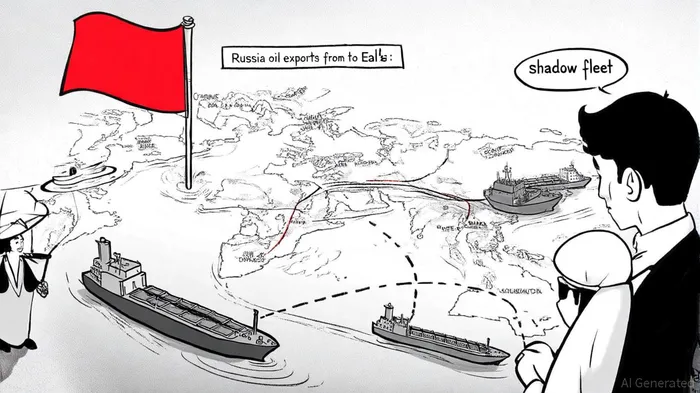







Comentarios
Aún no hay comentarios