
Russel Metals' Delta Closure and Strategic Repatriation of Working Capital: A Path to Operational Efficiency and Capital Reallocation
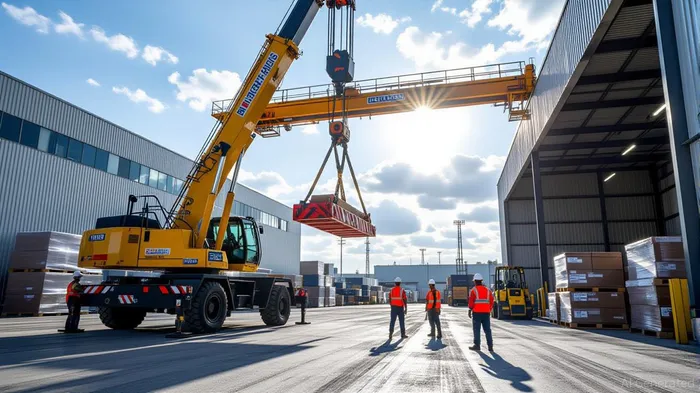
In the industrial metals logistics sector, where margins are often razor-thin and operational agility defines competitive advantage, Russel Metals Inc. has embarked on a bold rationalization strategy. The recent closure of its DeltaDAL--, British Columbia, facility—announced in September 2025—represents a pivotal step in this journey. By repatriating excess working capital, optimizing inventory integration, and repurposing assets, the company is not merely cutting costs but reengineering its operational DNA to align with the demands of a post-pandemic, supply-constrained global economy.
Strategic Rationale: From Excess Capacity to Capital Efficiency
Russel Metals' decision to shutter the Delta location is part of a broader initiative to reduce excess capacity in its Western Canadian operations. According to a report by Stockhouse, the closure will integrate inventories from Delta into other regional hubs, enabling the repatriation of excess working capital[1]. This move is critical in an industry where inventory turnover and working capital management are key performance indicators. By consolidating operations, Russel aims to eliminate redundancies while maintaining service levels—a delicate balance that, if executed well, could enhance its EBITDA margins.
The financial implications are equally striking. The company has already reduced invested capital by $58 million in Q3 2024 through working capital optimization[1]. With the Delta closure, it projects an additional $40–50 million reduction, bringing the total to approximately $100 million[2]. This capital will be reallocated to high-growth areas, such as digital logistics platforms and automation, which are increasingly vital in an industry grappling with labor shortages and rising transportation costs.
Accounting for Restructuring: Transparency and Compliance
The Delta closure will incur a $4 million restructuring provision in Q3 2025[2]. Under IFRS, such provisions require a detailed formal plan and reliable estimation of obligations, ensuring transparency for stakeholders[3]. Similarly, U.S. GAAP (ASC 420-10) mandates that restructuring liabilities be recognized only when incurred, emphasizing the need for rigorous financial reporting[4]. Russel's approach—disclosing the nature of the restructuring, expected completion dates, and financial impacts—aligns with these standards, reinforcing investor confidence in the company's governance.
Operational Efficiency: Beyond Cost-Cutting
The closure is not merely a cost-reduction exercise but a strategic repositioning. By removing, refurbishing, and relocating processing equipment from Delta, Russel avoids capital expenditures while enhancing productivity at other sites[1]. This mirrors best practices in operational efficiency, where workflow optimization and asset utilization are prioritized[5]. For instance, integrating Delta's inventory into regional hubs reduces storage costs and accelerates order fulfillment, a critical advantage in a sector where just-in-time delivery is paramount.
Moreover, the sale of the Delta real estate—expected to generate over $40 million in Q2 2026[2]—provides liquidity for further strategic investments. This aligns with the company's post-2023 acquisition strategy, which sought to consolidate seven service centers into a cohesive network. The Delta closure thus represents the final phase of a multiyear rationalization effort, ensuring that the company's capital structure remains lean and responsive to market shifts.
Capital Reallocation Opportunities
The freed-up capital presents significant opportunities. In a metals logistics industry characterized by cyclical demand and volatile commodity prices, Russel's focus on capital efficiency positions it to outperform peers. For example, the $100 million reduction in invested capital could fund investments in predictive analytics for demand forecasting or green logistics initiatives, which are gaining traction as sustainability becomes a non-negotiable for clients.
Conclusion: A Model for Industrial Resilience
Russel Metals' Delta closure exemplifies how strategic repatriation of working capital and operational efficiency can drive long-term value creation. By leveraging restructuring provisions, optimizing inventory flows, and adhering to accounting rigor, the company is transforming its operational footprint. In an industry where agility and capital discipline are paramount, this approach not only mitigates risks but also unlocks opportunities for growth. For investors, the message is clear: Russel's commitment to capital reallocation and efficiency is a testament to its resilience in an era of relentless disruption.







Comentarios
Aún no hay comentarios