
Rupee Falls Further as Short-Term Players Unwind Bullish Bets
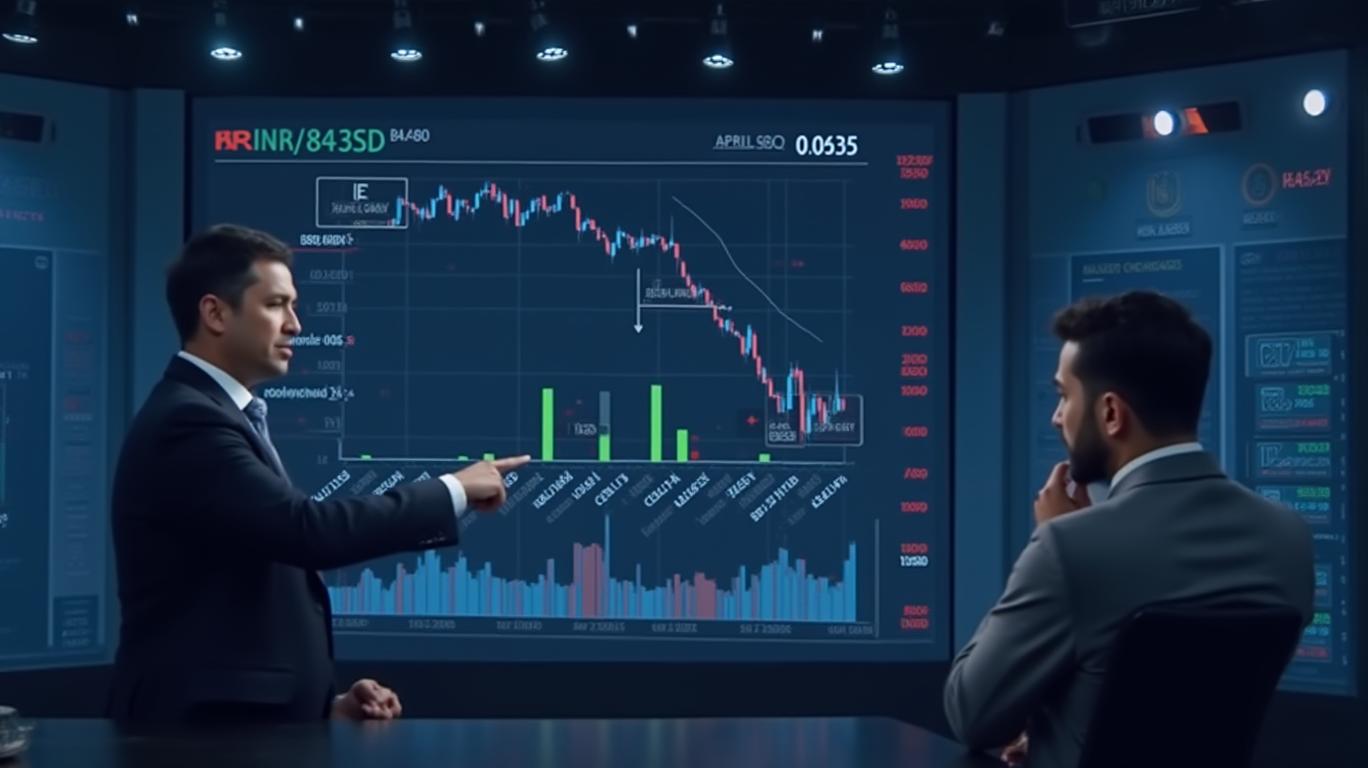
The Indian rupee (INR) has entered a precarious phase, sliding to a 2-day low of 85.267 per USD on April 23, 2025, as short-term traders unwind bullish bets and geopolitical tensions exacerbate market volatility. This decline underscores a broader struggle between domestic resilience and external headwinds, with short-term capital flows playing a decisive role in the currency’s trajectory.
The Recent Decline in Context
The rupee’s weakness is not isolated but part of a global shift. The U.S. dollar index surged to 99.64 in early April, its highest level in two years, as traders priced in delayed Federal Reserve rate cuts and reduced trade tensions between the U.S. and China. Meanwhile, India’s foreign exchange reserves dipped to $642.63 billion—still robust but down from record highs—amid sustained interventions by the Reserve Bank of India (RBI).
Geopolitical and Economic Drivers
The immediate catalyst for the rupee’s April decline was a deadly terrorist attack in Pahalgam, Jammu and Kashmir, which killed 28 and reignited regional instability. Such events typically trigger capital outflows from emerging markets, as investors shift to safer assets. This fear-driven liquidity shift was compounded by pending economic data: traders braced for India’s April HSBC Purchasing Managers’ Index (PMI), which could reveal whether the economy is losing momentum.
Domestic inflation also remains a concern. While the RBI has maintained terminal interest rates to combat price pressures—particularly in food staples—this has narrowed India’s interest rate differential with the U.S., reducing the rupee’s appeal to carry-trade investors.
The Role of Short-Term Traders
The most critical factor, however, is the unwinding of bullish bets by speculative traders. Earlier in 2025, traders had built long positions in the rupee, betting on India’s inclusion in global bond indices and a rebound in foreign institutional investor (FII) inflows. But by April, these positions were reversed as:
1. FII outflows accelerated: Net FII outflows hit ₹2,035 crore by late February / 2025, with fears of U.S. tariffs on Indian exports (a $88 billion trade corridor) spooking investors.
2. Policy shifts: The RBI’s shift to a more flexible exchange rate regime, ending its aggressive interventionist stance, signaled to traders that the rupee’s stability was no longer guaranteed.
3. Technical breakdowns: The rupee’s breach of support levels—such as the 85.00 mark—triggered algorithmic selling, amplifying the decline.
Analysts at Gavekal Research warn that if the rupee slips below 84.80, it could accelerate toward 86.50 by year-end, fueled by speculative short positions.
Technical and Sentiment Factors
Traders are also reacting to market sentiment shifts. While India’s equity markets have shown resilience—shares of tech giants like HCL Technologies surged 7.7% on strong earnings—the rupee’s decline reflects a broader lack of confidence in emerging markets.
The RBI’s net short dollar position in forex swaps (projected to hit $95 billion) further underscores the central bank’s struggle to counteract these flows without tightening liquidity.
Outlook and Investment Implications
The rupee’s path hinges on three critical variables:
1. Geopolitical stability: Escalation in Kashmir or broader U.S.-China trade wars could deepen capital outflows.
2. FII behavior: A reversal of FII outflows—possible if global risk appetite improves—might stabilize the rupee.
3. Policy responses: The RBI may need to recalibrate its intervention strategy, potentially sacrificing forex reserves to defend key levels.
Conclusion
The rupee’s decline to 85.267 on April 23, 2025, is a stark reminder of the fragility of emerging market currencies in the face of geopolitical and macroeconomic uncertainty. Short-term traders, reacting to policy shifts and capital outflows, have amplified volatility, pushing the rupee toward key technical thresholds.
With U.S. tariffs on Indian exports looming, FII outflows persisting, and the RBI’s tools constrained, the currency faces further downside risks. Analysts project a potential drop to 86.50 by year-end, though a rebound in FII inflows or a surprise RBI rate cut could limit losses. Investors should monitor the rupee’s resistance at 85.00, the HSBCHSBC-- PMI release, and geopolitical developments closely—this is a market where sentiment and speculative flows will dominate.
In this environment, hedging strategies—such as currency forwards or diversified emerging market ETFs—are critical. The rupee’s story is not just about India’s fundamentals but the global appetite for risk—a lesson traders will not soon forget.







Comentarios
Aún no hay comentarios