
The Rising Imperative of Climate Resilience Infrastructure in the UK: Investment Opportunities Amid Escalating Climate Risks
The UK's climate resilience agenda has entered a new phase of urgency. While hypothetical scenarios such as a 4°C temperature rise or a 2-metre sea level rise remain statistically unlikely, their potential economic and infrastructural consequences are no longer abstract. Recent government reports and the Climate Change Committee's (CCC) 2025 adaptation progress review underscore a stark reality: the cost of inaction far outweighs the cost of preparation. As extreme weather events-whether hypothetical storms like Storm Goretti or real-world disruptions-become more frequent, the demand for climate-resilient infrastructure is accelerating. Investors must now grapple with both the risks and opportunities in this evolving landscape.
The Escalating Climate Threat and Government Response
The UK government has acknowledged the growing risks posed by climate change, particularly the potential collapse of Atlantic Ocean currents, which could disrupt agriculture, energy systems, and infrastructure according to the Guardian. In response, it has committed £10.5 billion to flood and coastal erosion protection by 2036, a figure that reflects the scale of investment required to safeguard vulnerable regions. However, as the CCC has repeatedly emphasized, these efforts remain fragmented. The 2025 adaptation progress report criticizes the government for failing to integrate climate resilience into core policy-making, particularly in health, water supply, and digital infrastructure.
The National Adaptation Programme (NAP4), due in 2028, represents a critical juncture. The government has pledged to strengthen adaptation objectives, including updated guidance for infrastructure operators to identify and mitigate climate risks. For instance, the Department for Transport's Climate Risk Assessment Guidance now requires operators to prioritize resilience in planning. Similarly, the Cyber Security and Resilience Bill aims to embed climate adaptation into digital infrastructure, ensuring the resilience of data networks and smart technologies. These measures, while welcome, are still in their early stages.
The Investment Case: Sectors Under Pressure
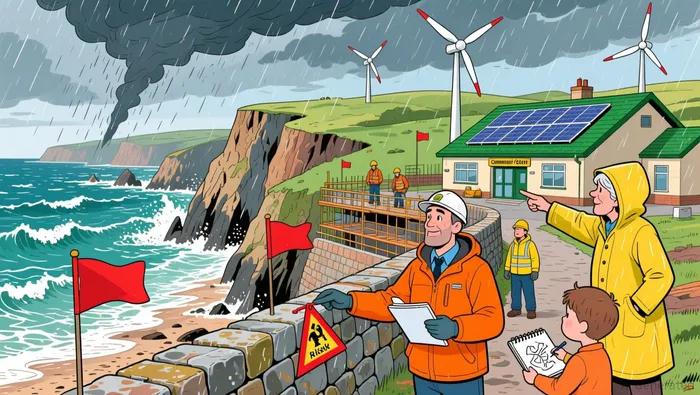 The most immediate investment opportunities lie in sectors directly exposed to climate risks. Flood and coastal protection, for example, is a £10.5 billion priority over the next decade. This includes both traditional engineering solutions-such as sea walls and drainage systems-and innovative approaches like nature-based flood management. The government's emphasis on local nature recovery strategies suggests a growing role for green infrastructure, which could attract private capital through public-private partnerships.
Digital infrastructure is another frontier. The CCC has highlighted the vulnerability of the UK's digital networks to extreme weather, from power outages to cyber threats exacerbated by climate stressors. The Cyber Security and Resilience Bill, which grants Ofcom a statutory remit for data infrastructure resilience, signals a regulatory shift toward proactive adaptation. Investors in renewable energy, microgrids, and climate-monitoring technologies may find fertile ground here.
Transport and energy sectors also present compelling cases. The Department for Transport's Climate Risk Assessment Guidance mandates that operators address risks such as heat stress on rail networks and flooding in road infrastructure. Meanwhile, the energy sector faces dual pressures: decarbonization and resilience. Grid operators must now design systems that withstand both extreme temperatures and cyberattacks, creating demand for advanced grid technologies and distributed energy solutions.
The Challenge of Coordination
Despite these initiatives, the CCC's 2025 report remains critical of the UK's adaptation strategy, describing it as "piecemeal and disjointed". This fragmentation poses a risk to investors. For example, while the government has updated planning guidance for flood protection, local implementation varies widely. Similarly, the integration of climate adaptation into digital infrastructure planning depends on cross-sector collaboration, which has historically lagged.
The solution lies in aligning private investment with public policy. The government's record £10.5 billion commitment is a start, but it will need to be matched by private capital to achieve scale. This requires clearer regulatory frameworks, such as standardized risk assessments and incentives for green bonds or resilience-focused infrastructure funds.
Conclusion: A Call for Proactive Investment
The UK's climate resilience agenda is at a crossroads. While the government has taken steps to address extreme weather risks, the Climate Change Committee's warnings highlight the need for more cohesive action. For investors, the message is clear: the demand for climate-resilient infrastructure is accelerating, driven by both regulatory shifts and market pressures. Sectors such as flood protection, digital infrastructure, and transport offer not only risk mitigation but also substantial returns for those who act decisively.
As the Fourth National Adaptation Programme approaches, the UK's ability to transform its infrastructure will depend on the willingness of both public and private actors to invest in resilience. The cost of delay, as the CCC has warned, will be far greater than the cost of preparation.







Comentarios
Aún no hay comentarios