
Rising Demand for Short-Term Mortgages: A Strategic Opportunity in the UK Housing Market
The UK mortgage market is undergoing a seismic shift. For the first time in years, two-year fixed-rate mortgages now offer lower rates than their five-year counterparts, a phenomenon known as rate inversion. This structural change, driven by falling Bank of England base rates and evolving borrower preferences, signals a pivotal moment for investors. Short-term mortgages are no longer a niche product but a strategic asset class, offering opportunities in financial institutionsFISI--, mortgage-backed securities (MBS), and real estate with price resilience. Let us dissect the drivers and implications.
The Inversion of Rates: A Mirror of Market Sentiment
The inversion of two- and five-year mortgage rates is striking. At a 60% loan-to-value (LTV) ratio, Santander's two-year fixed rate stands at 3.99%—lower than its five-year equivalent of 4.21% (fee-free option). Similarly, at 75% LTV, Yorkshire Building Society's two-year rate is 4.27%, while the five-year option from First Direct is 4.38% fee-free. This inversion reflects borrower confidence that interest rates will continue to fall. With the Bank of England's base rate now at 4.25%—down from 4.5% in early 2025—and inflation moderating, borrowers are opting for shorter terms to lock in low rates while retaining flexibility to refinance later.
Borrower Behavior: Shorter Terms, Sharper Focus
The preference for shorter terms is not merely about cost. It reflects a pragmatic calculus:
1. Refinancing Potential: Borrowers anticipate further base rate cuts, expecting to secure even lower rates in the next few years. A two-year term allows them to exit high-cost mortgages before rates drop further.
2. Lower Fees: Shorter-term mortgages often carry smaller upfront costs. For instance, Santander's two-year product at 3.99% has a fee of £1,999, versus £1,495 for a five-year Yorkshire Building Society deal at 4.31%. This makes shorter terms more accessible for cash-constrained buyers.
3. Economic Prudence: With Standard Variable Rates (SVRs) averaging 7.36% (up to 7.99% for some lenders), borrowers want to avoid being trapped in expensive revert rates. Short-term fixes provide a controlled runway before exposure to volatility.
Regulatory Tailwinds: A Perfect Storm of Support
Policy changes are amplifying this shift:
- Lending Criteria Relaxation: The FCA's potential easing of stress-testing thresholds—from 8-9% to 6.5%—could boost borrowing power by 15-20%, enabling more buyers to qualify for mortgages.
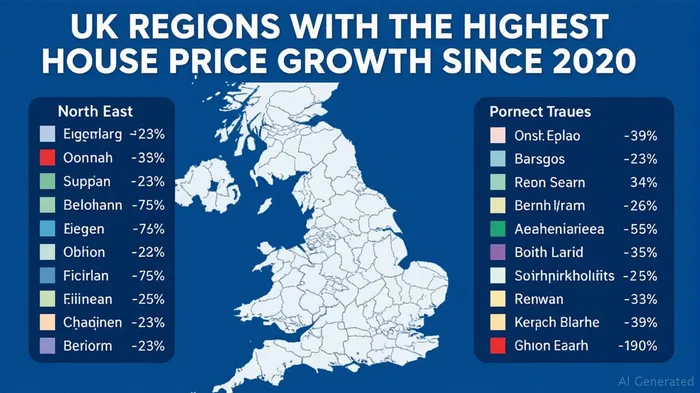
- Affordability Initiatives: The government's push to increase housing supply—via Homes England's over-achievement of 2024/25 targets—and regional focus on high-growth areas (e.g., North East England's 14.3% annual price growth) are creating demand in underserved markets.
- Monetary Policy: The Bank of England's dovish stance, with further cuts anticipated by late 2025, ensures a low-rate environment conducive to refinancing.
Investment Implications: Where to Allocate Capital
The short-term mortgage boom presents three clear investment avenues:
- Financial Institutions: Banks with robust mortgage origination businesses—Lloyds Banking Group and Barclays—stand to benefit from rising demand. Their exposure to adjustable-rate mortgages and fee-based origination services positions them to capitalize on refinancing waves.
Both firms have strong customer satisfaction scores and competitive rates, reducing risks of borrower attrition.
- Mortgage-Backed Securities (MBS): Short-term mortgages' lower rates and shorter durations reduce prepayment risks, making MBS a safer yield play. The yield differential between UK MBS and government bonds has widened to 1.2%—a compelling margin in a low-yield world.
Investors should prioritize MBS backed by short-term, high-LTV mortgages, which align with the current origination trends.
- Resilient Real Estate: Regions like the North East of England—where prices are growing faster than London—offer prime opportunities. Property-backed by short-term mortgages in these areas benefits from strong rental demand and price appreciation.
Investors might consider REITs focused on affordable housing or direct investments in high-growth regions.
Risks to Consider
While the outlook is positive, risks remain:
- Affordability Constraints: First-time buyers still face median home prices 7.7 times average earnings, limiting broad-based demand.
- Supply Shortages: New home completions have fallen 9% annually, exacerbating competition for existing homes.
- Policy Volatility: Geopolitical risks or inflation spikes could force the Bank of England to halt rate cuts, disrupting refinancing plans.
Conclusion: A Strategic Play for Disciplined Investors
The inversion of mortgage rates and the shift toward shorter-term products are not temporary blips but a structural realignment. Regulatory tailwinds, declining inflation, and borrower pragmatism have created a compelling case for investing in financial institutions, MBS, and resilient real estate. For investors willing to navigate near-term risks, this is a chance to secure exposure to a market poised for growth. The UK housing sector's next chapter will be written by those who bet on flexibility—and the shortest path to yield.





Comentarios
Aún no hay comentarios