
The Rise of Propane-Powered School Buses: A Sustainable and Cost-Effective Mobility Trend with Long-Term Investment Potential
A Case Study in Pragmatic Decarbonization: Guilford County's Propane Initiative
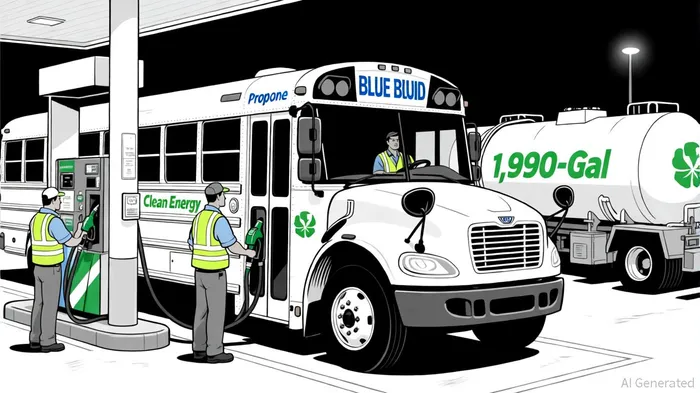
Guilford County Schools, a district serving over 80,000 students in North Carolina, has unveiled 10 Blue Bird Vision Propane buses, marking a strategic pivot toward cleaner energy, according to a district announcement. These buses, powered by 7.3L V8 Ford engines and ROUSH CleanTech propane systems, deliver equivalent performance to diesel counterparts while slashing annual fuel and maintenance costs by up to $3,700 per unit, and reduce greenhouse gas emissions by 10–15% compared to diesel, according to the National Propane Gas Association. The district's investment in a 1,990-gallon propane tank at Dudley High School, supported by fuel provider Sharp Energy, underscores the importance of localized infrastructure in enabling this transition (see the Guilford County Schools announcement above).
This initiative is not an isolated experiment. It reflects a broader industry trend: propane buses now account for 5% of the U.S. school bus fleet, a figure projected to rise sharply as diesel compliance costs escalate and electric alternatives grapple with charging infrastructure delays, according to NPGA data. The 2027 EPA NOx emissions standards, which will phase out older diesel models, further tilt the playing field in favor of propane, which meets these requirements without costly aftertreatment systems (NPGA data).
Market Dynamics: Cost Efficiency and Policy Tailwinds
The economic case for propane buses is robust. According to industry data, the payback period for switching from diesel to propane is 18–24 months, with a vehicle lifespan of 12–15 years, generating long-term savings (NPGA data). This financial logic is amplified by federal incentives. The 2024 Clean School Bus (CSB) program, for instance, allocates $965 million, offering up to $35,000 per propane bus to school districts through the CSB Rebate. Meanwhile, the Federal Transit Administration's $1.5 billion fiscal 2025 funding package explicitly prioritizes propane as a bridge to low-emission mobility, recognizing its infrastructure advantages over battery-electric alternatives, according to a National League of Cities article.
Infrastructure and Energy Transition Opportunities
The rise of propane buses is catalyzing growth in two key areas: green vehicle manufacturing and propane infrastructure. Blue Bird, which has sold over 23,000 propane buses since 2008, is a clear beneficiary, but the ecosystem extends further. Companies like Dover Corporation, through its subsidiary SWEP, are expanding propane testing facilities to support the next generation of sustainable HVAC and fuel systems, as noted in a Dover announcement. Such investments are critical, as the global demand for low-GWP refrigerants and clean fuel infrastructure is surging, driven by regulations like the EU's F-Gas Regulation.
For investors, this creates a dual opportunity. First, exposure to manufacturers like Blue Bird and infrastructure enablers like Dover offers a diversified stake in the energy transition. Second, the policy-driven demand for propane infrastructure-tanks, fueling stations, and distribution networks-presents a scalable, capital-efficient asset class. Unlike electric vehicle charging, which requires grid upgrades and rare materials, propane infrastructure leverages existing supply chains and is less vulnerable to geopolitical bottlenecks.
Conclusion: A Sustainable Path Forward
Guilford County's adoption of propane buses is more than a local success story-it is a harbinger of a sector-wide transformation. As school districts nationwide seek to balance environmental goals with fiscal constraints, propane offers a pragmatic middle ground. For investors, the implications are clear: the energy transition is not a monolithic shift but a mosaic of solutions, each tailored to specific contexts. Propane-powered transportation, with its blend of cost efficiency, regulatory alignment, and infrastructure readiness, is poised to play a pivotal role in this mosaic.





Comentarios
Aún no hay comentarios