
The Rise of Low-Carbon LNG: Coastal Bend LNG and the New EPC Megaproject Landscape
The global energy transition is reshaping the landscape of liquefied natural gas (LNG) development, with low-carbon technologies and carbon capture, utilization, and storage (CCUS) emerging as critical enablers of sustainable growth. At the heart of this transformation lies the engineering, procurement, and construction (EPC) sector, whose contractors are not only building the infrastructure of the future but also redefining the economics of decarbonization. Coastal Bend LNG, a 22.5 million ton per annum (MTPA) project on the Texas Gulf Coast, exemplifies this shift, combining cutting-edge carbon capture innovations with strategic partnerships to position itself as a leader in low-carbon LNG. For investors, the interplay between EPC contractors and LNG developers like Coastal Bend offers a compelling lens through which to assess the investment potential of the energy transition.
The EPC Sector: A Catalyst for Decarbonization
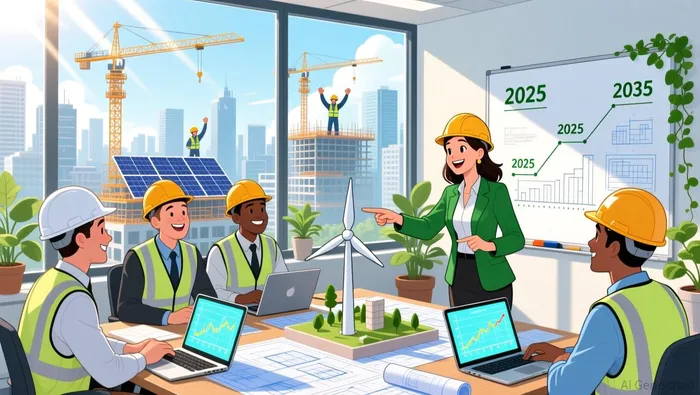
The EPC market for oil and gas is projected to grow from USD 56.52 billion in 2025 to USD 92.95 billion by 2035, driven by a compound annual growth rate (CAGR) of 5.1%. This expansion is fueled by two megatrends: the resurgence of North American LNG exports and the global push for decarbonization. North America's 40.1% market share in 2035 underscores the region's pivotal role in this transition, with EPC contractors like Technip Energies and KBR Inc.KBR-- emerging as key players.
Technip Energies, for instance, has demonstrated exceptional financial resilience. In the first nine months of 2025, the company reported a 9% year-over-year revenue increase to €5.4 billion and a 9% rise in Recurring EBITDA to €478 million. Its adjusted backlog of €15.7 billion, up 23% year-over-year, reflects robust demand for its modularized solutions, such as the SnapLNG technology deployed in the Commonwealth LNG project. Beyond LNG, Technip's acquisition of Ecovyst's Advanced Materials & Catalysts business signals a strategic pivot toward hydrogen and carbon capture, aligning with the energy transition's long-term trajectory.
Coastal Bend LNG: A Model for Low-Carbon Innovation
Coastal Bend LNG's 22.5 MTPA project is a case study in integrating decarbonization into large-scale LNG development. The project's front-end engineering and design (FEED) study with Solvanic to implement electrochemically mediated amine regeneration (EMAR) technology is a breakthrough in carbon capture. By using electricity instead of high-temperature steam to regenerate amines, EMAR reduces energy consumption and costs by nearly 40%, making CCUS economically viable for LNG facilities. This innovation, coupled with partnerships like Envana's tokenization of carbon intensity under the OGMP 2.0 framework, positions Coastal Bend as a pioneer in transparent, low-carbon LNG production.
The project's scale also creates a $9.3–$11.1 billion EPC and supply chain value pool, attracting contractors with expertise in modular construction and CCUS. While Technip Energies has not been directly linked to Coastal Bend's EPC work, its involvement in similar projects-such as the North Field South expansion in Qatar-highlights its capacity to deliver complex, low-carbon LNG infrastructure. Meanwhile, KBR Inc. and Técnicas Reunidas, both selected for Coastal Bend's FEED and EPC roles, bring complementary strengths. KBR's Carbon Reduction Plan for 2025 and its spin-off of the Mission Technology Solutions segment reflect a strategic focus on sustainable technologies, while Técnicas Reunidas' 209.6% growth in low-carbon sales in 2024 underscores its operational agility in decarbonization.
Financial Health and Strategic Resilience
The investment case for EPC contractors hinges on their ability to balance profitability with decarbonization. KBR's reaffirmed 2025 financial targets, bolstered by its HomeSafe Alliance joint venture, suggest strong earnings potential. Similarly, Técnicas Reunidas' record Q2 2025 net sales of €1.4 billion and its portfolio of biomass power plants and green hydrogen projects demonstrate resilience in a shifting market. These firms are not merely adapting to regulatory pressures but proactively shaping the energy transition through innovation.
For Coastal Bend LNG, the integration of CCUS and carbon tokenization aligns with global demand for low-carbon energy. By reducing the carbon intensity of its LNG, the project taps into markets where buyers are willing to pay a premium for climate-conscious supply chains. This value proposition is critical in an era where energy security and decarbonization are no longer mutually exclusive.
Conclusion: A Dual Opportunity for Investors
The rise of low-carbon LNG represents a dual opportunity for investors: EPC contractors with diversified technology portfolios and LNG developers leveraging CCUS and modular construction are well-positioned to capitalize on the energy transition. Technip Energies, KBRKBR--, and Técnicas Reunidas exemplify this duality, combining financial strength with strategic investments in hydrogen, carbon capture, and sustainable fuels. Coastal Bend LNG, with its innovative approach to decarbonization, serves as a blueprint for future projects. As the EPC market expands and global demand for low-carbon energy intensifies, these firms and projects will likely outperform peers reliant on traditional fossil fuel infrastructure.
For investors, the key lies in identifying EPC contractors and LNG developers that not only meet current decarbonization targets but also anticipate the next wave of technological and regulatory shifts. In this rapidly evolving landscape, adaptability and innovation are the ultimate assets.





Comentarios
Aún no hay comentarios