
The Rig Count Paradox: How Falling Drilling Activity Could Ignite the Next Energy Rally
The inverse relationship between U.S. oil rig counts and crude prices has long been a cornerstone of energy market analysis. Now, as rig activity hits its lowest level since October 2021, the stage is set for a potential supply-demand imbalance that could propel oil prices higher by late 2025. Investors seeking to capitalize on this dynamic must navigate the interplay between declining drilling activity, Permian Basin constraints, and the strategic positioning of energy equities.
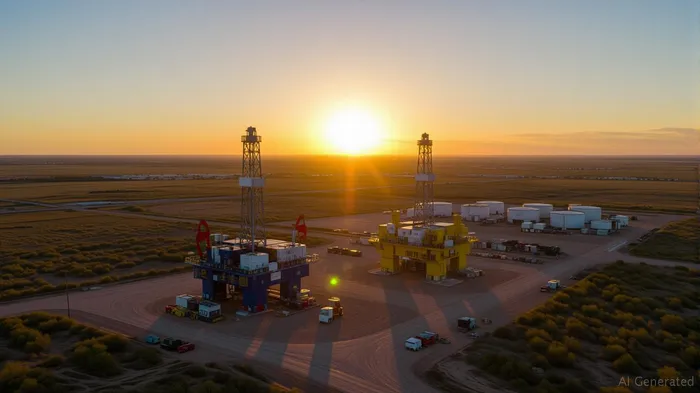
The Rig Decline: A Ten-Week Downturn with Long-Term Implications
Over the past 10 weeks, the U.S. oil rig count has fallen to 425 units, marking the tenth consecutive weekly decline and the lowest level since late 2021. This contraction, driven by weak near-term oil prices and cost pressures from steel tariffs, has drawn comparisons to historical cycles where rig cuts preceded price spikes. reveals a steady downward trajectory, with Permian Basin activity—critical to U.S. production growth—also declining. Texas rig counts fell to 256, while New Mexico's dropped to 90, signaling reduced exploration in one of the world's most prolific basins.
The Permian Puzzle: Water Constraints and Tariff Headwinds
The Permian Basin, responsible for nearly 40% of U.S. crude output, faces twin challenges: produced water management and steel tariffs. Over 70% of energy executives now believe water disposal issues will constrain drilling activity over the next five years, with 32% citing “significant constraints” due to over-pressurized injection zones. Simultaneously, the 50% steel tariff has raised drilling costs by 4–6% for many firms, forcing smaller players to curtail activity. The Dallas Fed Energy Survey highlights a 61% probability of production cuts if WTIWTI-- remains below $60/barrel, underscoring the fragility of supply growth.
Supply Constraints Meet Rising Demand: The Case for Higher Oil Prices
The data paints a clear picture: reduced rig counts today translate to lower future supply. With global oil demand expected to grow by 1.2 million barrels per day (bpd) in 2025 and OPEC+ maintaining production discipline, the market could tighten significantly by year-end. shows a correlation coefficient of -0.75 between rig declines and price gains, reinforcing the inverse relationship. Analysts at Goldman SachsGS-- now forecast WTI to reach $85/barrel by Q4 2025, while the EIA projects U.S. production growth to slow to just 0.2 million bpd annually—a stark contrast to the 1.5 million bpd surge seen in 2022.
Investment Strategy: Playing Both Sides of the Market
For investors, the path to profit lies in long positions in crude futures and selectively bullish energy equities:
Commodities: Establish long positions in WTI or Brent futures, focusing on contracts expiring in late 2025. The contango structure in oil markets currently offers a low-cost entry point, with storage costs offsetting roll yield losses.
Equities: Prioritize E&P firms with low production leverage and Permian exposure, such as Pioneer Natural Resources (PXD) and Devon Energy (DVN). These companies have deleveraged balance sheets and operational flexibility to capitalize on higher prices. Avoid high-cost producers or those overexposed to natural gas, which remains oversupplied.
ETFs: The Energy Select Sector SPDR Fund (XLE) offers diversified exposure to integrated majors and mid-cap E&Ps, while the United States Oil Fund (USO) tracks WTI prices.
Risks and Counterarguments
Bearish scenarios include a geopolitical supply shock (e.g., Iran ramping up exports) or a sharper-than-expected economic slowdown. However, the Dallas Fed's survey shows that even at $50/barrel, only 12% of firms would halt drilling entirely, suggesting resilience in core basins. Meanwhile, the Permian's water issues are structural, not cyclical, and could limit future production upside even if prices rebound.
Conclusion: The Bull Case for Oil and Strategic Equities
The decline in U.S. rig counts is not a temporary hiccup but a strategic recalibration by an industry prioritizing returns over growth. With supply growth constrained and demand resilient, the stage is set for a price surge by late 2025. Investors who position now—by buying crude futures and selective E&Ps—may capture a rare convergence of market fundamentals and technical momentum. As the rig count paradox unfolds, those who bet on tighter markets will be rewarded.
Final Note: Monitor the Baker HughesBKR-- rig count weekly and the Permian's produced water regulatory developments for real-time signals.





Comentarios
Aún no hay comentarios