
Rhythm Pharmaceuticals: Insider Selling and Valuation in a High-Stakes Biotech Landscape
The recent wave of insider selling at Rhythm PharmaceuticalsRYTM-- (NASDAQ: RYTM) has sparked questions about executive confidence in the company's trajectory. Against a backdrop of promising clinical data and a robust cash position, the sales by top executives—including the CFO—demand scrutiny. This article examines whether these transactions signal cautious optimism, strategic capital reallocation, or a warning for investors.
The Insider Selling Landscape: Timing and Magnitude
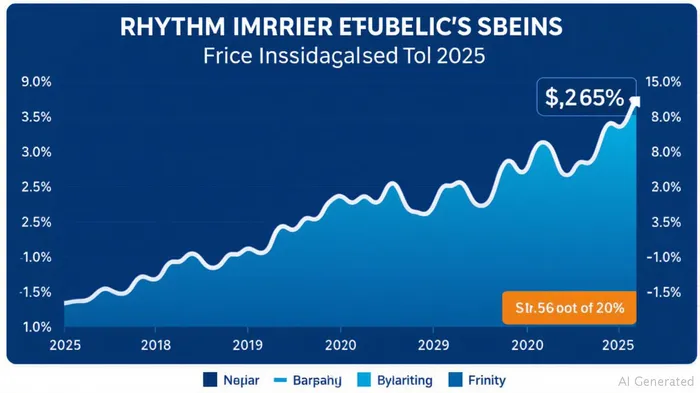
Hunter C. Smith, Rhythm's CFO, sold 42,120 shares on July 7, 2025, realizing proceeds of $3.39 million. The sale followed the exercise of stock options at $6.88 per share, with transactions executed under a Rule 10b5-1 plan adopted in February 2025. This pre-planned structure suggests the sale was not reactive to company-specific news. However, the sheer scale of the sale—reducing his direct ownership by 26%—is notable.
Other executives also offloaded shares earlier this year:
- Pamela J. Cramer (Chief Human Resources Officer) sold 15,572 shares, retaining 19,209 shares.
- Joseph Shulman (Chief Technical Officer) sold 7,969 shares, cutting his holdings by nearly half.
Total insider selling in 2025 now exceeds $27 million, with no reported purchases. While these sales represent just 0.3% of outstanding shares, they raise questions about alignment between executives and long-term investors.
Company Fundamentals: Cash, Pipeline, and Catalysts
To contextualize the selling, we must assess Rhythm's financial health and pipeline progress:
Cash Position and Burn Rate
Rhythm ended Q1 2025 with $314.5 million in cash, enough to fund operations through 2027, despite a net loss of $49.5 million in Q2. Operating expenses remain elevated, but R&D costs have declined significantly (from $128.7 million in Q1 2024 to $37 million in Q1 2025). This efficiency could alleviate near-term dilution risks, though a $150 million stock offering in 2025 could still pressure shares.
Pipeline Momentum
- Bivamelagon: A Phase 3-ready therapy for acquired hypothalamic obesity (AHO), a rare and debilitating condition with no approved treatments. Data showed a -19.8% BMI reduction, and an FDA submission is expected by Q3 2025. Analysts estimate a $1.2 billion market opportunity if approved.
- IMCIVREE Pediatric Expansion: Trials to extend use to children under 6 could double the eligible patient pool.
These catalysts are critical. Success here could validate Rhythm's valuation, which currently sits at $5.5 billion—a premium reflecting growth expectations.
Institutional Sentiment: A Mixed Picture
Institutional ownership trends reflect divided views:
- Reductions: Goldman SachsGS-- cut holdings by 53.3%, citing potential dilution risks.
- Increases: Janus HendersonJHG-- and T. Rowe Price added stakes, betting on pipeline execution.
The net result is a modest decline in institutional ownership, but overall support remains. Westfield Capital and Primecap Management now hold significant stakes, signaling confidence in Rhythm's long-term prospects.
Analyst Consensus: Buy with Caveats
Analysts maintain a “Buy” consensus, with an average price target of $91.00—5% below the July 2025 price of $95.57. Key points:
- Upside Drivers: Positive FDA decisions and pediatric trial results could push the stock toward $129 (Goldman Sachs) or even $150 (speculative consensus).
- Downside Risks: Regulatory delays, pricing disputes, or a failed stock offering could trigger a selloff.
Investment Analysis: Opportunity or Overvaluation?
Should investors buy RYTM despite insider selling?
Bull Case:
- The Bivamelagon FDA filing in Q3 2025 is a binary event. A positive outcome could propel the stock to $120+, rewarding buyers now.
- Strong cash reserves provide a runway to execute on multiple pipeline opportunities.
Bear Case:
- Insider sales, even under 10b5-1 plans, may reflect personal financial needs or a preference to lock in gains amid valuation uncertainty.
- A $150M equity raise could dilute shares by 2.7–4.3%, pressuring the stock in the short term.
Conclusion: A High-Reward, High-Risk Bet
Rhythm Pharmaceuticals is a story stock, where success hinges on executing on its pipeline. The insider sales are not definitive red flags—Smith's stake remains substantial, and the 10b5-1 plan mitigates concerns about timing. However, investors must weigh the $37.7 million Q1 revenue miss against the $1.2 billion Bivamelagon market opportunity.
Recommendation:
- Aggressive investors might consider a partial position at current levels, targeting the Q3 FDA decision as a catalyst.
- Wait-and-see investors should avoid buying until post-FDA results, when valuation gaps narrow.
The stock's $86.70 closing price (July 11) offers a margin of safety if Bivamelagon succeeds. But with insider exits and dilution risks, this remains a high-conviction call, best suited for those willing to bet on biotech's high-reward, high-volatility dynamic.
Disclosure: This analysis is for informational purposes only and not a recommendation to buy or sell securities. Always consult a financial advisor.





Comentarios
Aún no hay comentarios