
Retirement Debt Crisis: Strategic Pathways for Credit Card Debt Relief
The retirement years, once envisioned as a period of financial stability and leisure, are increasingly shadowed by a growing crisis: the surge in credit card debt among older Americans. According to a 2025 analysis, the average credit card balance for U.S. adults aged 65 and older reached $7,321 in the first quarter of 2025, marking a 5.8% increase from $6,921 in Q1 2024. This trend underscores a systemic challenge, with 92.6% of retirement-age Americans carrying an average balance. The crisis is not uniform geographically, as states like Alaska, Maryland, and Texas report the highest average balances, while South Dakota, Iowa, and Minnesota lag behind.
Behavioral Finance and the Psychology of Debt Repayment
The psychological toll of debt in retirement cannot be overstated. Behavioral finance reveals that retirees often face a unique interplay of cognitive biases and emotional stressors. For instance, the debt snowball method, which prioritizes paying off smaller debts first, leverages the psychological benefit of early wins to sustain motivation. This approach aligns with the human tendency to seek immediate gratification-a concept known as present bias. Conversely, 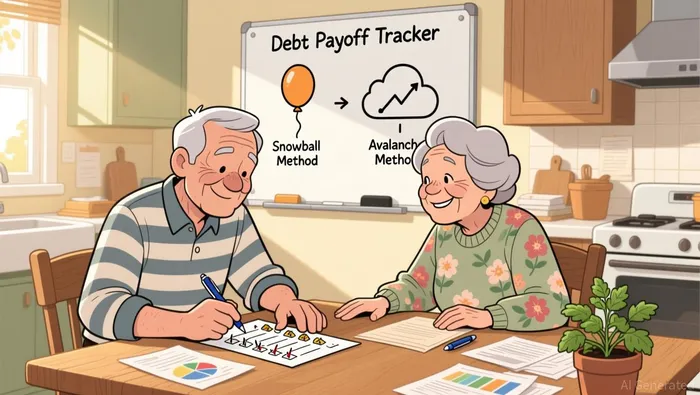 the debt avalanche method, which targets high-interest debts first, is more financially efficient but may lack the motivational punch of the snowball method. A 2025 analysis by NCOA emphasizes that retirees must weigh these strategies based on their personal financial circumstances and psychological resilience.
The choice between these frameworks is not merely technical but deeply human. For retirees with limited income, the snowball method's incremental successes can provide critical emotional reinforcement, whereas the avalanche method's long-term savings may appeal to those with a stronger capacity for delayed gratification. This duality highlights the need for personalized debt management plans, particularly for a demographic that often lacks the financial flexibility to absorb prolonged repayment timelines.
Negotiation Tactics and Systemic Support
Beyond repayment strategies, retirees must also engage in proactive negotiation with creditors. The NCOA advocates for direct communication with credit card companies to secure lower interest rates, hardship programs, or payment plans. Such tactics are particularly vital for older adults, 80% of whom face financial instability or are at risk of economic insecurity as they age. For example, debt consolidation-whether through balance transfer cards or personal loans-can simplify payments and reduce interest burdens. However, these options require careful evaluation of fees and terms, as retirees may lack the liquidity to capitalize on favorable offers.
Systemic support is equally critical. The BLS data reveals that only 24% of civilian workers have access to defined benefit retirement plans, while 65% have access to defined contribution plans. This disparity underscores the fragility of retirement savings, particularly for those relying on 401(k)-style accounts. Without robust pension systems, retirees are more vulnerable to debt shocks, making policy interventions-such as reauthorizing the Older Americans Act-essential to bolster community-based financial counseling and debt relief programs.
The Financial and Psychological Imperative for Action
The urgency of addressing retirement debt is underscored by its cascading consequences. Medical debt, for instance, has become a silent crisis, with many seniors forced to delay or forgo care due to financial constraints. Reducing credit card debt can free up resources for healthcare, thereby mitigating long-term risks to both physical and mental well-being.
From a financial perspective, the cost of inaction is steep. At an average interest rate of 18–20%, credit card debt compounds rapidly, eroding savings and Social Security income. The avalanche method, by prioritizing high-interest debts, can save retirees thousands in interest over time. Yet, as behavioral finance teaches, the psychological cost of prolonged debt-stress, anxiety, and diminished quality of life-must also be factored into decision-making.
Conclusion: A Call for Immediate and Strategic Action
The retirement debt crisis demands a dual approach: tactical repayment strategies and systemic advocacy. Retirees must assess their psychological and financial needs to choose between snowball and avalanche methods, while leveraging negotiation tactics to reduce interest burdens. Policymakers, meanwhile, must expand access to financial counseling and retirement security programs to address root causes.
As the data from LendingTree, NCOA, and BLS makes clear, the crisis is both a personal and societal challenge. For retirees, the path to financial freedom lies not in denial but in disciplined, informed action. The time to act is now-before debt becomes an insurmountable barrier to a dignified retirement.







Comentarios
Aún no hay comentarios