
The Resurgence of Silver Over Oil: A Harbinger of Fiscal Crisis or a Strategic Buy Opportunity?
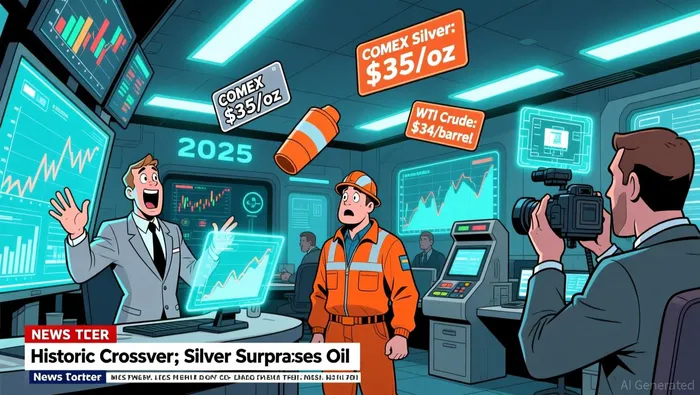
The global commodities market has witnessed a historic inversion in 2025: silver, long overshadowed by oil in valuation, has surpassed the price of a barrel of crude for the first time in over four decades. As of December 2025, silver traded at $63.06 per ounce on COMEX, while West Texas Intermediate (WTI) crude hovered at $56.19 per barrel. This shift, driven by divergent industrial demand, monetary policy dynamics, and structural energy transitions, raises critical questions for investors. Is this a harbinger of systemic fiscal instability, or a strategic inflection point for capital reallocation?
Silver's Surge: Industrial Demand and Macro Tailwinds
Silver's outperformance is rooted in its dual role as an industrial metal and a safe-haven asset. Over 70% of global silver consumption is tied to industrial applications, particularly in solar panels, electric vehicles (EVs), and electronics according to a report. The global push for decarbonization has intensified demand, while supply constraints-stemming from declining ore grades and rising extraction costs-have exacerbated deficits. A report by Metals Edge notes that silver's price surge was further amplified by a historic short squeeze in 2025, as coordinated retail investor efforts forced short sellers to buy, creating a self-reinforcing rally.
Monetary policy also played a pivotal role. The U.S. Federal Reserve's rate-cut expectations and a weakening dollar bolstered silver's appeal as a hedge against currency devaluation. Meanwhile, the gold-to-silver ratio plummeted to 68.08 in 2025, signaling silver's strong outperformance amid inflationary pressures according to a study. Analysts project silver could reach $70–$75 by late 2026 if supply-demand imbalances persist according to market analysis.
Oil's Decline: Oversupply and Structural Weakness
In contrast, oil prices have languished due to oversupply, weak demand, and the accelerating energy transition. WTI crude fell nearly 20% in 2025, marking its worst annual decline since the 2020 pandemic crash. Non-OPEC+ production unwinding and soft demand from key markets like Europe and China have saturated the market. The global shift toward renewables, coupled with efficiency gains in transportation, has further undermined oil's structural outlook.
Central banks, meanwhile, face a dilemma. While elevated energy prices traditionally complicate inflation targeting, the green transition is reshaping policy frameworks. As noted by ECB's Isabel Schnabel, central banks must now weigh the trade-offs between price stability and supporting decarbonization. This has led to a reevaluation of how energy price shocks are "looked through," with some policymakers advocating for more aggressive intervention to align with climate goals according to JPMorgan research.
Monetary Policy Risks: Diverging Trajectories
The divergent fates of silver and oil underscore broader monetary policy risks. Silver's rally reflects a "debasement trade," where investors bet on fiat currency erosion and seek hard assets as hedges according to a study. The U.S. dollar's weakness, driven by fiscal dominance and persistent deficits, has accelerated this trend. Conversely, oil's struggles highlight the challenges of balancing energy affordability with decarbonization.
For investors, the key question is whether these shifts signal a systemic fiscal crisis or a strategic reallocation of capital. Silver's industrial demand and monetary tailwinds suggest a structural bull case, particularly if the green transition accelerates. However, overbought conditions and technical indicators hint at potential short-term consolidation. Oil, meanwhile, faces prolonged pressure unless OPEC+ enforces tighter production controls or demand surges unexpectedly according to a report.
Conclusion: Navigating the New Commodity Paradigm
The silver-oil inversion is not merely a market anomaly but a reflection of deeper economic and policy shifts. For investors, this presents both opportunities and risks. Silver's dual role as an industrial and inflation hedge offers a compelling case for strategic allocation, while oil's structural challenges necessitate caution. Central banks' evolving approach to energy transitions and inflation will further shape these dynamics.
As the global economy navigates the tension between decarbonization and energy security, commodities like silver may serve as both a barometer of fiscal stress and a beacon for capital seeking resilience. The coming months will test whether this resurgence is a fleeting blip or a harbinger of a new era in commodity valuation.







Comentarios
Aún no hay comentarios