
Regulatory Tailwinds in Urban Logistics: The Teamsters' Endorsement of the NYC Delivery Protection Act
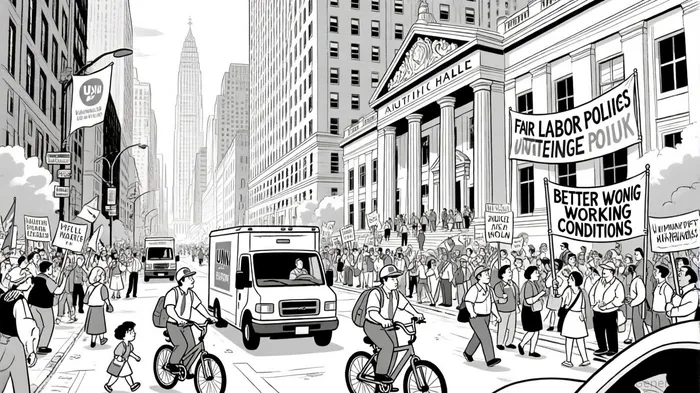
The New York City Delivery Protection Act, introduced by Councilmember Tiffany Cabán, has emerged as a pivotal piece of legislation in the evolving landscape of urban logistics. By targeting Amazon's Delivery Service Provider (DSP) model—a system that relies on third-party subcontractors to manage delivery work—the act seeks to hold corporations directly accountable for labor practices[1]. The Teamsters' endorsement of this legislation, a rare alignment of labor and regulatory ambition, signals a broader shift in how urban logistics firms must navigate labor policy. This move is not merely symbolic; it reflects a growing consensus that gig economy models, while efficient in cost, often erode worker protections and create systemic vulnerabilities.
The Teamsters' Strategic Bet
The Teamsters' support for the Delivery Protection Act is rooted in its potential to disrupt Amazon's subcontracting model, which has been criticized for exploiting workers through fragmented employment relationships[2]. By banning third-party subcontractors and imposing licensing requirements on last-mile delivery facilities, the act would force companies like AmazonAMZN-- to internalize labor costs and responsibilities[1]. This aligns with the Teamsters' broader efforts to unionize Amazon contract workers, as seen in the recent organizing efforts at the DBK4 warehouse in Queens[4]. The urgency for such legislation has been amplified by Amazon's alleged illegal termination of over 100 unionized drivers at DBK4, a move that has galvanized labor leaders and elected officials alike[1].
The Teamsters' endorsement is a calculated risk. If passed, the act could set a national precedent, compelling other cities to adopt similar measures. For urban logistics firms, this would mean a fundamental restructuring of their delivery models, shifting from a reliance on independent contractors to a more traditional employer-employee relationship. While this could increase labor costs, it also offers long-term stability by reducing turnover and fostering better worker retention—a critical factor in an industry plagued by high attrition rates[6].
Financial Implications and Adaptation Strategies
The financial impact of such regulations is already evident in New York City. In July 2025, the City Council expanded minimum wage protections for delivery workers, raising the rate to $21.44 per hour for grocery delivery workers and aligning them with food delivery standards[3]. This expansion, enacted despite the mayor's veto, underscores the political momentum behind labor reforms. However, enforcement remains a challenge. The Department of Consumer and Worker Protection (DCWP), tasked with implementing these policies, faces a lack of funding and staffing, raising questions about the act's effectiveness[2].
For last-mile delivery firms, the cost of compliance is significant. Labor regulations, combined with rising wage floors, could increase operational expenses by up to 20% in the short term[6]. Yet, these pressures are not insurmountable. Companies are already investing in technological solutions to offset rising costs. For example, Amazon's commitment to 100,000 electric vans by 2030[4] and the exploration of drone-based delivery systems—capable of reducing delivery costs by 79% compared to traditional methods[3]—highlight how firms are adapting to regulatory and environmental pressures.
Regulatory Tailwinds and Urban Innovation
The Delivery Protection Act is part of a broader trend of urban labor regulations reshaping the logistics sector. Cities like Pittsburgh and Detroit are experimenting with smart infrastructure projects, such as Pittsburgh's Smart Loading Zones, which improved loading zone turnover by 40%[2]. These initiatives demonstrate how cities are not merely imposing costs but also enabling innovation. For instance, the integration of micro-hubs and electrification in Detroit's Transport Innovation Zones[2] offers a blueprint for firms to comply with regulations while enhancing efficiency.
However, the path forward is not without friction. App-based delivery companies, including DoorDash and Grubhub, have lobbied against wage increases, arguing that such policies could lead to higher consumer prices and reduced flexibility for workers[5]. Yet, public backlash against these efforts has been swift, with elected officials and advocacy groups resisting corporate pushback[4]. This dynamic suggests that regulatory tailwinds are here to stay, and firms that resist adaptation risk losing market share to competitors who embrace innovation.
Conclusion: A New Equilibrium in Urban Logistics
The Teamsters' endorsement of the Delivery Protection Act is a harbinger of a new era in urban logistics. While the immediate financial burden on firms is undeniable, the long-term benefits of a more stable, unionized workforce and technologically advanced delivery systems could outweigh these costs. For investors, the key lies in identifying firms that are proactively adapting to these regulatory tailwinds—whether through electrification, automation, or strategic partnerships with labor organizations.
As cities continue to prioritize sustainability and worker dignity, the logistics sector must evolve from a cost-driven model to one that balances profitability with social responsibility. The Delivery Protection Act, if passed, will not merely be a labor policy; it will be a catalyst for redefining the economics of last-mile delivery in the 21st century.





Comentarios
Aún no hay comentarios