
Regulatory Risk in the Tech Sector: Apple's Challenge to the EU's Digital Markets Act and the Global Shift in Tech Policy
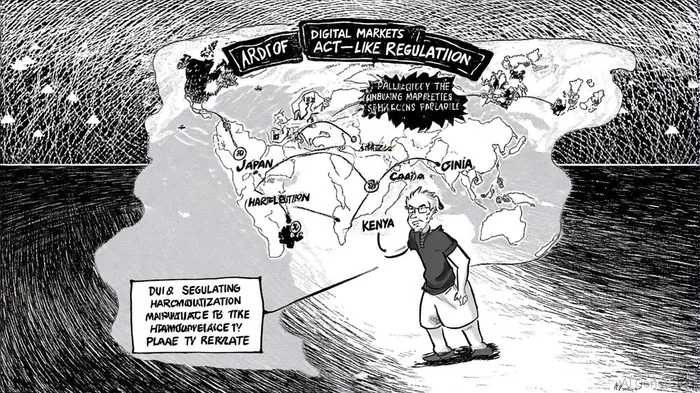
The European Union's Digital Markets Act (DMA), enacted in 2023, has become a flashpoint in the global debate over tech regulation. Apple's sustained legal and political challenge to the law—formally requesting its repeal or revision—has exposed a fundamental tension between regulatory ambition and corporate innovation. This conflict is not merely a European issue; it signals a broader shift in global tech policy, with implications for market positioning, investment risk, and the future of digital governance.
The Core Dispute: Innovation vs. Regulation
Apple's objections to the DMA are multifaceted. The company argues that the law's requirement to open its ecosystem to third-party integration has forced it to delay critical features, such as Live Translation with AirPods and iPhone Mirroring, in the EU [1]. These delays, AppleAAPL-- claims, stem from the technical and privacy challenges of ensuring compatibility with non-Apple devices while maintaining its security standards [2]. According to a report by AppleInsider, the firm has also raised concerns about the DMA's uneven enforcement, noting that competitors like Samsung and Chinese tech firms face fewer restrictions despite their growing market influence [3].
The European Commission, however, maintains that the DMA is essential to curbing anti-competitive behavior. Its recent €500 million fine against Apple for breaching anti-steering provisions—restricting app developers from promoting alternative payment methods outside the App Store—underscores this stance [4]. Apple has appealed the fine, arguing that the EU's approach is politically motivated and ignores its proposals for compliance [5]. This legal battle highlights a critical question: Can regulators enforce competition without stifling innovation?
The Global Ripple Effect: The “Brussels Effect” and Beyond
The EU's regulatory ambitions are increasingly shaping global policy. As stated by the Center for European Policy Analysis, countries such as Japan, Brazil, India, Canada, and Kenya have adopted or proposed laws mirroring the DMA, targeting app store rules, interoperability, and gatekeeper behavior [6]. Japan's Smartphone Software Competition Promotion Act (SSCP), for instance, directly impacts Apple and Google by mandating app store flexibility [7]. This “Brussels Effect”—where EU regulations become de facto global standards—poses significant risks for tech firms, particularly those with dominant market positions.
For investors, the challenge lies in assessing how companies adapt to this fragmented regulatory landscape. Apple's ability to navigate these pressures will depend on its capacity to innovate within constraints while maintaining its premium brand value. However, the company's resistance to the DMA suggests a broader strategy of lobbying for regulatory revisions, which could delay compliance and increase legal costs.
Investment Considerations: Navigating Regulatory Risk
The DMA and its global counterparts represent a new era of regulatory risk for tech firms. Three key factors should guide investment strategies:
Compliance Costs and Innovation Trade-offs: Companies like Apple may face higher operational costs as they adapt to interoperability mandates. For example, the need to support third-party app stores or sideloaded apps could divert resources from core R&D [8]. Investors must weigh these costs against potential revenue from expanded market access.
Geopolitical Tensions: The U.S. government has already signaled concern over the DMA's impact on American tech firms. Former President Donald Trump, for instance, has threatened retaliatory tariffs on countries enforcing such laws [9]. This risk underscores the importance of diversifying exposure to regulatory regimes and monitoring geopolitical developments.
Long-Term Market Positioning: Firms that successfully adapt to regulatory pressures—such as Google's adjustments to sideloading rules in the EU—may gain a competitive edge. Conversely, those that resist regulation, like Apple, risk reputational damage or market exclusion in key regions.
Conclusion: Balancing Innovation and Regulation
Apple's legal challenge to the DMA is emblematic of a larger struggle between regulatory oversight and corporate autonomy. While the EU's focus on competition is laudable, the unintended consequences—such as delayed product launches and privacy risks—highlight the complexity of regulating digital markets. For investors, the key is to identify firms that can innovate within regulatory boundaries while mitigating compliance risks. The outcome of Apple's case may set a precedent not only for the tech sector but for the future of global digital governance.





Comentarios
Aún no hay comentarios