
Red Cat Holdings' Maritime Ambition: Can Capital Allocation Fuel Growth?
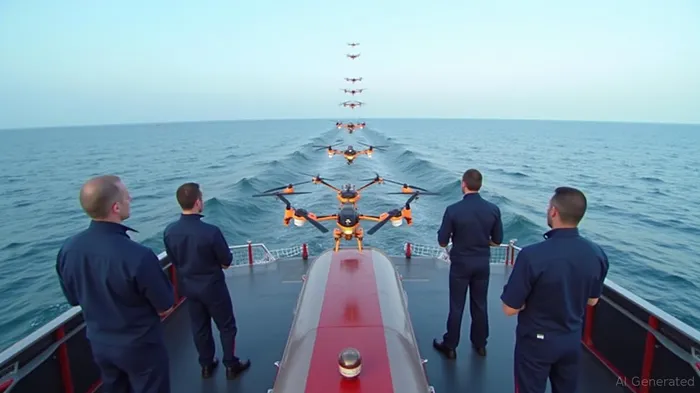
Red Cat Holdings (NASDAQ: RCAT) has placed a bold bet on the future of autonomous systems by expanding into the maritime domain through its newly launched Unmanned Surface Vessels (USVs) division. The $46.75 million registered direct offering, finalized in June 2025, signals the company's ambition to become a leader in multi-domain autonomy. But with shares diluted by 8% and execution risks looming, the question remains: Can Red Cat efficiently allocate capital to fuel sustainable growth?

Capital Allocation: A High-Risk, High-Reward Play
The $46.75 million financing represents a critical pivot for Red Cat, which has traditionally focused on aerial drones like the Black Widow and Edge 130. While the majority of the funds will support general corporate needs, the USV division is the strategic linchpin. Key allocations include:
- Manufacturing Expansion:
- Doubling Black Widow production to 1,000 units/month to meet demand from both military and commercial clients.
Establishing a Florida-based boat yard by Q3 2025 to build seven-meter USVs for defense logistics and anti-ship warfare.
Partnerships and Technology:
- A collaboration with Palantir's Warp Speed AI platform aims to optimize supply chains, reducing costs and improving margins.
- Integration of USVs with existing drone systems to create a unified “Family of Systems” for multi-domain operations.
The move into USVs aligns with a growing global market projected to hit $20 billion by 2030, driven by defense modernization and commercial shipping automation. However, the 8% dilution—coupled with a stock price trading at $3.13 versus the offering's $7.26—has raised eyebrows.
Revenue Growth Potential: Near-Term Challenges, Long-Term Vision
Red Cat's 2025 revenue guidance of $80–120 million hinges on three pillars:
- Aerial Drones:
- Black Widow: $25–65 million from the U.S. Army's Short Range Reconnaissance (SRR) program, contingent on finalizing a Low Rate Initial Production (LRIP) contract.
Edge 130: $25 million in sales to global defense and commercial clients.
USV Division:
Minimal 2025 revenue contribution, but long-term potential in defense and commercial markets. Red Cat's partnerships with boat builders and NDAA compliance position it to tap into federal shipbuilding incentives.
Global Expansion:
- International deals showcased at events like the UAE's International Defense Exhibition and Malaysia's AISSE could diversify revenue streams.
The wide revenue range reflects execution risks: delays in the SRR contract, manufacturing bottlenecks, or slower-than-expected USV adoption could shrink the upper end of projections.
Risks and Concerns
- Dilution and Liquidity: While the $46.75 million bolsters liquidity, the stock's undervaluation relative to the offering price suggests investor skepticism. Institutional selling post-offering adds to this concern.
- Profitability: A $1.63 million net loss in Q1 2025 underscores the need for margin improvements. Palantir's supply chain optimization is critical here.
- Market Competition: The USV space is crowded, with rivals like SeaDrone and Textron's UAV divisions vying for contracts. Red Cat must differentiate through AI integration and interoperability.
Investment Thesis: A Gamble on Execution
Red Cat's pivot into maritime autonomy is a strategic move with significant upside if the USV division gains traction. The Florida boat yard and Palantir partnership are positives, as is the SRR program's potential to deliver recurring revenue. However, the near-term financials—particularly the reliance on a single contract—present material risks.
Investment Advice:
- Bull Case: Investors betting on Red Cat's execution success might view the stock as undervalued, especially if the SRR LRIP is finalized and USV production scales. The $3.13 price offers a speculative entry point for long-term growth.
- Bear Case: Caution is warranted given the dilution, execution history, and narrow margin for error. Historical performance around earnings events further underscores volatility: a backtest of buying 5 days before quarterly earnings and holding for 10 days post-announcement from 2020–2025 showed an average drawdown of 68.78% and negative returns, highlighting material risk exposure during key reporting periods.
Conclusion
Red Cat's $46.75 million financing is a vote of confidence in maritime autonomy's future, but its success hinges on efficiently deploying capital to scale production, secure contracts, and manage dilution. For now, the stock remains a high-risk, high-reward play for investors willing to bet on Red Cat's ability to navigate uncharted waters.





Comentarios
Aún no hay comentarios