
Reassessing Energy Security: The Paradox of Transition Stagnation and Fossil Fuel Resurgence in a Post-Net-Zero World
The Resurgence of Fossil Fuels: A Calculated Bet on Energy Security
Despite the global shift toward renewables, fossil fuels have not vanished from the energy landscape. In fact, they are being rebranded as part of a "bridge" strategy, particularly in regions where energy security remains paramount. The United States, for instance, has seen a revival of coal advocacy under the banner of "Coal Week," with Republican lawmakers pushing for expanded federal coal leasing and plant upgrades, as reported in an OilPrice article. Similarly, China's approval of 50 GW of unabated coal-fired capacity in 2023 reflects its prioritization of domestic energy stability over climate commitments, according to an IEA report.
This resurgence is not merely a regression but a recalibration. The Broadwing Energy project in Illinois-a 400 MW natural gas plant with carbon capture and sequestration (CCS) technology-exemplifies how fossil fuels are being integrated into low-carbon frameworks. Backed by Google and I Squared Capital, the project aims to capture 90% of its CO₂ emissions while providing reliable power, according to a Yahoo Finance release. Such hybrid models suggest that fossil fuels are not being abandoned but repurposed to align with energy security and decarbonization goals.
Investment Shifts: Clean Energy Dominance vs. Regional Disparities
The investment landscape reveals a stark contrast between global trends and regional realities. According to the International Energy Agency (IEA), clean energy investments in 2024 outpaced fossil fuel investments by a ratio of 10:1, reaching over $2 trillion globally. Asia, led by China, accounted for 71% of new renewable capacity additions in 2024, while Africa and other regions contributed a mere 2.8%, according to an IRENA press release. This disparity highlights the uneven distribution of capital and policy support, with emerging markets often lacking the infrastructure and financing to transition rapidly.
Meanwhile, fossil fuel investments persist in regions where energy security is a non-negotiable priority. The Middle East, for example, is leveraging its solar potential-targeting 130 GW of clean energy by 2030-while also maintaining oil and gas production to hedge against economic volatility. Similarly, Russia's fossil fuel exports have plummeted due to Ukraine's drone attacks on oil infrastructure, yet its national oil companies continue to allocate $570 billion to upstream projects in 2024, the IEA notes. These examples illustrate how energy security is driving a dual strategy: investing in renewables for long-term sustainability while maintaining fossil fuel capacity as a buffer against geopolitical and economic shocks.
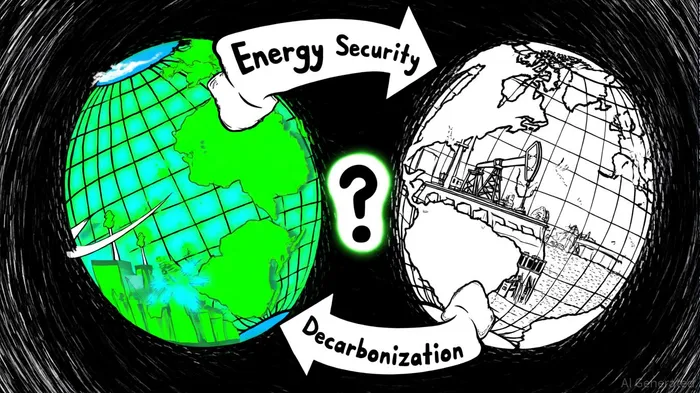
The Post-Net-Zero Paradox: Collaboration vs. Self-Sufficiency
The post-net-zero era is marked by a paradox: the need for international collaboration to address climate change clashes with the imperative for national energy self-sufficiency. The Inflation Reduction Act in the United States and the Net Zero Industry Act in the European Union reflect this tension, as both aim to localize clean energy production while recognizing the limits of unilateral action, according to IEA's World Energy Outlook 2023. For instance, the UAE's Masdar has deployed $30 billion in renewable projects over two years, signaling a commitment to global decarbonization, yet it also continues to export oil and gas to fund its transition, as reported in a Reuters newsletter.
This duality is further complicated by technological shifts. AI-driven automation and cloud computing are altering energy consumption patterns, with enterprises prioritizing AI-capable infrastructure that demands reliable, low-cost power. This has inadvertently bolstered demand for fossil fuels in the short term, as coal and gas remain the most cost-effective baseload sources in many regions, as noted in a MarketMinute article.
Conclusion: A Path Forward
The energy transition is no longer a binary choice between renewables and fossil fuels but a complex interplay of security, economics, and climate imperatives. For investors, the key lies in identifying regions and technologies that balance these priorities. Advanced economies with diversified energy portfolios and robust infrastructure are well-positioned to lead, while emerging markets require targeted financing and international partnerships to avoid locking into high-carbon pathways.
As the world navigates this paradox, the role of innovation-whether in carbon capture, AI-driven grid management, or hybrid energy systems-will be pivotal. The challenge is not merely to accelerate decarbonization but to ensure that the transition is resilient, equitable, and aligned with the realities of energy security in a fragmented global landscape.







Comentarios
Aún no hay comentarios