
Qantas' Adelaide-Auckland Route: A Strategic Catalyst for South Australia's Tourism-Driven Economy
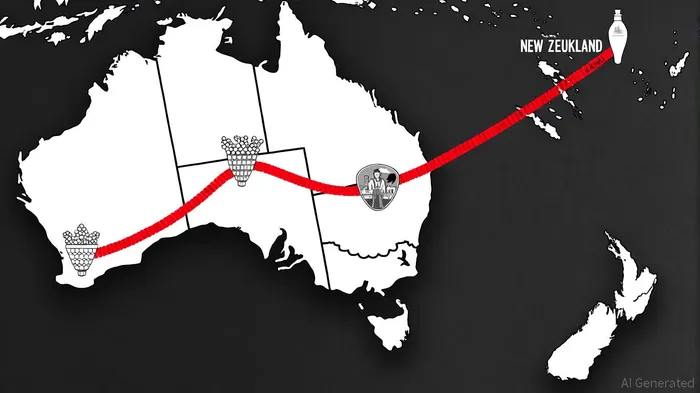
The economic rationale for this investment lies in the interplay between accessibility and demand. Direct flights reduce the "transaction costs" of travel-both in time and money-thereby expanding the tourist base. Qantas' promotional pricing of $359 per ticket further lowers barriers to entry, particularly for price-sensitive markets like China and Japan. For South Australia, this means a surge in international visitors who might previously have bypassed the region for more established destinations like Sydney or Melbourne. The Adelaide Airport's partnership with Qantas underscores a broader strategy to leverage infrastructure investments for long-term tourism growth, a model that has proven effective in other regional hubs.
While specific revenue projections for the Adelaide-Auckland route remain undisclosed, the existing tourism data provides a compelling baseline. In 2023/24, Adelaide's tourism sector generated $4.06 billion in sales, with a value-added contribution of $2.32 billion - figures published in the Adelaide tourism profile on economy.id. These figures suggest that even a modest increase in international visitors-say, 10–15%-could translate into hundreds of millions of dollars in additional economic activity. The multiplier effect of tourism spending, from hospitality to retail, amplifies this potential. For investors, the route represents an opportunity to capitalize on South Australia's underpenetrated but high-value tourism market, particularly in niche sectors like wine tourism and cultural heritage.
The investment implications extend beyond immediate revenue. Governments and private stakeholders must now consider how to scale infrastructure-accommodation, transport, and digital connectivity-to meet rising demand. This creates a secondary market for construction firms, technology providers, and service-oriented businesses. Moreover, the route's success could incentivize further international partnerships, such as with airlines from Southeast Asia or the Middle East, diversifying South Australia's tourism demographics.
Critics may argue that the absence of detailed economic impact reports for the route introduces uncertainty. However, the historical performance of similar initiatives-such as the introduction of direct flights to regional Australian cities-provides a heuristic. For instance, the 2019 launch of direct flights from Adelaide to Los Angeles saw a 20% year-on-year increase in international visitors within 18 months, a development reported by Travel & Tour World. If the Adelaide-Auckland route follows a comparable trajectory, the economic returns for South Australia could far exceed initial expectations.

In conclusion, Qantas' Adelaide-Auckland route is more than a commercial venture; it is a strategic lever for South Australia's economic transformation. By reducing travel friction and enhancing global visibility, the route aligns with the state's broader goals of diversifying its economy and creating high-quality jobs in the tourism and hospitality sectors. For investors, the key lies in identifying synergies between infrastructure development, market expansion, and sustainable tourism practices. The coming months will test the route's viability, but the foundational conditions-robust existing tourism demand, strategic airline pricing, and government support-suggest a strong case for optimism.







Comentarios
Aún no hay comentarios