
Power Root Berhad's Earnings Miss: A Strategic Reassessment of Valuation and Growth Prospects
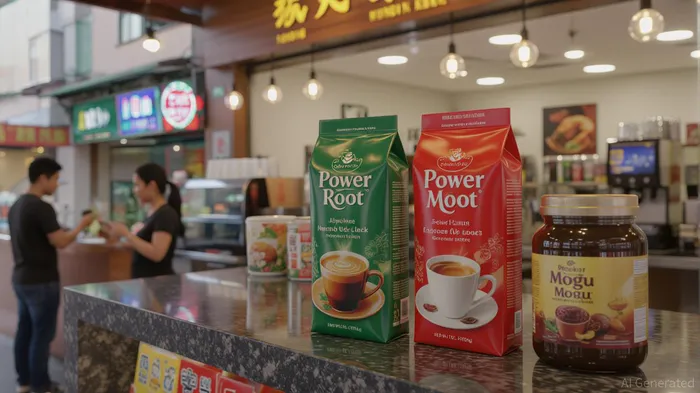
The recent earnings miss by Power RootROOT-- Berhad has sent ripples through Malaysia's beverage sector, forcing a critical reevaluation of the company's strategic trajectory. For a firm that once symbolized the potential of Southeast Asian consumer goods, the decline in profitability—from MYR 41.57 million to MYR 31.99 million in net income for FY2025—raises urgent questions. This analysis unpacks the forces behind the earnings shortfall, the company's competitive positioning, and what these developments mean for long-term investors.
The Earnings Miss: A Convergence of Cost and Margin Pressures
Power Root's FY2025 results reveal a sharp contraction in profitability, with net income falling 23% year-on-year and profit margins shrinking from 9.8% to 7.6%. The primary culprit? Escalating operating costs, which have eroded margins despite relatively stable revenue. The company's Q1 performance was particularly dire: net profit plummeted 52% to MYR 7.3 million, driven by a 13% decline in overseas sales and a 52% drop in EBIT.
The root causes are multifaceted. First, the global sugar tax regime has pressured pricing flexibility, reducing sales volumes. Second, the depreciation of the Malaysian Ringgit (which hit MYR 4.74/USD in 2022) has inflated costs for imported raw materials, a vulnerability Power Root shares with many F&B firms. Third, the company's overseas markets, particularly the Middle East, have underperformed, dragging down overall revenue growth. These challenges are compounded by the broader sector's liquidity constraints, as a 2023 study in the Social and Management Research Journal noted a statistically significant negative correlation between liquidity and profitability in Malaysia's F&B industry.
Competitive Positioning: Strategic Alliances and Market Expansion
Despite these headwinds, Power Root has pursued a bold strategy to reposition itself. Its partnership with Thailand's Sappe Public Company Limited is a case in point. By co-investing MYR 2.6 million to introduce Sappe's MoguMOGU-- Mogu nata de coco into Malaysia and exporting its Frenche Roast coffee to Thailand, the firm is leveraging cross-border synergies. Mogu Mogu, a global brand with 11 million bottles sold in the UK alone, offers Power Root a gateway to international markets, while Sappe's 100,000+ distribution points in Thailand amplify Frenche Roast's reach.
The company has also embraced celebrity endorsements to rejuvenate brand appeal. Jang Han Byul's ambassadorship for Mogu Mogu and Khai Bahar's alignment with Alicafé signal a strategic pivot toward youth-centric marketing. These moves are critical in a sector where brand equity and innovation drive consumer loyalty.
However, the competitive landscape is intensifying. The Malaysian beverage market, valued at RM4.4 billion for coffee alone, is crowded with local and global players. Power Root's 6.5% projected annual revenue growth over the next three years, while slightly outpacing the sector's 4.9% forecast, still lags behind its historical 5.7% CAGR. This suggests that operational execution, not just strategic intent, will determine its success.
Investor Confidence: A Fragile Rebound?
The earnings miss has already dented investor sentiment. Kenanga Stock Broking House downgraded its target price for Power Root from MYR 1.40 to MYR 1.28, reflecting reduced confidence in FY2025-26 earnings. The company's shares, which rose 1.4% in the week following the report, remain volatile, as analysts cut revenue forecasts from MYR 455.2 million to MYR 435.0 million for 2026.
For long-term investors, the key question is whether Power Root can reverse its margin compression. The company's 7.6% profit margin in FY2025 is a stark contrast to its 9.8% margin in FY2024 and lags behind industry peers. While the proposed 1.30 sen per share dividend offers a modest yield, it does little to offset concerns about earnings sustainability.
Strategic Implications and Investment Outlook
The path forward for Power Root hinges on three pillars:
1. Cost Optimization: Reducing operating expenses and mitigating currency volatility through hedging or localized sourcing.
2. Market Diversification: Accelerating international expansion, particularly in Asia-Pacific markets where Mogu Mogu's K-pop-driven brand equity resonates.
3. Product Innovation: Investing in premium or functional beverages to capture premium pricing, a strategy that could offset commodity price pressures.
For investors, the stock's current valuation—trading at a P/E ratio below the sector average—presents a potential opportunity, but only if operational improvements materialize. A disciplined approach is warranted: consider adding to positions only if Power Root demonstrates consistent margin expansion and revenue growth outpacing the sector. For now, the earnings miss underscores the fragility of Malaysia's beverage sector and the need for strategic resilience.
In conclusion, Power Root Berhad's earnings miss is a wake-up call. While its strategic alliances and brand investments offer hope, the company must confront its cost structure and operational inefficiencies to regain investor trust. The road ahead is uncertain, but for those who can stomach the volatility, the potential for a rebound may yet justify a cautious bet.







Comentarios
Aún no hay comentarios