
Political Risk and Market Volatility: Trump's Pardon of Ghislaine Maxwell as a Signal of Regulatory Shifts
The potential presidential pardon of Ghislaine Maxwell, a convicted accomplice in the Jeffrey Epstein sex trafficking case, has ignited a storm of political and legal controversy. While the Supreme Court has closed the door to her appeal, declining to hear it, the prospect of a Trump pardon underscores a broader question: How might such an act signal shifts in regulatory and legal priorities under a potential 2024 return to power-and what does this mean for market volatility and political risk?
Trump's Pardon Patterns: A Precedent of Political Favoritism
Donald Trump's use of clemency during his first term was marked by a stark departure from traditional norms. According to a Justice Department report, he granted executive clemency to 237 individuals, with 60% of these actions concentrated in his final hours in office. Recipients often included political allies, donors, and figures embroiled in legal controversies, such as Paul Manafort and Roger Stone, the report notes. This pattern suggests a clemency process driven by personal and political considerations rather than legal or moral consistency.
Maxwell's case fits this mold. Her legal team has argued that a 2007 non-prosecution agreement with Epstein should extend to her, but the Supreme Court rejected this claim. A pardon for Maxwell would thus appear as a favor to someone with deep ties to Trump, raising concerns about quid pro quo arrangements and undermining public trust in the justice system, according to a Mediaite poll. Such perceptions could reignite congressional investigations into the Epstein case, further complicating Trump's political landscape.
Market Volatility: Trump's Legacy of Uncertainty
The Trump administration's impact on financial markets was characterized by volatility driven by his unpredictable communications and policy shifts. A 2023 working paper found that 80% of Trump's economy-related tweets were reactive to existing market trends, amplifying uncertainty rather than creating new information. For instance, his tariff announcements during the U.S.-China trade war triggered sharp spikes in the VIX (volatility index) and the MOVE Index (bond volatility indicator), though these effects often subsided as markets adjusted.
If Trump returns to power in 2024, similar dynamics could emerge. His re-election already caused a 2.5% surge in the S&P 500, with energy, finance, and industrial sectors benefiting from expectations of deregulation and tax cuts, according to a CEPR analysis. However, the Economic Policy Uncertainty (EPU) index rose sharply post-election, reflecting long-term concerns about trade conflicts and fiscal policies. A Maxwell pardon, if perceived as a politically motivated act, could exacerbate this uncertainty, triggering renewed volatility as investors reassess risks.
Regulatory Shifts: Deregulation and Its Consequences
Trump's first term prioritized deregulation, particularly in environmental, health, and labor sectors. Executive Order 13,771 mandated that for every new regulation, two existing ones be eliminated, as detailed by The Regulatory Review. Critics argue this approach weakened the benefit-cost analysis framework, leading to inconsistent regulatory decisions. A return to power could see a continuation of such policies, favoring corporate interests over public welfare.
However, Trump's pardons have also led to unintended consequences. A report by ABC News noted that several recipients of his clemency later faced new legal troubles, raising questions about the quality of due diligence in the process. If Maxwell is pardoned, it could signal a broader tolerance for legal leniency toward high-profile figures, potentially eroding institutional credibility and increasing political risk for investors.
Political Risk and Investor Strategy
For investors, the interplay between Trump's pardon power and regulatory priorities presents a dual challenge. On one hand, sectors aligned with his pro-market agenda-such as energy and industrials-may benefit from deregulation and tax cuts, as the CEPR analysis indicates. On the other, the reputational and legal risks associated with politically motivated pardons could lead to market corrections, particularly if investigations into Epstein-related matters resurface.
Public opinion further complicates the outlook. A recent poll found 64% of Americans oppose a Maxwell pardon, with only 4% supporting it. Such sentiment could pressure Trump to avoid actions that alienate his base, but it also highlights the fragility of political consensus in a polarized environment.
Conclusion
The potential pardon of Ghislaine Maxwell is not merely a legal or political issue-it is a barometer of broader shifts in regulatory and legal priorities under a Trump administration. Historically, Trump's clemency decisions have prioritized personal and political connections over legal consistency, a pattern that could deepen in 2024. For markets, this means heightened volatility driven by uncertainty over regulatory rollbacks, trade policies, and the integrity of the justice system. Investors must remain vigilant, balancing the short-term gains of a pro-business environment with the long-term risks of political instability and reputational damage.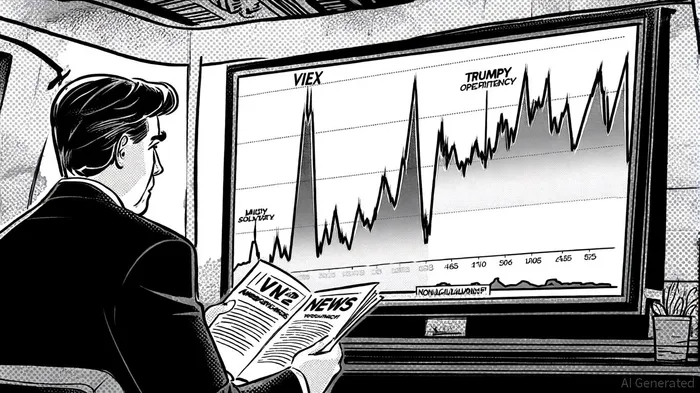







Comentarios
Aún no hay comentarios