
Political Pressure on Central Banking: Implications for U.S. Monetary Policy and Financial Markets
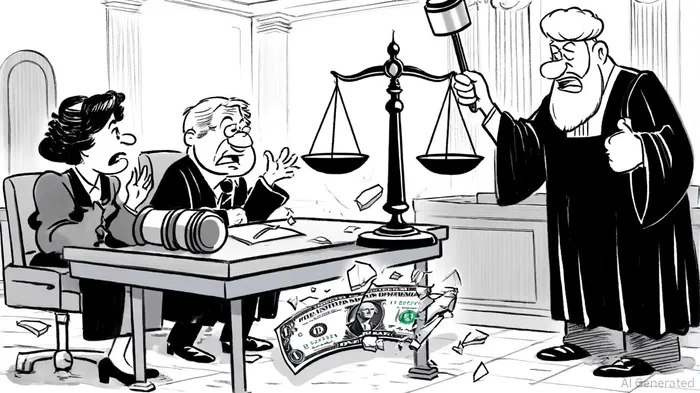
The Federal Reserve's independence has long been a cornerstone of U.S. economic policy, ensuring that monetary decisions are guided by data and long-term stability rather than short-term political expediency. Yet, in 2025, this independence faces unprecedented challenges. Political pressures, particularly from the Trump administration, have escalated to levels not seen since the 1970s, raising urgent questions about the future of U.S. monetary policy and its ripple effects on global financial markets. Investors must now grapple with the risks of politicized central banking and adjust their strategies accordingly.
The Erosion of Institutional Credibility
President Donald Trump's recent actions against the Federal Reserve have tested the boundaries of its autonomy. His public accusations against Fed Governor Lisa Cook—calling her conduct “deceitful and potentially criminal”—and the subsequent failed attempt to remove her from office underscore a troubling trend of direct political interference [4]. While a court ultimately blocked the dismissal, citing constitutional protections for Fed governance [5], the episode has already damaged the central bank's perceived credibility. Similarly, Trump's push to appoint loyalists like Stephen Miran, who retained dual roles in the White House and the Fed, has amplified fears of a politicized monetary policy apparatus [1].
The Fed's September 2025 decision to cut interest rates by 25 basis points in a nearly unanimous vote was widely interpreted as a defiant stand against these pressures [3]. Yet, the attempted removal of a sitting governor and the nomination of officials skeptical of Fed independence signal a broader erosion of institutional trust. Historical precedents, such as the inflationary chaos of the 1970s under Nixon or the currency collapses in Turkey and Argentina, demonstrate that when central banks lose autonomy, economic stability often follows [1].
Market Volatility and Inflationary Risks
The implications for financial markets are profound. Political interference could lead to premature rate cuts driven by electoral cycles rather than economic fundamentals, reigniting inflation and forcing the Fed into more aggressive tightening later—a scenario that could destabilize asset valuations. Morgan Stanley has warned that such volatility could trigger a reevaluation of long-held assumptions about low inflation and stable interest rates, with investors increasingly hedging against uncertainty [3].
Gold's surge to record highs in 2025 reflects this shift in sentiment. As a traditional safe-haven asset, gold has become a proxy for investor anxiety over Fed credibility and inflation risks [1]. Meanwhile, the U.S. dollar's global dominance faces potential erosion if confidence in the Fed's independence wanes, prompting capital flight and shifts in international reserve allocations [4].
Investor Strategy in a Shifting Landscape
For investors, the lesson is clear: prepare for a world where Fed policy may no longer be insulated from political pressures. Morgan Stanley advises reducing exposure to high-risk, small-cap, and unprofitable tech stocks while favoring quality large-cap equities and real assets [3]. Defensive sectors, such as utilities and consumer staples, may also offer resilience in a high-volatility environment.
Moreover, the potential for inflation-driven market corrections necessitates a rethinking of portfolio allocations. Real assets like real estate and commodities could serve as hedges against inflation, while Treasury bonds—traditionally a safe haven—may lose appeal if inflation expectations rise sharply. Investors should also monitor the Fed's balance sheet and communication strategies, as any deviation from data-driven policymaking could signal further instability.
Conclusion
The Federal Reserve's independence is not merely a technicality; it is a linchpin of global financial stability. While the Fed has so far resisted overt political pressure, the erosion of its institutional credibility poses long-term risks for inflation, market volatility, and the dollar's role as a reserve currency. Investors must remain vigilant, adapting their strategies to navigate a landscape where monetary policy may increasingly reflect political agendas rather than economic realities.







Comentarios
Aún no hay comentarios