
The Political Influence Play in U.S. Capital Markets
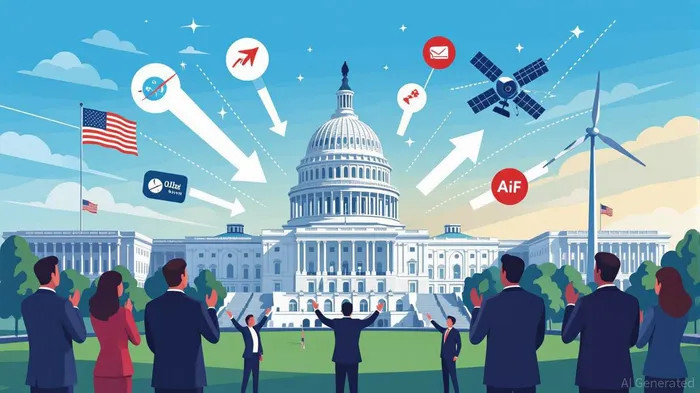
The U.S. capital markets have long been shaped by the invisible hand of political influence, but in recent years, this force has grown more explicit and strategic. From the reauthorization of the Defense Production Act (DPA) to the rollout of the Inflation Reduction Act (IRA), policymakers and media narratives have become central architects of capital allocation. Investors who understand this interplay can identify sectors poised to benefit from sustained political favor—and avoid those exposed to regulatory or reputational risks.
The DPA and the Reshaping of the Defense Industrial Base
The DPA, originally enacted in 1950, has reemerged as a cornerstone of U.S. industrial policy. According to a report by the Hudson Institute, its 2024 reauthorization has been instrumental in directing capital toward strategic industries, including clean energy technologies like solar panels[2]. While critics argue that the DPA often benefits specific firms without broadening sectoral resilience, its political symbolism is undeniable. Media coverage has amplified this effect, framing the DPA as a tool to counter global supply chain vulnerabilities and bolster national security. For instance, the 2025 Thailand-Cambodia border crisis spurred a 20% surge in Southeast Asian defense spending, directly boosting firms like Thai Aerospace Industries (TAI) and Siam Defense Systems (SDS)[1]. Such events highlight how geopolitical tensions, amplified by media narratives, can rapidly redirect capital toward defense contractors.
Renewable Energy: Policy-Driven Growth and Media-Driven Volatility
Renewable energy investment hit a record $386 billion in the first half of 2025, a 10% increase from 2024[1]. This growth, however, masks a shift in focus from utility-scale projects to small-scale solar, driven by both policy incentives and market dynamics. The IRA, combined with state-level green banks, has unlocked over 36 GW of renewable energy and storage by 2030[1]. Yet, public sentiment remains a wildcard. A Pew survey noted declining support for wind and solar energy amid political attacks, illustrating how media narratives can sway investor confidence[4]. For example, Cambodia's Sembcorp Energy gained traction in 2025 as regional trade disruptions pushed countries to diversify energy imports[1]. Such cases underscore the dual role of policy and media in shaping renewable energy's trajectory.
AI and Infrastructure: The New Frontiers of Political Capital
Artificial intelligence and infrastructure have become focal points of political and media attention. The U.S. government's $150 billion defense budget boost in 2025[2] includes significant allocations for AI-driven surveillance and logistics, while the IRA's emphasis on clean infrastructure has spurred demand for EV battery suppliers and grid modernization. Media coverage of AI's potential—ranging from productivity gains to ethical concerns—has created a “hype cycle” that drives speculative capital. Meanwhile, infrastructure projects, particularly in regions affected by geopolitical disruptions, have attracted institutional investors seeking stable returns. The interplay between policy announcements and media-driven sentiment is particularly evident in the industrials sector, where IPO activity in H1 2025 was dominated by EV battery and auto parts suppliers[3].
Strategic Positioning for Investors
For investors, the key lies in aligning with sectors where political and media narratives converge. Defense and renewable energy, for instance, benefit from overlapping policy goals (national security and climate resilience) and media amplification of geopolitical risks. AI and infrastructure, meanwhile, are shaped by both regulatory tailwinds and public discourse. However, risks abound. Overreliance on politically driven sectors can expose portfolios to abrupt shifts in policy or public opinion. As Deloitte notes, the renewable energy sector's growth hinges on sustained demand from data centers and direct air capture technologies[1], which themselves depend on evolving regulatory frameworks.
Conclusion
The U.S. capital markets are no longer driven solely by economic fundamentals. Political influence and media narratives have become indispensable tools for shaping investor behavior. As the DPA and IRA demonstrate, strategic sectors can attract capital through a combination of policy incentives and public perception. Yet, investors must remain vigilant: the same forces that drive growth can just as easily trigger volatility. In this environment, the ability to discern genuine long-term opportunities from short-term hype is paramount.







Comentarios
Aún no hay comentarios