
Political Health Disclosures and Market Volatility: Navigating Investor Sentiment in an Uncertain Era
The Anatomy of Uncertainty
Political leaders' health disclosures-whether voluntary or mandated-introduce a layer of uncertainty that reverberates through financial markets. A 2024 study in Nature Medicine found that political polarization obstructs health policy implementation and erodes trust in medical expertise, leading to divergent public health behaviors, according to a Columbia analysis. For instance, during the 2020–2022 pandemic, U.S. states with Republican trifectas (governor and legislative control) saw significantly lower vaccination rates and higher mortality compared to Democratic counterparts, according to a market volatility study. Such disparities not only reflect governance failures but also create asymmetric risks for investors. Sectors like healthcare and pharmaceuticals face heightened volatility as policy shifts-such as restrictions on CDC authority or changes to Medicaid funding-alter regulatory landscapes, as highlighted by Project 2025.
The quality of political information further amplifies these effects. A 2025 paper in Journal of Financial Economics demonstrated that low-quality political signals reduce the predictive power of investor sentiment while intensifying risk aversion, according to a Harvard Law post. Consider the case of Tesla in June 2025: Elon Musk's political spending aligned with anti-environmental policies triggered a 12% drop in its stock price, as investors recalibrated expectations around regulatory headwinds, a pattern noted in the Columbia analysis. This underscores how opaque or ideologically charged health-related disclosures can distort market perceptions, even when fundamentals remain stable.
Investor Behavior in a Polarized World
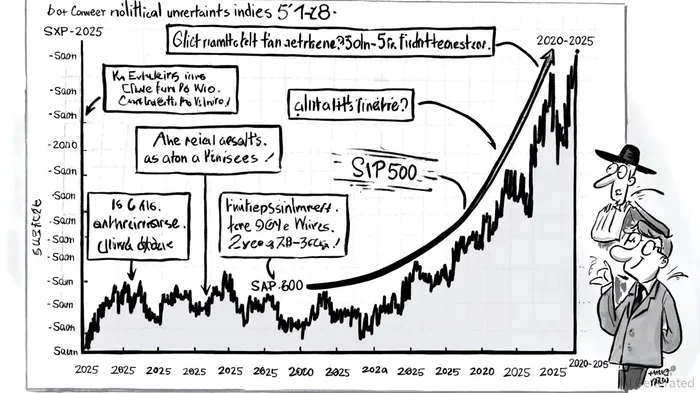
The 2024 U.S. presidential election offers a stark example of how health-related political uncertainty translates into market turbulence. In the pre-election months, the S&P 500's performance correlated strongly with investor sentiment toward incumbent policies, particularly in sectors like technology and healthcare, according to a Fifth Person analysis. When concerns arose about potential regulatory crackdowns on tech giants, defensive assets such as utilities and consumer staples saw inflows of $23 billion in Q3 2024, the analysis noted. Similarly, the 2023 Supreme Court ruling in Students for Fair Admissions v. Harvard-which curtailed race-conscious policies-prompted firms like JPMorgan Chase to revise DEI disclosures, triggering a 7% decline in ESG-focused ETFs, as discussed in the Harvard Law post. These shifts highlight how investors increasingly treat political risk as a quantifiable variable in portfolio construction.
The insurance sector provides another lens. A 2024 Health Affairs article revealed that public health emergencies trigger conflicting investor sentiments: fear-driven sell-offs in insurance stocks coexist with demand for health-related coverage, creating a "double-edged sword" effect. Smaller insurers, with less brand resilience, experienced amplified volatility, with stock prices swinging by 15–20% during the 2022 Omicron surge, the study found. This duality underscores the need for granular risk assessments, particularly in sectors directly tied to policy outcomes.
Strategic Implications for Investors
For investors, the lesson is clear: political health disclosures must be integrated into risk models. Vanguard's 2025 report on political uncertainty advises a "barbell strategy"-balancing long-term fundamentals with short-term hedging against policy shocks. Defensive allocations in healthcare, utilities, and gold have gained traction, while sectors like renewable energy face headwinds in conservative-leaning markets, a dynamic noted in discussions of Project 2025.
Moreover, the rise of "political sentiment indices" offers new tools. The Presidential Uncertainty and Risk (PUR) index, derived from news coverage, has shown that a 1% increase in uncertainty terms correlates with a 21-basis-point decline in abnormal stock returns, according to the PUR index study. Investors leveraging such metrics can anticipate volatility spikes, particularly during election cycles or major health announcements.
Conclusion
The past five years have redefined the relationship between politics and markets. Health disclosures of political leaders, once a peripheral concern, now serve as a barometer for systemic risk. As polarization deepens and policy shifts accelerate, investors must adopt a more nuanced approach-one that dissects not just the content of disclosures but their political and social context. In this era of uncertainty, the ability to parse political signals from noise may well determine the difference between resilience and fragility in global portfolios.







Comentarios
Aún no hay comentarios