
PL Capital's Activist Push at Horizon Bancorp: A Strategic Takeover Opportunity in a Stabilizing Banking Sector?
The activist campaign by PL Capital Advisors, LLC against Horizon BancorpHBNC--, Inc. (HBNC) has ignited a critical debate about the future of regional banking in a sector marked by both fragility and resilience. As the U.S. regional banking landscape grapples with commercial real estate (CRE) defaults, regulatory pressures, and shifting investor priorities, PL Capital's call for Horizon to halt acquisitions and consider a sale raises a pivotal question: Is this a strategic opportunity to unlock value in a stabilizing sector-or a misjudged gamble in a market still reeling from recent turbulence?
The Case for Activism: A Clash of Strategic Priorities
PL Capital, a firm specializing in U.S. community banks, has staked its position on Horizon's recent acquisition-heavy strategy. The firm argues that Horizon's 2021 purchase of 14 TCF National Bank branches has failed to deliver satisfactory returns, with restructuring efforts leading to stock dilution and underwhelming performance metrics, according to a PL Capital presentation. In a presentation titled "Stop Making Acquisitions and Take Proactive Strategic Actions to Maximize Shareholder Value," PL Capital has urged Horizon to pivot toward a capital-efficient model, emphasizing dividends, share buybacks, or even a sale.
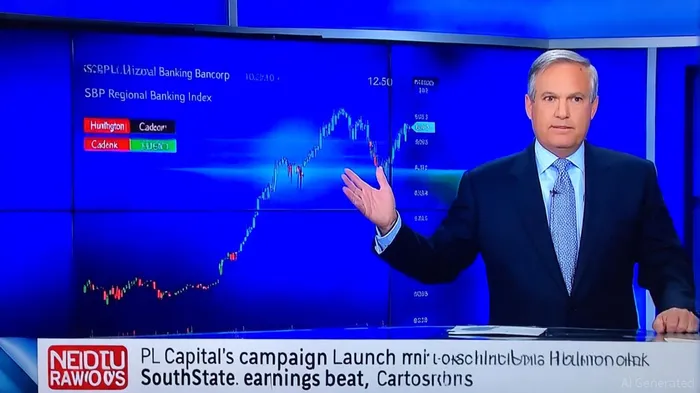
This push aligns with broader activist trends in 2025, where investors are increasingly demanding that regional banks prioritize shareholder returns over aggressive expansion. For instance, Huntington Bancshares' $7.4 billion acquisition of Cadence Bank reflects a sector-wide shift toward consolidation, driven by the need for scale in a low-margin, high-risk environment (Huntington Bancshares' $7.4 billion acquisition). PL Capital's 3% stake in Horizon positions it as a credible player in this narrative, though its success hinges on Horizon's willingness to abandon its current growth-at-all-costs approach.
Horizon's Defense: Strength Amidst Strategic Rebalancing
Horizon's management, however, has defended its strategy, citing strong Q3 2025 results that highlight a 20% year-over-year revenue increase and a robust net interest margin. CEO Thomas Prame has emphasized the company's "position of strength," pointing to successful balance sheet repositioning and solid commercial loan growth as evidence of long-term value creation. Yet, the same quarter saw a significant net loss attributed to non-interest income and expense items tied to its transformation efforts. This duality-strong core performance versus near-term accounting headwinds-has left investors divided.
The challenge for Horizon lies in reconciling its growth-oriented strategy with the realities of a sector where returns on equity (ROE) have been compressed by low interest rates and CRE defaults. PL Capital's critique is not without merit: Horizon's stock has underperformed peers like SouthState Bank Corporation (SSB), which reported a 30% year-over-year earnings-per-share increase and maintained dividend growth (SouthState's Q3 2025 performance).
Sector Rotation and the AI-Driven Shift in Strategy
The broader banking sector's stabilization in 2025 has been uneven. While some regional banks, such as Seacoast Banking Corp of Florida (SBCF), have shown resilience with projected 20.1% year-over-year revenue growth (Seacoast's projected 20.1% growth), others face existential risks from CRE defaults and regulatory scrutiny. Against this backdrop, sector rotation has become a critical tool for investors. S&P 500 3AI Sector Rotator Index-an AI-driven tool designed to dynamically allocate capital to top-performing sectors-reflects the growing reliance on technology to navigate volatility.
For PL Capital, the timing of its campaign is strategic. With the sector in a transitional phase, a forced sale or strategic pivot could capitalize on undervalued assets. However, Horizon's board must weigh the short-term gains of such a move against the long-term risks of abandoning its Midwestern market dominance.
The Path Forward: Activism as a Catalyst for Sector Rebalancing
PL Capital's campaign is emblematic of a larger trend: activist investors acting as arbiters of efficiency in a sector struggling to adapt to post-pandemic realities. If successful, the push for a sale could set a precedent for other regional banks to follow, accelerating consolidation and sector rotation. However, Horizon's board must also consider the reputational risks of capitulating to activist demands, particularly in a market where trust in management is already fragile.
For investors, the key question is whether Horizon's intrinsic value is being masked by short-term accounting noise. A detailed analysis of its core franchise-strong commercial loan growth and a 14% net interest margin-suggests that a strategic pivot, rather than a sale, could unlock greater long-term value. Yet, in a sector where survival often hinges on scale, PL Capital's call for a sale may prove to be the most pragmatic path.







Comentarios
Aún no hay comentarios