
Petronet LNG: A Leveraged Play on India’s LNG Boom and Gas Demand Surge
The energy transition in India is no longer a distant promise—it is a roaring reality. With natural gas consumption set to triple by 2030, Petronet LNGLNG-- stands at the epicenter of this shift, leveraging its terminal expansions and petrochemical integration to capitalize on surging demand. This is a story of infrastructure, cost optimization, and strategic foresight—a compelling case for investors to position in a company uniquely positioned to monetize India’s gas boom.
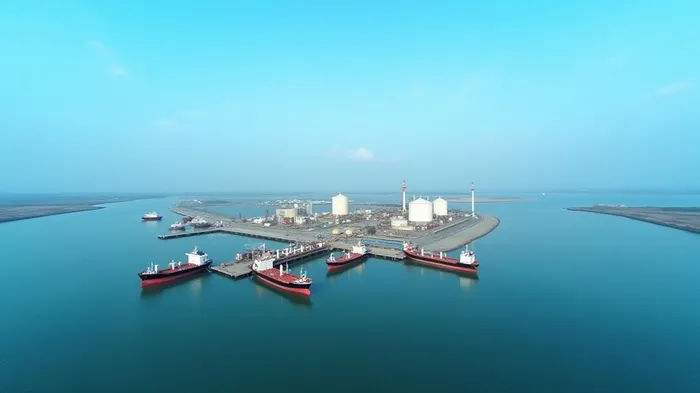
Terminal Upgrades: The Heart of Operational Efficiency
Petronet’s Dahej terminal, India’s largest LNG regasification hub, is undergoing a transformative expansion to boost capacity from 17.5 million tonnes per annum (MTPA) to 22.5 MTPA by mid-2025. The project includes two new 180,000-cubic-meter storage tanks and a 2.5-km jetty capable of handling Q-Max LNG tankers. This infrastructure upgrade is not merely about scale—it is about operational excellence.
The integration of petrochemical projects at Dahej is a masterstroke. A propane dehydrogenation (PDH) unit and a polypropylene plant, fueled by “cold energy” from LNG regasification, slashes energy costs. Lummus Technology’s Novolen® tech further reduces capital and operational expenses, enabling Petronet to produce polypropylene at competitive margins while reducing India’s reliance on imports. The petrochemical complex, valued at ₹200 billion, is 70% debt-financed, yet the returns—$1.6 billion in annual savings—make this a high-reward bet.
India’s $65 Billion Gas Infrastructure Pipeline: Fueling Terminal Utilization
India’s gas infrastructure is undergoing a $65 billion overhaul, with new terminals, pipelines, and city gas distribution networks. Today, Petronet’s terminals operate at just 56% utilization, but this is set to change. The Kochi-Bangalore pipeline (online by March 2025) and the proposed Kochi-Kanyakumari-Thoothukudi gas corridor will unlock demand in southern India, boosting utilization and reducing idle capacity costs.
The delayed Gopalpur terminal—a 5 MTPA land-based facility on India’s east coast—remains pivotal. While its 2027 completion date poses near-term risks, its strategic importance cannot be understated. Once operational, Gopalpur will diversify import routes, reducing reliance on western terminals and enabling Petronet to capture $0.75/mn Btu regasification tariffs with 5% annual hikes. The use-or-pay contracts, which recovered ₹360.94 crore in Q4 FY25, further underscore Petronet’s ability to monetize underutilized capacity.
LNG Import Growth to 65 BCM by 2030: Pricing Power for Regas Operators
India’s gas consumption is projected to hit 15% of the energy mix by 2030, requiring LNG imports to surge to 120 MTPA—a 350% increase from 2023 levels. Petronet’s terminals, now expanding to meet this demand, will gain pricing power as supply tightens. The company’s Singapore-based LNG trading arm—targeting spot cargoes outside long-term contracts—adds flexibility, enabling Petronet to arbitrage price disparities and boost margins.
Regulatory Risks vs. Tailwinds: A Calculated Bet
Delays at Gopalpur (due to land acquisition and environmental clearances) and rising LNG spot prices (currently $14–15/mn Btu vs. $11 for long-term contracts) pose near-term headwinds. However, India’s policy tailwinds—$15 billion in annual gas subsidies, favorable tariffs, and a government committed to energy security—mitigate these risks.
The Investment Thesis: A Multi-Year Growth Story
Petronet LNG is a leveraged play on India’s gas revolution, with three clear value drivers:
1. Terminal Capacity Expansion: Doubling utilization to 100% could slash per-unit costs by 20–30% via economies of scale.
2. Petrochemical Synergies: Cold energy and Novolen® tech enable $1.6 billion in annual savings, creating a high-margin revenue stream.
3. Infrastructure-Driven Demand: The $65B pipeline ensures Petronet’s terminals are utilized to their full potential by 2030.
At current valuations, Petronet trades at a 12x EV/EBITDA multiple—a discount to global peers. With LNG imports set to hit 65 bcm by 2030, and regas tariffs rising annually, this is a buy-and-hold opportunity.
Conclusion: Position for the LNG Decade
Petronet LNG is not just a terminal operator—it is a strategic integrator of energy infrastructure and petrochemicals, uniquely positioned to capitalize on India’s gas boom. With utilization rates set to soar, cost efficiencies materializing, and a $65B infrastructure tailwind, this is a stock primed to outperform. Investors who act now can secure a leveraged stake in one of Asia’s most compelling energy plays.
Act swiftly—the LNG decade is here.
Note: This analysis is based on publicly available data and assumes no liability for market fluctuations or regulatory changes.





Comentarios
Aún no hay comentarios