
Perpetua Resources: A High-Conviction Long in a Critical Mineral Play
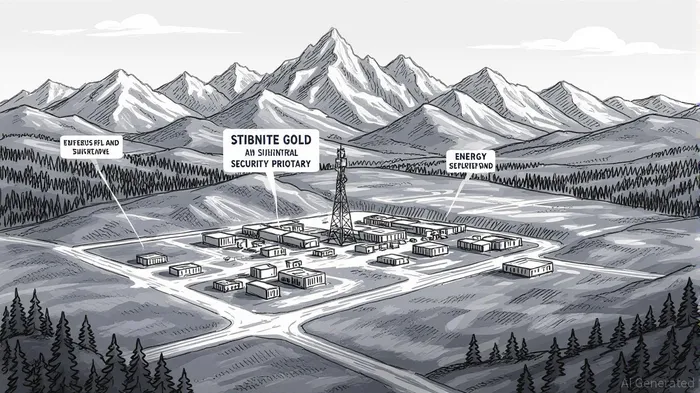
In an era of geopolitical fragmentation and supply chain vulnerabilities, the strategic value of critical minerals has become impossible to ignore. Gold, long a store of value, now shares the spotlight with lesser-known elements like antimony, whose role in defense and technology applications is indispensable. Perpetua ResourcesPPTA-- (PPTA), a junior miner operating in Idaho, has positioned itself at the intersection of these trends. Its Stibnite Gold Project is not merely a gold mine but a linchpin in the U.S. effort to secure a domestic supply of antimony—a material critical to advanced munitions and semiconductors. With a cascade of government support, clear operational milestones, and a compelling capital strategy, PerpetuaPPTA-- represents a high-conviction long in a sector where national security and market fundamentals align.
Strategic Positioning: Antimony and the National Security Imperative
Antimony, a metal with unique thermal and electrical properties, is a key component in over 300 types of U.S. munitions and advanced defense systems. Until 2024, the U.S. relied heavily on China for antimony trisulfide, a compound used in pyrotechnics and electronics. When Beijing abruptly cut off exports, the strategic risk became acute. Perpetua's Stibnite Gold Project, expected to supply 35% of U.S. antimony demand in its first six years, is now the nation's most viable solution. This dual-purpose asset—producing both gold and antimony—benefits from a unique confluence of market demand and geopolitical urgency.
The project's strategic value is underscored by its recent milestones. After eight years of interagency coordination, Perpetua secured its final federal permit in Q2 2025, including a Record of Decision from the U.S. Forest Service and a Section 404 permit from the Army Corps of Engineers. These approvals, coupled with over $120 million in government grants, position the company to begin early works construction this fall and full construction by spring 2026.
Government Support: A Catalyst-Driven Capital Strategy
Perpetua's ability to attract U.S. government backing is a testament to its alignment with national priorities. The company has secured a preliminary project letter and non-binding indicative term sheet from the Export-Import Bank of the United States (EXIM) for up to $2 billion in debt financing. This would cover nearly the entire $2.2 billion capital expenditure required for the project, with final board consideration anticipated by spring 2026. Such support is rare for a junior miner and reflects the project's critical role in reducing U.S. reliance on foreign mineral supplies.
Defense funding further amplifies the catalyst. Perpetua has received $22.4 million in total awards from the U.S. Army via the Defense Ordnance Technology Consortium (DOTC), including a recent $6.9 million boost to advance antimony trisulfide production. These funds are directed toward building a modular pilot plant and expanding material sampling, ensuring the project meets military specifications. The Department of Defense's involvement is not merely financial; it signals a strategic partnership aimed at restoring supply chain resilience.
Financials and Risk Mitigation: A Capital Plan with Clear Pathways
Despite its progress, Perpetua faces immediate liquidity constraints. Current cash reserves are expected to last only through Q3 2025, necessitating further fundraising. The company has already executed a $425 million equity offering in 2025 and is negotiating a royalty or stream arrangement to provide financial assurance guarantees. These steps, combined with the EXIM financing, create a multi-layered capital strategy that reduces reliance on volatile equity markets.
The risks, however, are not trivial. EXIM's approval is conditional, and the full $2 billion may not materialize. Additionally, the DOTC funding could be adjusted based on evolving program needs. Yet, these uncertainties are mitigated by the project's strategic importance. The U.S. government's vested interest in antimony security ensures that Perpetua's challenges will be addressed through policy and funding mechanisms, not left to market forces alone.
Conclusion: A High-Conviction Bet on Geopolitical Necessity
Perpetua Resources embodies the archetype of a high-conviction long: a junior miner with a clear, defensible thesis supported by government action and inelastic demand. Its Stibnite Gold Project is not just a mining venture but a national infrastructure play, addressing a critical gap in U.S. mineral security. While the path to production involves navigating regulatory and financial hurdles, the scale of government support and the project's strategic value make these risks manageable. For investors seeking exposure to the critical minerals boom, Perpetua offers a rare combination of catalysts, margins, and geopolitical tailwinds.





Comentarios
Aún no hay comentarios