
PepsiCo's Strategic Supply Chain Overhaul: Activist Investor Influence and Operational Transformation in 2025
In 2025, PepsiCoPEP-- finds itself at a pivotal crossroads as activist investor Elliott Investment Management, armed with a $4 billion stake, pushes for sweeping reforms to the company's supply chain and portfolio strategy. This pressure has catalyzed a strategic overhaul aimed at streamlining operations, reducing costs, and refocusing on core competencies. The transformation, however, is not without its challenges, as PepsiCo navigates the delicate balance between rapid execution and long-term sustainability.
Activist-Driven Operational Shifts
Elliott's primary demands center on refranchising PepsiCo's company-owned bottling network-a move inspired by Coca-Cola's 2017 restructuring-and divesting underperforming brands such as Cap'n Crunch. These proposals are designed to simplify the business, reduce operational complexity, and free up capital for innovation in high-growth categories like functional beverages and clean-label snacks according to reports. In response, PepsiCo CEO Ramon Laguarta has emphasized a "sense of urgency" in addressing portfolio transformation and cost reduction, including the elimination of nearly 20% of SKUs and the closure of three manufacturing plants according to CEO statements.
The company has also implemented workforce restructuring, cutting 7% of Frito-Lay's workforce and shuttering several production lines to improve efficiency. These measures align with Elliott's push for sharper cost controls and operational excellence, though some investors caution that refranchising the bottling network could prove costly and disruptive to margins during the transition period according to market analysis.
Financial Impact and Strategic Reinvestment
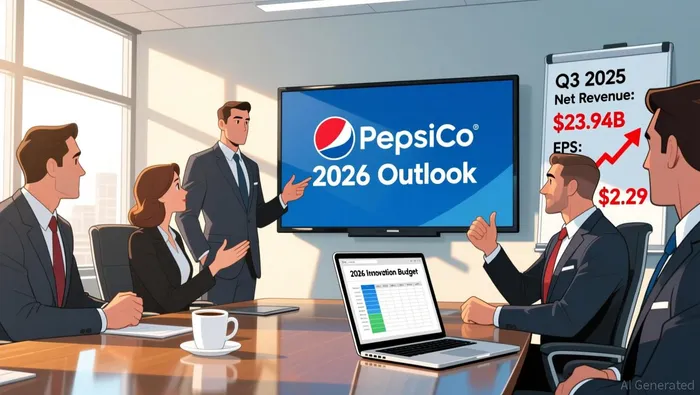 PepsiCo's cost-cutting initiatives have already yielded tangible results. In Q3 2025, the company reported net revenue of $23.94 billion and adjusted earnings per share (EPS) of $2.29, exceeding analyst expectations. These figures reflect the benefits of SKU rationalization, automation, and optimized promotional strategies, which have helped offset rising ingredient and tariff costs according to earnings call data. The savings are being reinvested into innovation, with a focus on health-conscious products and digital marketing campaigns to reinvigorate brand appeal according to company statements.
Looking ahead, PepsiCo projects a 2% to 4% organic revenue growth by 2026, driven by margin expansion and supply chain optimization. The company plans to provide a comprehensive update on its North America go-to-market strategies in late 2026, emphasizing a state-level approach to balancing return on investment, scale, and market share.
Investor Reactions and Risks
While Elliott's vision has garnered support from some shareholders, others remain skeptical. The proposed refranchising of the bottling network, for instance, is seen as a double-edged sword: it could simplify operations and improve margins but may also incur significant short-term costs and disrupt distribution networks according to investor analysis. Similarly, the divestiture of legacy brands like Cap'n Crunch raises questions about the trade-off between capital reallocation and the potential loss of brand equity according to industry reports.
PepsiCo's management has acknowledged these concerns, stating that it is reviewing Elliott's perspectives in the context of its long-term growth strategy. The company's ability to execute these changes without alienating key stakeholders will be critical to its success.
Future Outlook and Strategic Priorities
By 2026, PepsiCo aims to achieve at least 100 basis points of core operating margin expansion, a target underpinned by its aggressive cost-cutting and operational streamlining. The company is also prioritizing everyday value strategies and packaging innovations to enhance affordability and consumer engagement according to strategic priorities. However, the path to profitability remains fraught with risks, including supply chain volatility, shifting consumer preferences, and the execution challenges inherent in large-scale restructuring.
Conclusion
PepsiCo's supply chain overhaul, driven by activist investor pressure, represents a bold but precarious attempt to reclaim its competitive edge. While the company has made strides in reducing costs and refocusing its portfolio, the long-term success of these initiatives will depend on its ability to balance short-term disruptions with sustainable growth. As the 2026 outlook takes shape, investors will be watching closely to see whether PepsiCo can transform its operational challenges into a renewed era of profitability.







Comentarios
Aún no hay comentarios