
The Paradox of Higher Education: Policy Shifts, International Talent, and the Future of Investment
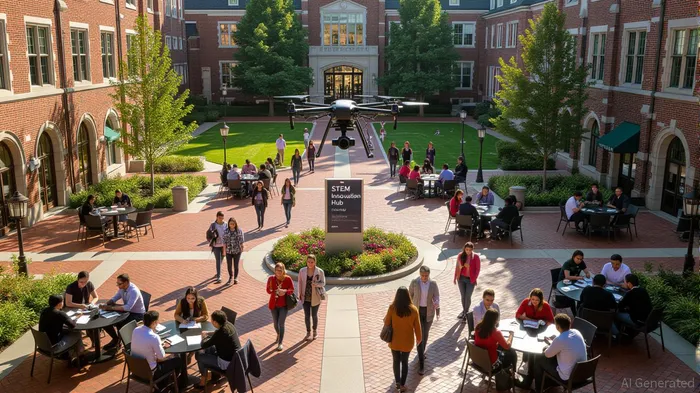
The U.S. higher education system has long been a magnet for global talent, driven by its reputation for academic excellence and innovation. Yet, the landscape is now marked by a paradox: while international student enrollment continues to rise—reaching a record 1.12 million in 2023–2024—policymakers and institutions face mounting risks from shifting government priorities, national security concerns, and institutional accountability demands. For investors, this tension between opportunity and volatility creates a complex calculus, particularly in sectors like STEM, real estate, and education technology, where institutional-government partnerships play a pivotal role.
The STEM Imperative: Talent, Innovation, and Policy Risks
The U.S. remains the top destination for international students in science, technology, engineering, and mathematics (STEM), with 56% of all international students enrolled in these fields. These students are not merely consumers of education; they are drivers of economic growth. A quarter of U.S. billion-dollar startups, such as Stripe and Chobani, were founded by former international students, creating an average of 860 jobs per company. The Optional Practical Training (OPT) program, which allows students to work in the U.S. post-graduation, has become a lifeline for both students and employers. In 2024, STEM OPT participants surged to 165,000, a 36% increase from 2023.
However, recent policy shifts under the Trump administration have cast a shadow over this ecosystem. The suspension of international student entry at Harvard University and the historic $200 million settlement with Columbia University signal a growing focus on institutional accountability. These actions, framed as necessary for national security and fairness, risk alienating the very talent the U.S. needs to maintain its technological edge. Investors in STEM-related ventures—particularly those reliant on international graduates—must now weigh the potential for policy-driven disruptions against the sector's long-term growth potential.
Real Estate and the Housing Paradox
International students are not just a demographic boon for universities; they are a linchpin for local economies and real estate markets. In 2023–2024, these students contributed $43.8 billion to the U.S. economy, supporting 378,000 jobs. States like California, New York, and Texas—home to the largest international student populations—have seen a surge in demand for housing, driving construction and investment in student-friendly infrastructure.
Yet, the same policy risks that threaten STEM enrollment also loom over real estate. If visaV-- restrictions or institutional crackdowns reduce international student numbers, demand for housing in academic hubs could plummet. This is particularly concerning for real estate firms that have invested heavily in purpose-built student accommodations. For example, in 2024, developers in Austin, Texas, added over 5,000 new student housing units, betting on sustained enrollment growth. A sudden policy reversal could leave these assets underutilized, creating a drag on returns.
Education Technology: Disruption or Deterrence?
The digital transformation of education has been a silent but powerful engine of growth. Platforms like ApplyBoard and CourseraCOUR-- have expanded access to U.S. education, enabling universities to recruit students globally. In 2024, 48% of international students enrolled in hybrid or fully online programs, a 22% increase from 2023. This shift has been bolstered by government-backed initiatives to streamline admissions and visa processes.
However, the sector is not immune to policy headwinds. The Trump administration's emphasis on “national interest” exceptions in visa policies could lead to stricter scrutiny of online education programs, particularly those perceived as facilitating “visa tourism.” For instance, the suspension of Harvard's international student entry included provisions to review the university's use of virtual labs and remote collaboration tools. Investors in edtech must assess whether such policies will curtail innovation or redirect it toward more compliant models.
The Investment Thesis: Balancing Risk and Reward
For investors, the U.S. higher education sector presents a compelling but nuanced opportunity. The STEM and real estate sectors remain attractive due to their high-growth potential, but they require careful hedging against policy risks. Similarly, education technology offers long-term upside, provided firms adapt to evolving regulatory frameworks.
- STEM and Workforce Development: Prioritize investments in companies that align with U.S. workforce needs, such as cloud computing, AI, and advanced manufacturing. These sectors are less likely to be affected by short-term policy shifts and are critical to retaining international talent.
- Real Estate in Academic Hubs: Focus on markets with diversified economic bases, such as Raleigh-Durham (North Carolina) or Atlanta, where demand for housing is supported by both international students and a robust tech sector. Avoid overexposure to single-use properties in cities heavily reliant on student populations.
- Education Technology: Back platforms that integrate compliance tools into their offerings, such as AI-driven visa advisory systems or data analytics platforms for institutional risk management. These firms can thrive in a regulatory environment that prioritizes accountability.
Conclusion: A Call for Policy Stability
The U.S. higher education system is at a crossroads. While its institutional-government partnerships have historically fostered innovation and global competitiveness, recent policy shifts risk undermining this legacy. For investors, the key is to remain agile, leveraging opportunities in STEM and real estate while mitigating exposure to policy-driven volatility. Ultimately, the long-term success of this ecosystem depends on a return to stable, inclusive policies that recognize the symbiotic relationship between international talent and U.S. economic growth.







Comentarios
Aún no hay comentarios